MENU

Bibliography Options Menu

The Electronic Scholarly Publishing Project: Providing world-wide, free access to classic scientific papers and other scholarly materials, since 1993.
More About: ESP | OUR CONTENT | THIS WEBSITE | WHAT'S NEW | WHAT'S HOT
Options Menu: Classical Genetics Publications
ESP Library: Classical Genetics 17 Jun 2026 Updated:
Publications in Classical Genetics
ESP presents a browsable collection of books and papers from the early days of classical genetics. All of this material is available in full-text format on this website.
Featured Publications
Publications: Classical Genetics
Author
Author
Title
Title
Date
Date
The Genetic Basis of Truncate Wing,—an Inconstant and Modifiable Character in Drosophila
Genetics, 5: 1-59.
PDF image facsimile file
The Genetic Basis of Truncate Wing,—an Inconstant and Modifiable Character in Drosophila
Genetics, 5: 248.
PDF image facsimile file
Vestiges of the Natural History of Creation.
London: John Churchill.
This is a full-text PDF image facsimile version of the entire 390-page original first edition.
In 1859, many had already begun to think deeply about the meaning and origin of creation. Fifteen years before the Origin, Vestiges of the Natural History of Creation appeared, published anonymously. In one sense, the book is hopelessly dated, and amateurish to boot. In another, the book is incredibly modern - an effort, in the author's own words, "to connect the natural sciences into a history of creation."
At one point, the author (revealed in the 12th edition to be Robert Chambers) uses the example of Charles Babbage's calculating engine (the first computer) to show how apparently miraculous changes might occur as the result of subtle changes in an underlying governing system.
NOTE: This is an electronic FACSIMILE of the original work. The PDF files contain images of the original pages. The files are large and will download slowly. It is probably best to download the files to disk for later viewing and printing. When printed, these files give output equivalent to good quality Xerox copies of the original.
This is a full-text PDF version of the entire book.
Aristotle’s On the Generation of Animals (in Latin, De Generatione Animalium) was produced in the latter part of the fourth century B.C., exact date unknown. This book is the second recorded work on embryology as a subject of philosophy, being preceded by contributions in the Hippocratic corpus by about a century. It was, however, the first work to provide a comprehensive theory of how generation works and an exhaustive explanation of how reproduction works in a variety of different animals. As such, De Generatione was the first scientific work on embryology. Its influence on embryologists, naturalists, and philosophers in later years was profound. A brief overview of the general theory expounded in De Generatione requires an explanation of Aristotle’s philosophy. The Aristotelian approach to philosophy is teleological, and involves analyzing the purpose of things, or the cause for their existence. These causes are split into four different types: final cause, formal cause, material cause, and efficient cause. The final cause is what a thing exists for, or its ultimate purpose. The formal cause is the definition of a thing’s essence or existence, and Aristotle states that in generation, the formal cause and the final cause are similar to each other, and can be thought of as the goal of creating a new individual of the species. The material cause is the stuff a thing is made of, which in Aristotle’s theory is the female menstrual blood. The efficient cause is the “mover” or what causes the thing’s existence, and for reproduction Aristotle designates the male semen as the efficient cause. Thus, while the mother’s body contains all the material necessary for creating her offspring, she requires the father’s semen to start and guide the process.
This is a full-text PDF version of the entire book.
Any collection of critical works in the history of biology must include works by Aristotle, as Aristotle was, essentially, the world's first biologist (if biologist is defined as one who conducts a scientific study of life). Although some earlier writers (e.g., Hippocrates) touched upon the human body and its health, no prior writer attempted a general consideration of living things. Aristotle held the study living things, especially animals, to be a critical foundation for the understanding of nature. No similarly broad attempt to understand biology occurred until the 16th century.
Here, in On the Parts of Animals, Aristotle provides a study in animal anatomy and physiology; it aims to provide a scientific understanding of the parts (organs, tissues, fluids, etc.) of animals.
This is a full-text PDF version of the entire book.
Any collection of critical works in the history of biology must include works by Aristotle. Here, in The History of Animals, Aristotle provides a discussion of the diversity of life, with considerable attention to reproduction and heredity.
In The History Aristotle frames his text by explaining that he is investigating the what (the existing facts about animals) prior to establishing the why (the causes of these characteristics). The book is thus an attempt to apply philosophy to part of the natural world. Throughout the work, Aristotle seeks to identify differences, both between individuals and between groups. A group is established when it is seen that all members have the same set of distinguishing features; for example, that all birds have feathers, wings, and beaks. This relationship between the birds and their features is recognized as a universal. The History of Animals contains many accurate eye-witness observations, in particular of the marine biology around the island of Lesbos, such as that the octopus had colour-changing abilities and a sperm-transferring tentacle, that the young of a dogfish grow inside their mother's body, or that the male of a river catfish guards the eggs after the female has left. Some of these were long considered fanciful before being rediscovered in the nineteenth century. Aristotle has been accused of making errors, but some are due to misinterpretation of his text, and others may have been based on genuine observation. He did however make somewhat uncritical use of evidence from other people, such as travellers and beekeepers. The History of Animals had a powerful influence on zoology for some two thousand years. It continued to be a primary source of knowledge until in the sixteenth century zoologists including Conrad Gessner, all influenced by Aristotle, wrote their own studies of the subject.
See also WIKIPEDIA: History of Animals
Experimental Studies in the Physiology of Heredity.
Reports to the Evolution Committee of the Royal Society, II, 1904, pp. 1-131
PDF image facsimile file: 6,907,359 bytes - 154 pages - no figures
William Bateson was the first English-speaking scientist to appreciate the potential significance of Mendel's work. He and his co-workers began immediately to confirm and extend Mendel's findings. This report to the evolution committee of the Royal Society represents one of the very first systematic investigations into Mendelism as a possible general explanation for the fundamental mechanisms of heredity.
The facts of heredity in the light of Mendel's discovery.
Reports to the Evolution Committee of the Royal Society, I, 1902, pp. 125-160
PDF typeset file: 543,744 bytes - 41 pages - no figures
William Bateson was the first English-speaking scientist to appreciate the potential significance of Mendel's work. He began working immediately to confirm and extend Mendel's findings. This report to the evolution committee of the Royal Society represents one of the very first systematic investigations into Mendelism as a possible general explanation for the fundamental mechanisms of heredity.
Materials for the Study of Variation.
London: Macmillan and Company.
This is a full-text PDF image facsimile version of the entire 598-page original first edition.
William Bateson was the first English-speaking scientist to recognize the significance of Mendel's work. Before the rediscovery of Mendel's work in 1900, Bateson had been active in studying morphology, with a special interest in discontinuous variation as it might apply to the origin of species.
In this book Bateson summarizes his observations on discontinuous variation. His concern for this kind of variation probably contributed greatly to the quickness with which he grasped the significance of Mendel's work.
NOTE: This is an electronic FACSIMILE of the original work. The PDF files contain images of the original pages. The files are large and will download slowly. It is probably best to download the files to disk for later viewing and printing. When printed, these files give output equivalent to good quality Xerox copies of the original.
Hybridisation and cross-breeding as a method of scientific investigation.
Journal of the Royal Horticultural Society, 24:59-66.
PDF typeset file: 89,523 bytes - 13 pages - no figures
In this talk, given in 1899, before Mendel's work had been rediscovered, Bateson gives his vision of what kind of research will be necessary to shed light on the processes of inheritance and evolution:
What we first require is to know what happens when a variety is crossed with its nearest allies. If the result is to have a scientific value, it is almost absolutely necessary that the offspring of such crossing should then be examined statistically. It must be recorded how many of the offspring resembled each parent and how many shewed characters intermediate between those of the parents. If the parents differ in several characters, the offspring must be examined statistically, and marshalled, as it is called, in respect of each of those characters separately.
One would be hard pressed to provide a better anticipation of the experimental approach of Gregor Mendel. Small wonder that Bateson, upon encountering Mendel's work, quickly became convinced that the correct method for studying inheritance was finally at hand.
Problems of heredity as a subject for horticultural investigation.
Journal of the Royal Horticultural Society, 25:54-61.
PDF typeset file: 84,218 bytes - 12 pages - no figures
Mendel's work of 1865 was largely neglected, until 1900 when it was simultaneously rediscovered by Hugo de Vries, Carl Correns, and Erik von Tschermak. When Mendel's work came to the attention of William Bateson (who himself had already been advocating controlled crosses as an approach to studying heredity), he was convinced that Mendel's work was of major importance:
That we are in the presence of a new principle of the highest importance is, I think, manifest. To what further conclusions it may lead us cannot yet be foretold.
Bateson devoted the remainder of his scientific career to further elucidations of "Mendelism." This present paper captures the enthusiasm of Bateson's first encounter with the works of Mendel.
In Bateson, B. 1928. William Bateson, F.R.S.: His Essays & Addresses, together with a Short Account of his Life. Cambridge: Cambridge University Press.
PDF typeset file: 36,348 bytes - 6 pages - no figures
Although not considered to be one of the "official" rediscovers of Mendel's work, William Bateson was the first English-speaking scientist to recognize the importance of Mendel's work and he immediately set out to bring Mendel's work to the attention of the scientific community. Bateson coined the word "genetics" to name the new field and made many important contributions to its development.
This present document is a copy of a letter that Bateson wrote in 1902, seeking financial support from the Trustees of the Carnegie Institution for continued investigations into Mendelian mechanisms of inheritance.
The letter was almost certainly the world's first grant application in the new field of genetics. It was declined.
Mendel's Principles of Heredity: A Defence.
London: Cambridge University Press.
This is a full-text PDF image facsimile version of the entire 212-page original first edition.
William Bateson was the first English-speaking scientist to recognize the significance of Mendel's work. In an 1899 paper, he had anticipated the sort of experimental design that Mendel used, and in 1900, shortly after Mendel's rediscovery, he published another paper in which he summarized Mendel's work in English, declaring it to be "a new principle of the highest importance."
In the present work, Bateson offers a book-length presentation of Mendel's approach to genetic research, including the first English translation of both Mendel's work on peas and his later work on Hieracium. The book is subtitled A Defence because the Mendelian approach to genetics was initially strongly resisted by the biometrician school, which based their thinking on Galton's ancestral law of heredity.
NOTE: This is an electronic FACSIMILE of the original work. The PDF files contain images of the original pages. The files are large and will download slowly. It is probably best to download the files to disk for later viewing and printing. When printed, these files give output equivalent to good quality Xerox copies of the original.
The Methods and Scope of Genetics.
London: Cambridge University Press.
This is a newly typeset full-text version of the entire 49-page original first edition.
This short book is a copy of the Inaugural Address, given by Bateson upon the creation of the Professorship of Biology at Cambridge. In his introduction, Bateson notes:
The Professorship of Biology was founded in 1908 for a period of five years partly by the generosity of an anonymous benefactor, and partly by the University of Cambridge. The object of the endowment was the promotion of inquiries into the physiology of Heredity and Variation, a study now spoken of as Genetics.
It is now recognized that the progress of such inquiries will chiefly be accomplished by the application of experimental methods, especially those which Mendel's discovery has suggested. The purpose of this inaugural lecture is to describe the outlook over this field of research in a manner intelligible to students of other parts of knowledge.
Here then is a view of how one of the very first practitioners of genetics conceived of the "Methods and Scope of Genetics".
Genetics, 20:179-191.
PDF image facsimile file
Genetics, 22: 587-611.
PDF image facsimile file
Further Studies of Crossing Over in Attached-x Chromosomes of Drosophila Melanogaster
Genetics, 20: 192-206.
PDF image facsimile file
The Differentiation of Eye Pigments in Drosophila As Studied by Transplantation
Genetics, 21: 225-247.
PDF image facsimile file
Development of Eye Colors in Drosophila: Diffusible Substances and Their Interrelations
Genetics, 22: 76-86.
PDF image facsimile file
Crossing Over and Gene Rearrangement in Flowering Plants
Genetics, 18: 388-413.
PDF image facsimile file
Salivary Analysis of Inversion-3r-payne in the "venation" Stock of Drosophila melanogaster
Genetics, 23: 111-114.
PDF image facsimile file
Science, NS vol. XL:107-109.
PDF typeset file: 24,076 bytes - 5 pages - no figures
Although Bridges' longer 1916 Genetics paper (vol 1, page 1) on the same topic is better known and treats the issue at much greater length, this short communication in Science contains the same argument and is equally persuasive.
By 1910, much evidence had been presented to demonstrate that sexual phenotype (i.e., maleness or femaleness) was determined by chromosomes. And, as early as 1902 Sutton noted that similarities in the behavior of genes and chromosomes suggested that Mendelian factors might be carried on chromosomes.
Here, Bridges shows that mis-assortment of the sex chromosomes is accompanied by atypical inheritance patterns for sex-linked traits and he argues that this proves that genes are carried on chromosomes. He concludes his paper: "there can be no doubt that the complete parallelism between the unique behavior of the chromosomes and the behavior of sex-linked genes and sex in this case means that the sex-linked genes are located in and borne by the X-chromosomes."
Non-disjunction as proof of the chromosome theory of heredity (part 1).
Genetics, B, 1:1-52.
PDF image facsimile file: 1.808,605 bytes - 52 pages - many figures
This paper was published as the first article in the first volume the new journal genetics. As the title states, the paper offered PROOF that genes are real, physical things that are carried on chromosomes.
This article was scanned from Alfred Sturtevant's personal copy of Genetics. Access to the journal was provided by Edward B. Lewis and Elliot M. Meyerowitz of the California Institute of Technology.
Non-disjunction as proof of the chromosome theory of heredity (part 2).
Genetics, B, 1:107-163.
PDF image facsimile file: 2,600,250 bytes - 59 pages - many figures
This paper was published as the first article in the first volume the new journal genetics. As the title states, the paper offered PROOF that genes are real, physical things that are carried on chromosomes.
This article was scanned from Alfred Sturtevant's personal copy of Genetics. Access to the journal was provided by Edward B. Lewis and Elliot M. Meyerowitz of the California Institute of Technology.
Genetics, 21:788-795.
PDF image facsimile file: 8 pages
Crossing over in the X chromosomes of triploid females of Drosophila melanogaster..
Genetics, 10:418-441.
PDF image facsimile file: 24 pages
The inheritance of the mutant character "vortex".
Genetics, 4:283-306.
PDF image facsimile file: 24 pages
Triploid intersexes in Drosophila melanogaster.
Science, 54:252-254.
PDF typeset file: 153,521 bytes - 5 pages - no figures
Work in the laboratory of T. H. Morgan was critical in establishing that genes are real, physical entities and that they are arranged in a linear order on chromosomes. Calvin Bridges was a key player in the Morgan group. In 1914, Bridges first demonstrated that a correlation existed between the incorrect assortment of X chromosomes and the incorrect assortment of some genes. In 1916, he expanded on that work to "prove" that sex-linked genes in Drosophila are carried on the X chromosome.
In this paper, Bridges shows that the correlation between mis-assortment of genes and chromosomes applies to the autosomes as well as to the sex chromosomes. In addition, he shows that sex determination in Drosophila appears to be driven by the ratio of X chromosomes to autosomes, not by the absolute number of X chromosomes.
A Proof That Crossing Over Involves an Exchange of Segments Between Homologous Chromosomes
Genetics, 20: 22-35.
PDF image facsimile file
The Law of Heredity, Second Edition.
Baltimore and New York: John Murphy & Co., Publishers.
This is a full-text PDF image facsimile version of the entire 336-page original first edition.
It is often thought that, besides Mendel, little work on heredity occurred during the 19th Century. This is far from true. Darwin's Origin of Species placed the study of inherited variation at the center of biological thought. As this work by Brooks attests, considerable effort was made to understand heredity, especially as it related to natural selection.
Although the details of Brooks' analysis are now outdated, the book provides general insights into late-nineteenth Century thinking on heredity. Since Brooks was one of T. H. Morgan's instructors when Morgan was a student at Johns Hopkins, the book also provides insights into the specific instruction on heredity that was presented to the man who became the first recipient of a Nobel Prize for work on genetics.
NOTE: This is an electronic FACSIMILE of the original work. The PDF files contain images of the original pages. The files are large and will download slowly. It is probably best to download the files to disk for later viewing and printing. When printed, these files give output equivalent to good quality Xerox copies of the original.
A cytological basis for the Mendelian laws.
Bulletin of the Torrey Botanical Club, 29:657-661.
PDF typeset file: 191,965 bytes - 6 pages
Heredity in Relation to Evolution and Animal Breeding.
New York: D. Appleton and Company
This is an image facsimile version of the entire 184-page original edition.
Simplification of Mendelian formulae.
The American Naturalist, 47:170-182
PDF typeset file: 69,294 bytes - 13 pages - no figures
Soon after Mendel was rediscovered, the nature of the gene was being worked out. Along the way, many suggested changes to the symbology being used (e.g., B for dominant allele, b for recessive). Here Castle offers some suggestions for changing Mendelian symbols.
The relation of Mendelism to mutation and evolution.
The American Naturalist, 57:559-561
PDF typeset file: 30,865 bytes - 5 pages - no figures
Here Castle offers a short note relating the behavior of simple Mendelian characters to the more complex, quantitative traits found in natural populations (and thus of interest to those studying evolution).
On a modified Mendelian ratio among yellow mice.
Science, N.S., 32:868-870.
PDF typeset file: 39,133 bytes - 7 pages - no figures
Here, Castle and Little offer evidence consistent with the idea that the gene for yellow fur in mice, studied earlier by Cuénot, is probably lethal when carried homozygously.
Is the arrangement of the genes in the chromosome linear?
Proceedings of the National Academy of Sciences, 5:25-32.
PDF image facsimile file: 615,957 bytes - 8 pages
The Linkage of Eight Sex-linked Characters in Drosophila virilis
Genetics, 3: 107-134.
PDF image facsimile file
Yearbook of Agriculture, pp. 1457-1477.
PDF typeset file: 251,867 bytes - 28 pages - one figure
Robert Cook, as editor of The Journal of Heredity, was especially well positioned to appreciate how the new science of genetics developed after the rediscovery of Mendel in 1900 and the establishment of the chromosome theory of inheritance by T. H. Morgan and his students.
In this essay, Cook traces the history of genetics to four main roots - mathematics, plant breeding, animal breeding, and cytology.
G. Mendel's law concerning the behavior of progeny of varietal hybrids.
First published in English as: Correns, C., 1950. G. Mendel's law concerning the behavior of progeny of varietal hybrids. Genetics, 35(5, pt 2): 33-41. Originally published as: Correns, C. 1900. G. Mendels Regel über das Verhalten der Nachkommenschaft der Rassenbastarde. Berichte der Deutschen Botanischen Gesellschaft, 18: 158-168.
PDF typeset file: 78,900 bytes - 14 pages - no figures
Correns, along with Hugo de Vries and Erik von Tschermak, is considered to be one of the three co-discovers of Mendel's work in 1900. Correns was the only one of the three to acknowledge Mendel in the title of his paper. Correns' paper begins:
The latest publication of Hugo de Vries: Sur la loi de disjonction des hybrides, which through the courtesy of the author reached me yesterday, prompts me to make the following statement: In my hybridization experiments with varieties of maize and peas, I have come to the same results as de Vries, who experimented with varieties of many different kinds of plants, among them two varieties of maize. When I discovered the regularity of the phenomena, and the explanation thereof - to which I shall return presently - the same thing happened to me which now seems to be happening to de Vries: I thought that I had found something new. But then I convinced myself that the Abbot Gregor Mendel in Brünn, had, during the sixties, not only obtained the same result through extensive experiments with peas, which lasted for many years, as did de Vries and I, but had also given exactly the same explanation, as far as that was possible in 1866.
A correlation of cytological and genetical crossing-over in Zea mays.
PNAS, 17:492-497.
PDF image facsimile file: 6 pages - several figures
When Alfred Sturtevant created the first genetic map, he hypothesized that genetic recombination resulted from the actual exchange of chromatid fragments. However, at the time there was no hard evidence that proved recombination is accomplished via such a mechanism. The same genetic results could be explained if only alleles are exchanged during recombination, leaving the bulk of the chromatid arm unaffected. Since the two hypotheses make equivalent predictions regarding the distribution of alleles, they cannot be distinguished using purely genetic methods.
Attempting to demonstrate that genetic recombination is accomplished via the physical exchange of chromatid arms poses a problem similar to that encountered by Thomas H. Morgan when he first hypothesized that genes might be carried on the X chromosome. Although Morgan's genetic hypothesis of X-linkage provided an explanation for the inheritance of the white-eye allele in Drosophila, the notion that genes are actually carried on the X chromosome was not proven until Calvin Bridges provided cytological evidence to confirm the genetic observations. Bridges established a one-to-one correspondence between the abnormal distribution of eye-color alleles and the abnormal distribution of X chromosomes. That is, he established a relationship between genetic markers (the eye color alleles and their associated inheritance patterns) and cytological markers (the presence of abnormal sets of sex chromosomes).
In this paper, Creighton and McClintock present work in which they use a combination of cytological and genetic markers to show that cytological crossing-over occurs and that it is accompanied by genetical crossing-over. In just a few pages the authors accomplish their goal of establishing the reality of cytological recombination and of showing that it is associated with genetic recombination. This paper is truly a classic.
If this paper is read in isolation, the authors' discussion of their results can, at times, be difficult to follow. When this paper was originally published, however, it was accompanied by another paper (by McClintock) that immediately preceded it in the journal and that was intended to serve as an introduction to this paper. In the preceding paper, McClintock provided the basic genetic and cytological information necessary to understand the experimental logic of this paper. The background paper is The order of the genes C, Sh, and Wx in Zea mays with reference to a cytologically known point in the chromosome. The two papers should be read together, with the first, descriptive paper serving as a critical and necessary introduction to the second, experimental work.
For additional commentary on Creighton and McClintock's important work, see Edward Coe and Lee B. Kass (2005) Proof of physical exchange of genes on the chromosomes. Proceedings of the National Academy of Sciences, USA. 102:6641-6646.
A correlation of cytological and genetical crossing-over in Zea mays.
PNAS, 17:492-497.
PDF typeset file: 140,176 bytes - 17 pages - several figures
When Alfred Sturtevant created the first genetic map, he hypothesized that genetic recombination resulted from the actual exchange of chromatid fragments. However, at the time there was no hard evidence that proved recombination is accomplished via such a mechanism. The same genetic results could be explained if only alleles are exchanged during recombination, leaving the bulk of the chromatid arm unaffected. Since the two hypotheses make equivalent predictions regarding the distribution of alleles, they cannot be distinguished using purely genetic methods.
Attempting to demonstrate that genetic recombination is accomplished via the physical exchange of chromatid arms poses a problem similar to that encountered by Thomas H. Morgan when he first hypothesized that genes might be carried on the X chromosome. Although Morgan's genetic hypothesis of X-linkage provided an explanation for the inheritance of the white-eye allele in Drosophila, the notion that genes are actually carried on the X chromosome was not proven until Calvin Bridges provided cytological evidence to confirm the genetic observations. Bridges established a one-to-one correspondence between the abnormal distribution of eye-color alleles and the abnormal distribution of X chromosomes. That is, he established a relationship between genetic markers (the eye color alleles and their associated inheritance patterns) and cytological markers (the presence of abnormal sets of sex chromosomes).
In this paper, Creighton and McClintock present work in which they use a combination of cytological and genetic markers to show that cytological crossing-over occurs and that it is accompanied by genetical crossing-over. In just a few pages the authors accomplish their goal of establishing the reality of cytological recombination and of showing that it is associated with genetic recombination. This paper is truly a classic.
If this paper is read in isolation, the authors' discussion of their results can, at times, be difficult to follow. When this paper was originally published, however, it was accompanied by another paper (by McClintock) that immediately preceded it in the journal and that was intended to serve as an introduction to this paper. In the preceding paper, McClintock provided the basic genetic and cytological information necessary to understand the experimental logic of this paper. The background paper is The order of the genes C, Sh, and Wx in Zea mays with reference to a cytologically known point in the chromosome. The two papers should be read together, with the first, descriptive paper serving as a critical and necessary introduction to the second, experimental work.
For additional commentary on Creighton and McClintock's important work, see Edward Coe and Lee B. Kass (2005) Proof of physical exchange of genes on the chromosomes. Proceedings of the National Academy of Sciences, USA. 102:6641-6646.
A correlation of cytological and genetical crossing-over in Zea mays. A Corroboration.
PNAS, 21:148-150.
PDF image facsimile file: 3 pages - no figures
Although Creighton and McClintock's 1931 paper — A correlation of cytological and genetical crossing-over in Zea mays. — had provided data in support of the notion that cytological crossing-over occurs and that it is accompanied by genetical crossing-over, some had criticized the relatively few data points in the paper. In this 1935 paper, the authors acknowledge the criticism, then explain why they will, in this paper, be sharing some additional corroborative data with little additional commentary:
There has recently been some skepticism expressed (Brink and Cooper, 1935) as to the value of the studies on the correlation of cytological and genetical crossing-over in maize published by Creighton and McClintock (1931) because of the fewness of the data. Since the paper by Stern (1931) dealing with Drosophila and having much more extensive data appeared at practically the same time and yielded the same conclusions, the authors felt it unnecessary to add to the ever-increasing amount of published work merely to record more evidence of the same nature without supplying anything essentially new or advancing. Therefore, confirmatory data which have accumulated since the time the joint paper mentioned above was published have not been considered for a separate publication. However, we now feel forced to add more data merely to counteract any suspicion that the evidence previously presented constituted insufficient proof. This will be done in as brief a form as possible, since a discussion of the method has been given in the paper mentioned above.
For additional commentary on Creighton and McClintock's important work, see Edward Coe and Lee B. Kass (2005) Proof of physical exchange of genes on the chromosomes. Proceedings of the National Academy of Sciences, USA. 102:6641-6646.
Recollections of the early days of the genetical society.
In John Jinks, The Genetical Society - The First Fifty Years, Edinburgh: Oliver and Boyd, pp.9-15.
PDF image facsimile file: 7 pages
On the supposed antagonism of Mendelian to biometric theories of heredity.
Manchester Memoirs, 49:1-19.
PDF typeset file: 16 pages
The Voyage of the Beagle, Second Edition.
London: John Murray.
This is a full-text, newly typeset, PDF version of the entire book.
For five years, from 1831-1836, Charles Darwin served as the official naturalist aboard the HMS Beagle as it visited exotic locations around the world. During this voyage, Darwin first came to wonder about the mechanisms driving the origin of species. This book chronicles the voyage and documents his early thinking.
London: John Murray, Albemarle Street.
This is a full-text PDF image facsimile version of the entire 502-page original first edition.
This is the book that changed the world and defined modern biology. By making mechanisms of heritable variation central to the biggest issue in all of biology, Darwin initiated the genetics revolution.
The Variation of Animals and Plants Under Domestication, Second Edition, Revised (two volumes).
New York: D. Appleton & Co.
This is a full-text PDF image facsimile version of the entire 473-page volume I and the entire 495-page volume II of the original work.
Although Darwin's theories regarding the origin of species through natural selection required that some mechanism of heredity exist, no such mechanism was known when the Origin was written. After the Origin appeared, Darwin turned his attention to the mechanism(s) of heredity, resulting in his subsequent two-volume The Variation of Animals and Plants Under Domestication.
In volume I, Darwin summarized what was known about inheritance in a variety of domesticated species and concluded with a chapter, Inheritance, that begins his general summary of the mechanisms of inheritance. He continued this summary in volume II, which also offers Darwin's own theory of inheritance in Chapter XXVII, Provisional Hypothesis of Pangenesis.
The notion of pangenesis dominated late nineteenth-century thinking about inheritance. Although ultimately seen to be simply wrong, it was very influential and a familiarity with its tenets is essential for anyone wishing to understand the intellectual climate at the time Mendel was rediscovered in 1900.
NOTE: This is an electronic FACSIMILE of the original work. The PDF files contain images of the original pages. The files are large and will download slowly. It is probably best to download the files to disk for later viewing and printing. When printed, these files give output equivalent to good quality Xerox copies of the original.
Frequency of Spontaneous Mutations in Certain Stocks of Drosophila melanogaster
Genetics, 22: 469-478.
PDF image facsimile file
Journal of Heredity, 24:368-378.
PDF typeset file: 679,936 bytes - 22 pages - several figures
Once the foundations of transmission genetics had been worked out, researchers began to consider what the chemical nature of the gene might be. Here Milislav Demerec offers one of the first such efforts. He concludes that the gene is a minute organic particle, capable of reproduction, located in a chromosome and responsible for the transmission of a hereditary characteristic. Moreover, he states that the available evidence suggests that genes are uni-molecular, and he notes:
If a gene is a complex organic molecule it would be expected to be similar in composition to other complex molecules, viz. molecular groups constituting this molecule (whatever these groups may be) would he arranged in chains and side chains. He then offers a drawing of the structure of DNA (!) as an example of a complex organic molecule, but is quick to add that The diagram is not intended to give any implication as to the number, the type, or the arrangement of the molecules in a gene group. Its purpose is to illustrate the molecular structure of a complex organic molecule.
Another 20 years would have to pass before the true chemical nature of the gene would be established.
Translocations involving the third and the fourth chromosomes of Drosophila melanogaster
Genetics, 15: 347-399.
PDF image facsimile file
Further Data on the Variation of the Y Chromosome in Drosophila Pseudoobscura
Genetics, 22: 340-346.
PDF image facsimile file
Studies on Hybrid Sterility IV. Transplanted Testes in Drosophila Pseudoobscura
Genetics, 21: 832-840.
PDF image facsimile file
Genetics, 23: 239-251.
PDF image facsimile file
Inversions in the Chromosomes of Drosophila Pseudoobscura
Genetics, 23: 28-64.
PDF image facsimile file
Genetics, 21: 113-135.
PDF image facsimile file
Translocations Involving the Second and the fourth chromosomes of Drosophila melanogaster
Genetics, 16: 629-658.
PDF image facsimile file
Heredity in the Light of Recent Research.
Cambridge: University Press
This is an image facsimile version of the entire 144-page original first edition.
London: J. M. Dent & Sons.
This is an image facsimile version of the entire 48-page original first edition.
This short book was based on a lecture given by Drinkwater as one of a series known as "Science Lectures for the People." The book provides insights into the general perception (as opposed to scholarly view) of genetics very early after the field had begun.
The book also contains some nice portraits of Mendel, Bateson, and Punnett.
The Centenary of Gregor Mendel and of Francis Galton.
The Scientific Monthly, 16: 225-270.
PDF typeset file: 247,951 bytes - 54 pages - no figures
In December of 1922, the American Society of Naturalists held a special session to honor the centenaries of the birth of Gregor Mendel and of Francis Galton. This is the collection of the four papers presented at that session and later published in the The Scientific Monthly.
Mendel and his contemporaries.
The Scientific Monthly, 16: 225-237.
PDF typeset file: 247,951 bytes - 54 pages - no figures
In December of 1922, the American Society of Naturalists held a special session to honor the centenaries of the birth of Gregor Mendel and of Francis Galton. This is one of the four papers presented at that session and later published in the The Scientific Monthly.
Proceedings of the International Congress of Plant Sciences, Ithaca, New York, August 16-23, 1926, vol. 1. Menasha, WI: George Banta Publishing Co. pp 889-895.
PDF typeset file: 76,104 bytes - 11 pages - no figures
As classical genetics acquired more and more explanatory power, the question what is a gene? became more important. Were genes real physical entities, or merely theoretical concepts that allowed for the mathematical modelling of inheritance. This paper represents one effort to consider The concept of the gene. The paper's opening paragraph sets the tone:
Nearly fifteen years ago I attempted to defend the thesis that the Mendelian method of recording the facts of inheritance was simply a notation useful as a description of physiological facts. The argument was an elaboration of the proposition that the germ-cell unit of heredity, the gene, was an abstract, formless, characterless concept used for convenience in describing the results of breeding experiments. It was the ghost of an entity which might later be clothed with flesh, but its usefulness at the time was due to its adaptability to mathematical treatment. By postulating that the results derived from controlled matings were due to the activities of definite germ-cell units which could be manipulated arithmetically, investigators were able to formulate new experimental tests, and thus to open the way to further discovery; but these units could be given no intelligible interpretation in terms of geometry, chemistry, or physiology.
In the last paragraph, East asserts:
We arrive, therefore, at the same port from which we departed when our discussion began. The genes are units useful in concise descriptions of the phenomena of heredity. Their place of residence is the chromosomes. Their behavior brings about the observed facts of genetics. For the rest, what we know about them is merely an interpretation of crossover frequency. In terms of geometry, chemistry, physics or mechanics, we can give them no description whatever.
The Distinction between Development and Heredity in Inbreeding.
The American Naturalist 43: 173-181.
Genetics, 22: 479-483.
PDF image facsimile file
Genetics, 22: 65-75.
PDF image facsimile file
Genetics, 17: 107-124.
PDF image facsimile file
London: Macmillan
This is an image facsimile version of the entire 260-page original first edition.
London: Macmillan
This is an image facsimile version of the entire 260-page original first edition.
Nature, 57:293.
PDF typeset file: 27,776 bytes - 5 pages - one figure
Some standard textbook descriptions of early genetics give the impression that, besides Mendel, no one attempted any genetic analysis in the entire nineteenth century. This is far from the truth, with Francis Galton offering a fine refutation. Starting just a few years after Mendel (and also working with peas), Galton carried out a series of well-received studies that resulted in his "Ancestral Law of Heredity," summarized diagrammatically in this brief communication. Galton's "Law" was so firmly established in some circles, that many adherents did not accept Mendelism until 1918, when R. A. Fisher showed that Galton's Law was in fact a natural consequence of Mendelian inheritance for polygenic traits.
The incidence of alkaptonuria: A study in chemical individuality.
Lancet, ii:1616-1620.
PDF typeset file: 145,052 bytes - 18 pages - no figures
This paper is a true classic. Like Mendel's own work, this report offers insights so far ahead of its time that it, and Garrod's follow-on work, were largely neglected, until later efforts to elucidate the physiological functioning of genes led to the Nobel-prize-winning one-gene, one-enzyme hypothesis.
Less than two years after the rediscovery of Mendelism and just a few years after the word biochemistry was first coined, Garrod reports on alkaptonuria in humans and comes to the conclusion that it is inherited as a Mendelian recessive and that the occurrence of mutations (sports in the word of the time) in metabolic function should be no more surprising than inherited variations in morphology.
Inborn Errors of Metabolism, Second Edition.
London: Henry Frowde and Hodder & Stoughton
This is a full-text PDF image facsimile version of the entire 216-page original book.
Less than two years after the rediscovery of Mendelism and just a few years after the word biochemistry was first coined, Garrod reported on alkaptonuria in humans and came to the conclusion that it was inherited as a Mendelian recessive and that the occurrence of mutations (sports in the word of the time) in metabolic function should be no more surprising than inherited variations in morphology.
In 1908, he summarized his thinking about "inborn errors of metabolism" (his term for what we would now think of as mutations in genes affecting metabolic function) in a book. An image facsimile of the second edition (1923) of that book is presented here.
Like Mendel's work, Garrod's insights were so far ahead of their time that his entire work on metabolic mutations was largely neglected, until later efforts to elucidate the physiological functioning of genes led to the Nobel-prize-winning one-gene, one-enzyme hypothesis.
Crossing Over ohne Chiasmatypie?
Genetics, 2:82-95.
PDF image facsimile file: 764,480 bytes - 14 pages - 2 figures
During the 1910's, research by Morgan and his students at Columbia established the Mendelian "gene" as a real object, with physical properties. Linkage among genes on the same chromosome had been shown and differences in recombination between linked genes had been used to calculate physical distances between genes. One assumption in the use of recombination frequencies to determine gene location was that physical sections of paired chromosomes could be exchanged during crossing-over associated with chiasmatype formation in meiosis.
See also: The Centenary of Janssens’s Chiasmatype Theory
In this paper — Crossing Over ohne Chiasmatypie? — Goldschmidt proposes that perhaps crossing over could occur in the absence of chiasmatype formation. Goldschmidt held (incorrectly) that the chromosomes essentially "disintegrate" during the resting phase of the cell cycle, then reassemble themselves in preparation for the next cell cycle. He assumed that some kind of "attractive force" was necessary to reassemble the genes into their proper places on the chromosome. In this paper, he proposes that variations in the attractive force, occuring over multiple mitotic division prior to meiosis could explain the apparent regularity of recombination distances.
Not surprisingly, this suggestion brought forth a vigorous counter-argument from Morgan's group, especially Sturtevant's Crossing Over without Chiasmatype? .
See also: Richard Goldschmidt and the crossing-over controversy
Genetics, 19: 412-429.
PDF image facsimile file
Mendelian Proportions in a Mixed Population.
Science, NS. XXVIII:49-50.
PDF typeset file: 19,473 bytes - 1 page - no figures
Every geneticist has heard of the Hardy-Weinberg Law and of Hardy-Weinberg Equilibrium, and nearly all basic biology texts teach that G. H. Hardy played a seminal role in founding population genetics. But, what most biologists don't realize is that Hardy's total contribution to biology consisted of a single letter to the editor in Science. The letter began,
I am reluctant to intrude in a discussion concerning matters of which I have no expert knowledge, and I should have expected the very simple point which I wish to make to have been familiar to biologists. However, some remarks of Mr. Udny Yule, to which Mr. R. C. Punnett has called my attention, suggest that it may still be worth making.
With that, Hardy offered his "simple point" and then washed his hands of biology. His autobiography, A Mathematician's Apology, makes no mention of population genetics.
Development of Eye Colors in Drosophila: Time of Action of Body Fluid on Cinnabar
Genetics, 22: 393-401.
PDF image facsimile file
Galton and Mendel: Their contribution to genetics and their influence on biology.
The Scientific Monthly, 16: 247-263.
PDF typeset file: 247,951 bytes - 54 pages - no figures
In December of 1922, the American Society of Naturalists held a special session to honor the centenaries of the birth of Gregor Mendel and of Francis Galton. This is one of the four papers presented at that session and later published in the The Scientific Monthly.
Reports to the Evolution Committee of the Royal Society, II, 1904, pp. 131-154
PDF image facsimile file: 6,907,359 bytes - 154 pages - no figures
William Bateson was the first English-speaking scientist to appreciate the potential significance of Mendel's work. He and his co-workers began immediately to confirm and extend Mendel's findings. C. C. Hurst was one of Wm Bateson's early co-workers. Bateson and Hurst collaborated in the battle against the biometricians Karl Pearson and Walter Frank Raphael Weldon, with Hurst generating much data from experimental crosses of different plant varieties and animal colour variants, including chickens, horses, and man. Together they practically proved that Mendelian genetics could be extended to many different systems. Hurst was much younger than Bateson, but had a fiery passion for genetics, great skill in debate, and an approachableness lacking in some of his older peers which meant he was well respected within the scientific and lay community.
Hurst adopted the chromosome theory of inheritance whole-heartedly referring copiously to Thomas Hunt Morgan's Drosophila work, and he was also clearly a staunch Darwinist. He believed that natural selection and Mendelian genetics were compatible, and referred to the theoretical work of Sewall Wright, R.A. Fisher, and J.B.S. Haldane, which proved that quantitative traits and natural selection were compatible with Mendelism. Hurst was also a major initiator of the modern "genetical species concept" later known as the biological species concept. Here is Hurst's concept of species in Creative Evolution (1932), p. 66-67.
A species is a group of individuals of common descent, with certain constant specific characters in common which are represented in the nucleus of each cell by constant and characteristic sets of chromosomes carrying homozygous specific genes, causing as a rule intra-fertility and inter-sterility. On this view the species is no longer an arbitrary conception convenient to the taxonomist, a mere new name or label, but rather a real specific entity which can be experimentally demonstrated genetically and cytologically. Once the true nature of species is realised and recognised in terms of genes and chromosomes, the way is open to trace its evolution and origin, and the genetical species becomes a measurable and experimental unit of evolution.
This report — Experiments with Poultry ‐ to the evolution committee of the Royal Society represents one of the very first systematic investigations into Mendelism as a possible general explanation for the fundamental mechanisms of heredity.
Nature, 1:9-11.
PDF image facsimile file: 343,040 bytes - 3 pages
A special article, written by Huxley on request for the first issue of Nature, a new publication. The article is mainly a lengthy quote from Goethe, consisting of an extended rhapsody on "Nature."
Tricolor Inheritance. I. the Tricolor Series in Guinea-pigs
Genetics, 1: 287-309.
PDF image facsimile file
Tricolor Inheritance. IV. the Triple Allelo-morphic Series in Guinea-pigs
Genetics, 4: 597-606.
PDF image facsimile file
Genetics, 8: 393-457.
PDF image facsimile file
The Genotype Conception of Heredity.
The American Naturalist. 45:129-159.
PDF image facsimile file: 31 pages - 1 figure
This paper is based on a talk given to The American Society of Naturalists in December, 1910. In this presentation, Johanssen discusses the challenges associated with using current language to describe new phenomena and suggests several new terms as possibly being of use:
possibly being of use: It is a well-established fact that language is not only our servant, when we wish to express-or even to conceal our thoughts, but that it may also be our master, overpowering us by means of the notions attached to the current words. This fact is the reason why it is desirable to create a new terminology in all cases where new or revised conceptions are being developed. Old terms are mostly compromised by their application in antiquated or erroneous theories and systems, from which they carry splinters of inadequate ideas not always harmless to the developing insight. Therefore I have proposed the terms "gene" and "genotype" and some further terms, as "phenotype" and "biotype," to be used in the science of genetics. The "gene" is nothing but a very applicable little word, easily combined with others, and hence it may be useful as an expression for the "unit-factors," "elements" or "allelomorphs" in the gametes, demonstrated by modern Mendelian researches. A "genotype" is the sum total of all the "genes" in a gamete or in a zygote. When a monohybrid is formed by cross fertilization, the "genotype" of this F1-organism is heterozygotic in one single point and the "genotypes" of the two "genodifferent" gametes in question differ in one single point from each other. As to the nature of the "genes" it is as yet of no value to propose any hypothesis; but that the notion "gene" covers a reality is evident from Mendelism.
Proceedings of the Sixth International Congress of Genetics, Vol. I.
Austin, Texas: Genetics Society of America
This is an image facsimile version of the entire 396-page original edition.
The Proceedings of the Sixth International Congress of Genetics, held in 1932, offers a glimpse into classical genetics at the height of its power and influence. Thomas Morgan, who had just received the first Nobel Prize ever awarded in genetics, served as president of the congress.
The participants list reads like a who's who of classical genetics: The three rediscovers of Mendel — Correns, de Vries, and von Tschermak — all attended the meeting. Morgan, Sturtevant, and Muller gave talks. Population genetics and the relationship of genetics to evolution was discussed by R. A. Fisher, J. B. S. Haldane, and Sewall Wright.
NOTE: According to the Treasurer's Report, the total cost of the meeting was $17,583.58. Correcting for the effects of inflation, that would be $323,442.89 in 2018.
An Account of Some Experiments on the Fecundation of Vegetables.
Philosophical Transactions of the Royal Society London. 89:195-204. (DOI: 10.1098/rstl.1799.0013)
PDF image facsimile file: 10 pages - no figures
A possible Mendelian explanation for a type of inheritance apparently non-Mendelian in nature
Science, 40:904-906.
PDF image facsimile file: 530,978 bytes - 3 pages
The Relation of Yellow Coat Color and Black-eyed White Spotting of Mice in Inheritance
Genetics, 2: 433-444.
PDF image facsimile file
Mutations of bacteria from virus sensitivity to virus resistance.
Genetics, 28:491-511
PDF typeset file: 201,354 bytes - 37 pages - several figures
This classic paper is the "fluctuation test" in which Luria and Delbrück first demonstrated the occurrence of microbial genetics. In fact, the fluctuation test must be regarded as the founding of bacterial genetics since it gave the first real proof that bacteria both possessed genes and experienced mutation. Luria and Delbrück shared the 1969 Nobel Prize with Alfred Hershey.
Luria and Delbrück were also able to use their data to calculate the actual mutation rate per bacterial cell division. Averaged across all of their experiments, this came to approximately 2.45 x 10⁻⁸. Thus, they not only proved that true genetic mutations occurred in bacteria, but also that such mutations were just as rare in bacteria as they were in higher organisms. Their work demonstrated that heritable variation in bacteria could be attributed to mechanisms similar to those in higher organisms. The previously puzzling ability of bacteria to respond rapidly and adaptively to changes in the environment could now be recognized as nothing more than the normal consequence of random gene mutation, followed by selection, in huge, rapidly reproducing populations.
Following this discovery, many researchers hurried to determine the range of true genetic mutation occurring in bacteria. Soon, such variation was detected in virtually every trait that could be studied, such as color, colony morphology, virulence (ability to infect a host), resistance to antimicrobial agents, nutritional requirements, and fermentation abilities (i.e., the ability to use different compounds as carbon sources).
An Essay on the Principle of Population.
PDF typeset file: 948,754 bytes - 134 pages - no figures
This book was first published anonymously in 1798, but the author was soon identified as Thomas Robert Malthus. The book predicted a grim future, as population would increase geometrically, doubling every 25 years, but food production would only grow arithmetically, which would result in famine and starvation, unless births were controlled. While it was not the first book on population, it was revised for over 28 years and has been acknowledged as the most influential work of its era. Malthus's book fuelled debate about the size of the population in the Kingdom of Great Britain and contributed to the passing of the Census Act 1800. This Act enabled the holding of a national census in England, Wales and Scotland, starting in 1801 and continuing every ten years to the present. The book's 6th edition (1826) was independently cited as a key influence by both Charles Darwin and Alfred Russel Wallace in developing the theory of natural selection.
rb> This book had a significant influence on Darwin as he looked for mechanisms that might explain evolutionary change. The influence shows, with Chapter Three of Darwin's Origin of Species entitled "Struggle for Existence".
The cytological identification of the chromosome associated with the r-g linkage group in Zea mays
Genetics, 16: 175-190.
PDF image facsimile file
PNAS, 17:485-491.
PDF image facsimile file: 7 pages - several figures
In this paper, McClintock provides the basic genetic and cytological information necessary to understand the logic of her classic work with Harriet Creighton: A correlation of cytological and genetical crossing-over in Zea mays that appeared immediately following this paper in PNAS.
For additional commentary on Creighton and McClintock's important work, see Edward Coe and Lee B. Kass (2005) Proof of physical exchange of genes on the chromosomes. Proceedings of the National Academy of Sciences, USA. 102:6641-6646.
Notes on the accessory chromosome.
Anatomischer Anzeiger, 20:220-226.
PDF typeset file: 58,569 bytes - 12 pages - no figures
In this brief paper, McClung introduces the evidence that male and female insects exhibit different chromosomal structures in their nuclei and that spermatozoa fall into two types &,mdash; those that carry the "accessory chromosome" and those that do not.
Based on this analysis, McClung suggests that the presence or absence of the "accessory chromosome" in spermatozoa may determine the sex of the progeny. McClung published this short note in 1901 to alert the scientific community of his findings and to alert them to a more detailed argument that he had already submitted for publication elsewhere and that he knew would appear a year later, in McClung, C. E. 1902. The accessory chromosome - Sex determinant? Biological Bulletin, 3:43-84.
The accessory chromosome - Sex determinant?
Biological Bulletin, 3:43-84.
PDF typeset file: 188,601 bytes - 40 pages - no figures
In this paper, McClung analyzes the evidence that male and female insects exhibit different chromosomal structures in their nuclei and that spermatozoa fall into two types - those that carry the "accessory chromosome" and those that do not.
Based on this analysis, McClung offers the bold hypothesis that the presence or absence of the "accessory chromosome" in spermatozoa may determine the sex of the progeny:
A most significant fact ... is that the [accessory chromosome] is apportioned to but one half of the spermatozoa. Assuming it to be true that the chromatin is the important part of the cell in the matter of heredity, then it follows that we have two kinds of spermatozoa that differ from each other in a vital matter. We expect, therefore, to find in the offspring two sorts of individuals in approximately equal numbers. ... [Since] nothing but sexual characters ... divides the members of a species into two well-defined groups, ... we are logically forced to the conclusion that the [accessory] chromosome has some bearing upon this arrangement.
That is, McClung hypothesizes that a difference in chromosome number is the cause, not an effect, of sex determination. This paper represents the first effort to associate the determination of a particular trait with a particular chromosome.
Special supplement to the journal Genetics 35(5, pt 2): 1-48.
PDF typeset file: 344,064 bytes - 66 pages - no figures
To celebrate the fiftieth anniversary of the rediscovery of Mendel's work, the Genetics Society of America published this special supplement, containing translations of the original papers by the rediscovers of Mendel - Carl Correns, Erik von Tschermak, and Hugo de Vries. It also contains letters written by Mendel and sent to Carl Nägeli, a leading botanist.
This was the first time these key works were made available in English translation.
Gregor Mendel's letters to Carl Nägeli, 1866-1873.
First published in English as: Mendel, G. 1950. Gregor Mendel's Letters to Carl Nägeli. Genetics, 35(5, pt 2): 1-29. Originally published as: Abhandlungen der Mathematisch-Physischen Klasse der Königlich Sächsischen Gesellschaft der Wissenschaften 29: 189-265, 1905. Reprinted in "Carl Correns, Gesammelte Abhandlungen zur Vererbungswissenschaft aus periodischen Schriften" 1899-1924. (Fritz V. Wettstein ed.) Berlin, Julius Springer, 1924. pp. 1237-1281.
PDF typeset file: 206,438 bytes - 36 pages - no figures
After his original paper on peas, Mendel published only one other paper on genetics, that one on Hieracium. These letters to Nägeli provide a rare additional glimpse into Mendel's thinking as he pursued his investigations on heredity.
On Hieracium-hybrids obtained by artificial fertilisation.
Verhandlungen des naturforschenden Vereines, Abhandlungen, Brünn, Bd. VIII für das Jahr 1869, 26-31. (Translated and reprinted as an appendix to Bateson, W. 1909. Mendel's Principles of Heredity. Cambridge University Press.)
PDF typeset file: 57,344 bytes - 8 pages - no figures
After his original paper on peas, Mendel published only one other paper on genetics, this one on Hieracium. Unknown to Mendel, Hieracium does not experience normal sexual fertilization, making it impossible for him to confirm the findings that he had obtained earlier with peas.
Experiments in plant hybridization.
Verhandlungen des naturforschenden Vereines in Brünn, Bd. IV für das Jahr 1865, Abhandlungen, 3-47.
PDF typeset file: 395,699 bytes - 41 pages - no figures
In February and March of 1865, Gregor Mendel presented the Brünn Natural History Society in Brünn, Czechoslovakia, with the results of his investigations into the mechanisms governing inheritance in pea plants. The next year, the work was published as Mendel, Gregor. 1866. "Versuche über Pflanzen Hybriden." Verhandlungen des naturforschenden Vereines in Brünn, 4:3-47.
In this remarkable paper, Mendel laid the groundwork for what later became the science of genetics. However, the work was largely ignored when it appeared and Mendel moved on to other things. He died in 1884.
His work was rediscovered at the turn of the century and its significance immediately recognized. Genetics, as a formal scientific discipline, exploded into activity in 1900.
An annotated version of Mendel's paper is also available. The annotated version contains explanatory notes throughout the document. This can be useful to those reading Mendel's paper for the first time.
For those wishing to see and read Mendel in the original, a facsimile reprint edition is available. This version is in Adobe PDF format, but the pages are images of the original publication, not a new type-setting of the material.
You may also wish to visit The Mendel Web site, created by Roger Blumberg. The site offers many additional resources for the Mendel scholar.
Experiments in plant hybridization. (annotated)
Verhandlungen des naturforschenden Vereines in Brünn, Bd. IV für das Jahr 1865, Abhandlungen, 3-47.
PDF typeset file: 395,699 bytes - 41 pages - no figures
In February and March of 1865, Gregor Mendel presented the Brünn Natural History Society in Brünn, Czechoslovakia, with the results of his investigations into the mechanisms governing inheritance in pea plants. The next year, the work was published as Mendel, Gregor. 1866. "Versuche über Pflanzen Hybriden." Verhandlungen des naturforschenden Vereines in Brünn, 4:3-47.
In this remarkable paper, Mendel laid the groundwork for what later became the science of genetics. However, the work was largely ignored when it appeared and Mendel moved on to other things. He died in 1884.
His work was rediscovered at the turn of the century and its significance immediately recognized. Genetics, as a formal scientific discipline, exploded into activity in 1900.
A non-annotated version of Mendel's paper is also available.
For those wishing to see and read Mendel in the original, a facsimile reprint edition is available. This version is in Adobe PDF format, but the pages are images of the original publication, not a new type-setting of the material.
You may also wish to visit The Mendel Web site, created by Roger Blumberg. The site offers many additional resources for the Mendel scholar.
Experiments in plant hybridization. (facsimile of first edition)
Verhandlungen des naturforschenden Vereines in Brünn, Bd. IV für das Jahr 1865, Abhandlungen, 3-47.
PDF image facsimile file: 2,142,414 bytes - 47 pages - no figures
For those wishing to see and read Mendel in the original, this provides an image facsimile of the original paper as it was published in German.
Small Deficiencies and the Problem of Genetic Units in the Giant Chromosomes
Genetics, 22: 543-556.
PDF image facsimile file
Genetics, 17: 60-80.
PDF image facsimile file
Polyploidy in Drosophila melanogaster with Two Attached X Chromosomes
Genetics, 10: 148-178.
PDF image facsimile file
A Spontaneous Somatic Exchange Between Non-homologous Chromosomes in Drosophila Melanogaster
Genetics, 24: 747-752.
PDF image facsimile file
Sex-linked Inheritance in Drosophila.
Carnegie Institution of Washington, Publication 237.
PDF image facsimile file, 94 pages, several images, two color plates
In this special publication from the Carnegie Institution of Washington, Morgan and Bridges review and summarize what was then known about sex-linked traits in Drosophila. It is interesting to note that this was written early enough that they use the word gen instread of the later word gene.
What are "factors" in Mendelian explanations?
American Breeders Association Reports, 5:365-369.
PDF typeset file: 108,227 bytes - 4 pages - no figures
Although T. H. Morgan is best known for heading the genetics laboratory at Columbia University (later at Cal Tech) that essentially defined American genetics research for decades, he was initially skeptical of the facile manner in which combinations of alleged Mendelian factors were being invoked to explain all manner of heritable traits.
This paper begins with a wonderful debunking of easy explanation:
In the modern interpretation of Mendelism, facts are being transformed into factors at a rapid rate. If one factor will not explain the facts, then two are invoked; if two prove insufficient, three will sometimes work out. The superior jugglery sometimes necessary to account for the result, may blind us, if taken too naïvely, to the common-place that the results are often so excellently "explained" because the explanation was invented to explain them. We work backwards from the facts to the factors, and then, presto! explain the facts by the very factors that we invented to account for them.
The American Naturalist, 44:449-496.
PDF typeset file: 222,436 bytes - 38 pages - one figure
Work in the laboratory of T. H. Morgan was critical in establishing that genes are real, physical entities and that they are arranged in a linear order on chromosomes. In this early, analytical paper, Morgan considers whether or not chromosomes might be carriers of the hereditary material and whether or not they might control sex determination.
Morgan's careful and logical approach is captured in his final comments on sex determination:
Science advances by carefully weighing all of the evidence at her command. When a decision is not warranted by the facts, experience teaches that it is wise to suspend judgment, until the evidence can be put to further test. This is the position we are in today concerning the interpretation of the mechanism that we have found by means of which sex is determined. I could, by ignoring the difficulties and by emphasizing the important discoveries that have been made, have implied that the problem of sex determination has been solved. I have tried rather to weigh the evidence, as it stands, in the spirit of the judge rather than in that of the advocate. One point at least I hope to have made evident, that we have discovered in the microscopic study of the germ cells a mechanism that is connected in some way with sex determination; and I have tried to show, also, that this mechanism accords precisely with that the experimental results seem to call for. The old view that sex is determined by external conditions is entirely disproven, and we have discovered an internal mechanism by means of which the equality of the sexes where equality exists is attained. We see how the results are automatically reached even if we can not entirely understand the details of the process. These discoveries mark a distinct advance in our study of this difficult problem.
The American Naturalist, 44: 449-496.
PDF typeset file: 284,612 bytes - 38 pages - no figures
Between 1910 and 1915, work in Morgan's lab laid the foundation of the modern chromosomal theory of heredity. This paper represents Morgan's thinking early in this process.
The opening lines of his paper captures the issues that he then deemed important to a consideration of the mechanism of heredity:
We have come to look upon the problem of heredity as identical with the problem of development. The word heredity stands for those properties of the germ-cells that find their expression in the developing and developed organism. When we speak of the transmission of characters from parent to offspring, we are speaking metaphorically; for we now realize that it is not characters that are transmitted to the child from the body of the parent, but that the parent carries over the material common to both parent and offspring. This point of view is so generally accepted to-day that I hesitate to restate it. It will serve at least to show that in what I am about to say regarding heredity and the germ-cells I shall ignore entirely the possibility that characters first acquired by the body are transmitted to the germ. Were there sufficient evidence to establish this view, our problem would be affected in so far as that we should not only have to account for the way in which the fertilized egg produces the characters of the adult, but also for the way in which the characters of the adult modify the germ-cells. The modern literature of development and heredity is permeated through and through by two contending or contrasting views as to how the germ produces the characters of the individual. One school looks upon the egg and sperm as containing samples or particles of all the characters of the species, race, line, or even of the individual. This view I shall speak of as the particulate theory of development. The other school interprets the egg or sperm as a kind of material capable of progressing in definite ways as it passes through a series of stages that we call its development. I shall call this view the theory of physico-chemical reaction, or briefly the reaction theory.
Sex-limited inheritance in Drosophila.
Science, 32:120-122.
PDF typeset file: 72,823 bytes - 14 pages - no figures
After Mendel's work was rediscovered in 1900, many researchers worked to confirm and extend his findings. Although a possible relationship between genes and chromosomes was suggested almost immediately, proof of that relationship, or even evidence that genes were physical objects, remained elusive. To many, the gene served only as a theoretical construct, conveniently invoked to explain observed inheritance patterns. In 1909, Morgan himself published a paper in which he expressed his skepticism about the facility with which Mendelian explanations were adjusted to fit the facts.
Just one year later, however, Morgan published the results of his work on an atypical male fruit fly that appeared in his laboratory, and all this began to change. Normally Drosophila melanogaster have red eyes, but Morgan's new fly had white eyes. The inheritance pattern for this new eye-color trait suggested strongly that the gene for eye-color was physically attached to the X-chromosome. In the paper, Morgan concluded:
It now becomes evident why we found it necessary to assume a coupling of [the eye-color gene] and X in one of the spermatozoa of the red-eyed F1 hybrid. The fact is that this R and X are combined, and have never existed apart.
In this present paper, Morgan offered the first evidence that genes are real, physical objects, located on chromosomes, with properties that could be manipulated and studied experimentally. The white-eyed fly provided the foundation upon which Morgan and his students established the modern theory of the gene.
Chromosomes and associative inheritance.
Science, New Series, 34:636-638.
PDF image facsimile file: 613,691 bytes - 3 pages - 0 figures
Random segregation versus coupling in Mendelian inheritance
Science, 34:384.
PDF image facsimile file: 189,193 bytes - 1 page
The origin of five mutations in eye color in Drosophila and their modes of inheritance.
Science, New Series, 33:534-537.
PDF image facsimile file: 694,626 bytes - 4 pages - 0 figures
The origin of nine wing mutations in Drosophila.
Science, New Series, 33:496-499.
PDF image facsimile file: 688,689 bytes - 4 pages - 0 figures
Complete linkage in the second chromosome of the male of Drosophila
Science, 36:933-934.
PDF image facsimile file: 325,825 bytes - 2 pages
Factors and Unit Characters in Mendelian Heredity.
The American Naturalist, 47:5-16.
PDF image facsimile file: 741,353 bytes - 14 pages - 0 figures
Simplicity versus adequacy in Mendelian formulae
The American Naturalist, 47:372-374
PDF typeset file: 32,835 bytes - 6 pages - no figures
Soon after Mendel was rediscovered, the nature of the gene was being worked out. Along the way, many suggested changes to the symbology being used (e.g., B for dominant allele, b for recessive). Here Morgan offers some thoughts on changing Mendelian symbols.
The Constitution of the Hereditary Material.
Proceedings of the American Philosophical Society, 54:143-153.
PDF image facsimile file: 424,504 bytes - 11 pages - 4 figures
The American Naturalist, 51:513-544.
PDF typeset file: 3,116,439 bytes - 28 pages - 9 figures
In 1909, Morgan expressed doubts about the methods of Mendelian inheritance. Then, in 1910, a white-eyed mutant fly turned up in Morgan's laboratory and studies on the inheritance of the white-eyed trait suggested that the gene producing the trait was carried on the X-chromosome. This strongly suggested that Mendelian genes were real, not theoretical, objects. Suddenly, Morgan became a Mendelian. Within a few years, Morgan and his students in The Fly Room had established a remarkably thorough understanding of The Mechanism of Mendelian Heredity.
In this paper, Morgan discusses The Theory of the Gene, as established in his laboratory.
The Physical Basis of Heredity.
Philadelphia: J. B. Lippincott Company
This is a full-text PDF image facsimile version of the entire 305-page original book.
In this book, T. H. Morgan (who would later receive the first Nobel Prize for genetics research) describes the model of heredity developed at Columbia by Morgan and his students.
The foundations of genetics were laid down by Mendel, and these were brought to the world's attention when his work was rediscovered by Correns, de Vries, and von Tschermak in 1900. But the real establishment of genetics as a real science, with a known physical basis, did not occur until the work outlined in this book became generally known.
To understand the true conceptual underpinnings of classical genetics, one must read the publications from "The Fly Room" at Columbia.
Croonian Lecture: On the Mechanism of Heredity.
Proceedings of the Royal Society, B, 94:162-197.
PDF typeset file: 3,916,605 bytes - 42 pages - 35 figures
The Croonian Lecture is the Royal Society's premier lecture in the biological sciences. Dr Croone, one of the original members of the Society, left on his death in 1684 a scheme for two lectureships, one at the Royal Society and the other at the Royal College of Physicians
Morgan was invited to give the Croonian lecture in 1922 - a recognition of his pioneering work in elucidating the physical basis of heredity.
The bearing of Mendelism on the origin of species.
The Scientific Monthly, 16: 237-247.
PDF typeset file: 247,951 bytes - 54 pages - no figures
In December of 1922, the American Society of Naturalists held a special session to honor the centenaries of the birth of Gregor Mendel and of Francis Galton. This is one of the four papers presented at that session and later published in the The Scientific Monthly.
The Theory of the Gene, Revised and Enlarged Edition.
New Haven: Yale University Press
This is a full-text PDF image facsimile version of the entire 358-page original book.
This book, by T. H. Morgan, summarizes the state of knowledge on classical genetics in the mid 1920's.
Although Mendelism had quickly been accepted as a good phenomenological explanation for the patterns seen in Mendelian crosses, until the work of Morgan's group, it was still possible to consider Mendelism to be a purely theoretical model of heredity. As Morgan's group first established the relationship of genes to chromosomes, then developed the first genetic map, and went on to describe a variety of interactions between chromosomes and Mendelian factors, the conclusions they offered became inescapable – genes are physical objects, carried on chromosomes in static locations.
Less than 15 years after Morgan first started working with fruit flies, the foundations for a theory of the gene had been worked out – largely by Morgan and students working in his laboratory.
The Mechanism of Mendelian Heredity.
New York: Henry Holt and Company
This is a full-text PDF image facsimile version of the entire 262-page original book.
This book, by T. H. Morgan and his students, is the first work to articulate a comprehensive, mechanistic model to explain Mendelian patterns of inheritance.
Although Mendelism had quickly been accepted as a good phenomenological explanation for the patterns seen in Mendelian crosses, until the work of Morgan's group, it was still possible to consider Mendelism to be a purely theoretical model of heredity. As Morgan's group first established the relationship of genes to chromosomes, then developed the first genetic map, and went on to describe a variety of interactions between chromosomes and Mendelian factors, the conclusions they offered became inescapable - genes are physical objects, carried on chromosomes in static locations.
Morgan's group made genes real and this book is the first full-length presentation of their findings. It revolutionized the study of heredity.
The Development of the Frog's Egg: An Introduction to Experimental Embryology.
New York: The Macmillan Company
PDF image facsimile file: 46,153,994 bytes - 204 pages - several figures
Thomas Hunt Morgan is best known for his work in genetics, for which he received the Nobel Prize in 1933. Morgan's first research interest, however, was in embryology. This short book on frog development is his first book.
From the Preface: The development of the frog's egg was first made known through the studies of Swammerdam, Spallanzani, Rusconi, and von Baer. Their work laid the basis for all later research. More recently the experiments of Pfluger and of Roux on this egg have turned the attention of embryologists to the study of development from an experimental standpoint. Owing to the ease with which the frog's egg can be obtained, and its tenacity of life in a confined space, as well as its suitability for experimental work, it is an admirable subject with which to begin the study of vertebrate development. In the following pages an attempt is made to bring together the most important results of studies of the development of the frog's egg. I have attempted to give a continuous account of the development, as far as that is possible, from the time when the egg is forming to the moment when the young tadpole issues from the jelly-membranes. Especial weight has been laid on the results of experimental work, in the belief that the evidence from this source is the most instructive for an interpretation of the development. The evidence from the study of the normal development has, however, not been neglected, and wherever it has been possible I have attempted to combine the results of experiment and of observation, with the hope of more fully elucidating the changes that take place. Occasionally departures have been made from the immediate subject in hand in order to consider the results of other work having a close bearing on the problem under discussion. I have done this in the hope of pointing out more definite conclusions than could be drawn from the evidence of the frog's egg alone.
Facts and Arguments for Darwin.
London: John Murray, Albemarle Street
Johann Friedrich Theodor Müller (March 31, 1821 – May 21, 1897), always known as Fritz, was a German biologist and physician who emigrated to southern Brazil, where he lived in and near the German community of Blumenau, Santa Catarina. There he studied the natural history of the Atlantic forest south of São Paulo, and was an early advocate of Darwinism. He lived in Brazil for the rest of his life. Müllerian mimicry is named after him.
Müller became a strong supporter of Darwin. He wrote Für Darwin in 1864, arguing that Charles Darwin's theory of evolution by natural selection was correct, and that Brazilian crustaceans and their larvae could be affected by adaptations at any growth stage. This was translated into English by W.S. Dallas as Facts and Arguments for Darwin in 1869 (Darwin sponsored the translation and publication). If Müller had a weakness it was that his writing was much less readable than that of Darwin or Wallace; both the German and English editions are hard reading indeed, which has limited the appreciation of this significant book.
The Standard Errors of Chromosome Distances and Coincidence
Genetics, 10: 509-524.
PDF image facsimile file
A Further Analysis of Loci in the So-called "inert Region" of the X Chromosome of Drosophila
Genetics, 22: 87-93.
PDF image facsimile file
The Mechanism of Crossing-over.
New York: The American Naturalist
This is an image facsimile version of the entire 86-page original edition.
Beginning 1910, T. H. Morgan and his students established the foundations of modern genetics by demonstrating that genes were real — not theoretical — entities.
This work is a collection of papers that represented the doctoral dissertation of one of those students - H. J. Muller.
Genetic Variability, Twin Hybrids and Constant Hybrids, in a Case of Balanced Lethal Factors
Genetics, 3: 422-499.
PDF image facsimile file
Genetic variability, twin hybrids and constant hybrids, in a case of balanced lethal factors.
Genetics, 3:422-499.
PDF image facsimile file: 78 pages
Variation due to change in the individual gene.
The American Naturalist, 56:32-50.
PDF typeset file: 69,751 bytes - 17 pages - no figures
This paper is from an address given by to the thirty-ninth annual meeting of the American Society of Naturalists, held in Toronto on 29 December 29 1921.
In this remarkably prescient analysis, Muller lays out the paradoxical nature of the genetic material. It is apparently both autocatalytic (i.e., directs its own synthesis) and heterocatalytic (i.e., directs the synthesis of other molecules), yet only the heterocatalytic function seems subject to mutation. With this, he defines the key problems that must be solved for a successful chemical model of the gene.
Muller also anticipated the ultimate development of molecular genetics:
That two distinct kinds of substances — the d'Hérelle substances (NOTE: viruses) and the genes — should both possess this most remarkable property of heritable variation or "mutability," each working by a totally different mechanism, is quite conceivable, considering the complexity of protoplasm, yet it would seem a curious coincidence indeed. It would open up the possibility of two totally different kinds of life, working by different mechanisms. On the other hand, if these d'Hérelle bodies were really genes, fundamentally like our chromosome genes, they would give us an utterly new angle from which to attack the gene problem. They are filterable, to some extent isolable, can be handled in test tubes, and their properties, as shown by their effects on the bacteria, can then be studied after treatment. It would be very rash to call these bodies genes, and yet at present we must confess that there is no distinction known between the genes and them. Hence we cannot categorically deny that perhaps we may be able to grind genes in a mortar and cook them in a beaker after all. Must we geneticists become bacteriologists, physiological chemists and physicists, simultaneously with being zoologists and botanists? Let us hope so.
The regionally differential effect of X rays on crossing over in autosomes of Drosophila.
Genetics, 10:470-507.
PDF image facsimile file: 38 pages
Artificial transmutation of the gene.
Science, 46:84-87.
PDF image facsimile file: 1,002,392 bytes - 4 pages
Genetics, 13:279-357.
PDF image facsimile file: 79 pages
A further analysis of loci in the so-called "inert region" of the X chromosome of Drosophila.
Genetics, 22:87-93.
PDF image facsimile file: 7 pages
The frequency of translocations produced by X-rays in Drosophila.
Genetics, 15:283-311.
PDF image facsimile file: 29 pages
The standard errors of chromosome distances and coincidence.
Genetics, 10:509-524.
PDF image facsimile file: 16 pages
Genetics, 13: 180-189.
PDF image facsimile file
Genetics, 20: 301-326.
PDF image facsimile file
The Structure and the Development of the Salivary Gland Chromosomes of Simulium
Genetics, 22: 612-633.
PDF image facsimile file
Genetics, 19: 175-188.
PDF image facsimile file: 915,967 bytes - 14 pages - 2 figures
Now, almost any reference to the genetics of Drosophila includes some illustration of the giant salivary gland chromosomes found in these flies. Although Drosophila had been used effectively since 1910, it was this paper by Painter that first showed the tremendous potential of these chromosomes for cytogenetic research. New discovery often hinges on new methods and this paper is truly a break-through study in genetic methodology.
Genetics, 19: 448-469.
PDF image facsimile file: 1,519,775 bytes - 22 pages - 2 figures
In this paper, Painter follows up on his earlier publication describing Drosophila giant salivary-gland chromosomes and here shows how genetics maps, obtained from crossing studies, can be placed on a morphological map obtained from cytological studies.
Crossover Modifiers in the Third Chromosome of Drosophila melanogaster
Genetics, 9: 327-342.
PDF image facsimile file
Induction of Mutations by High Temperature in Drosophila
Genetics, 20: 42-69.
PDF image facsimile file
Cambridge: Bowes and Bowes
PDF image facsimile file: 1,382,040 bytes - 71 pages - several figures
Reginald Punnett was born in 1875 in the town of Tonbridge in Kent, England. Attending Gonville and Caius College, Cambridge, Punnett earned a bachelor's degree in zoology in 1898 and a master's degree in 1901. Between these degrees he worked as a demonstrator and part-time lecturer at the University of St. Andrews' Natural History Department. In October 1901, Punnett was back at Cambridge when he was elected to a Fellowship at Gonville and Caius College, working in zoology, primarily the study of worms, specifically nemerteans. It was during this time that he and William Bateson began a research collaboration, which lasted several years. When Punnett was an undergraduate, Gregor Mendel's work on inheritance was largely unknown and unappreciated by scientists. However, in 1900, Mendel's work was rediscovered by Carl Correns, Erich Tschermak von Seysenegg, and Hugo de Vries. William Bateson became a proponent of Mendelian genetics, and had Mendel's work translated into English and published as a chapter in Mendel's Principles of Heredity: A Defence. It was with Bateson that Reginald Punnett helped established the new science of genetics at Cambridge. He, Bateson and Saunders co-discovered genetic linkage through experiments with chickens and sweet peas.
Punnett's little book — Mendelism — is the first edition of the first genetics textbook ever written. It was published just five years after Mendel's work was rediscovered.
Cambridge: Bowes and Bowes
PDF image facsimile file: 1,832,735 bytes - 93 pages - several figures
Reginald Punnett was born in 1875 in the town of Tonbridge in Kent, England. Attending Gonville and Caius College, Cambridge, Punnett earned a bachelor's degree in zoology in 1898 and a master's degree in 1901. Between these degrees he worked as a demonstrator and part-time lecturer at the University of St. Andrews' Natural History Department. In October 1901, Punnett was back at Cambridge when he was elected to a Fellowship at Gonville and Caius College, working in zoology, primarily the study of worms, specifically nemerteans. It was during this time that he and William Bateson began a research collaboration, which lasted several years. When Punnett was an undergraduate, Gregor Mendel's work on inheritance was largely unknown and unappreciated by scientists. However, in 1900, Mendel's work was rediscovered by Carl Correns, Erich Tschermak von Seysenegg, and Hugo de Vries. William Bateson became a proponent of Mendelian genetics, and had Mendel's work translated into English and published as a chapter in Mendel's Principles of Heredity: A Defence. It was with Bateson that Reginald Punnett helped established the new science of genetics at Cambridge. He, Bateson and Saunders co-discovered genetic linkage through experiments with chickens and sweet peas.
This second edition of Punnett's text on Mendelism came out just two years after the first edition. In this new edition, Punnett Squares appeared for the first time. Also, the author included an index (that could fit on a single page with room left over).
An Experimental and Theoretical Study of Chromatid Crossing Over
Genetics, 18: 535-555.
PDF image facsimile file
Any Hereditary Character and the Kinds of Things We Need to Know About It.
The American Naturalist, LVIII:410-425.
PDF typeset file: 80,148 bytes - 13 pages - no figures
This does not qualify as a classic genetics paper and I suspect that it has never before been included in a collection of important papers. In his time, Riddle was one of the top biologists in the United States. His research spanned endocrinology, the physiology of reproduction, animal pigmentation, and the nature and functional basis of sex. He is most remembered for his research into the major pituitary hormone prolactin. Riddle studied under Jacques Loeb, and he and his colleagues were the first to isolate prolactin, which was named by Riddle in 1932. Because Riddle was not focussed on researching heredity, his comments offer an interesting general perspective on the questions of heredity in the 1920s.
The paper begins: No one seems ever to have written the results of a serious inquiry as to which are the distinctly different kinds of knowledge that will be required for the adequate comprehension of a (any) hereditary character. It is possible that studies in heredity have lost and now lose something of perspective and of balance by the absence of some sort of gauge against which actual accomplishment in this subject can be measured against the total necessary accomplishment. The older and more inclusive science of biology has made far more definite and helpful classifications of its constituent aspects as applied to organisms and to groups of organisms than has heredity. These divisions or aspects of biological science comparative anatomy, systematics, biochemistry, paleontology, behavior, embryology, evolution, pathology, ecology, microanatomy, physiology and distribution are at once frank recognitions of the kinds of knowledge necessary to a comprehension of the organism, and of the limited scope and value of any single type of information. Heredity, or evolution, like biology as a whole, possesses an integrity which upon examination immediately dissolves into diversity. It is a crystal of many facies. The first purpose here is to attempt the identification of the radically diverse aspects presented by any single hereditary character. This attempt is the more opportune because some recent developments in sex studies now make it fairly clear that one or two new or hitherto imperfectly conceived aspects of a hereditary character can be identified as distinct and utilizable aspects of any hereditary character.
The premise of this essay is essentially that, as of its writing, "studies on heredity and evolution offer what is mainly a two-sided attack on a many-sided problem." This argument was well taken, but the modern reader may have difficulty appreciating other concerns of the essay. At the same time, appreciating works in the history of science require appreciating the general mindset, concerns, and zeitgeist extant at the time a paper was written.
The minute reaction in the development of Drosophila melanogaster
Genetics, 14: 366-419.
PDF image facsimile file
Genetics, 19: 344-364.
PDF image facsimile file
Transactions of the American Microscopical Society, 41:82-100.
PDF image facsimile file: 909,722 bytes - 19 pages - 8 figures
Genetic Definitions in the New Standard Dictionary.
The American Naturalist, 49:52-59.
PDF typeset file: 78,002 bytes - 12 pages - no figures
In this short paper, Shull takes exception to some recently published dictionary definitions of many technical genetics terms and he offers corrected definitions in their stead. The main value of this paper to modern readers is that it gives a very good idea of what geneticists (or at least this geneticist) meant by their use of genetic terminology at the time. Although many of Shull's proffered definitions would be at home in a modern biology text, some are no longer in current usage.
Shull could have done a better job of defining "alternative inheritance" by adding "contrast with continuous inheritance," since at the time of his writing there was still a school of thought that argued that most heritable variation was continuous but that Mendelian theories provided explanations only for cases of "alternative inheritance," which were rare in nature and might only represent artifacts of inheritance in domesticated organisms.
For just such a criticism of alternative inheritance, see Weldon, W. F. R. 1902 Mendel's laws of alternative inheritance in peas. Biometrika, 1:228-254.
A permanent memorial to Galton and Mendel.
The Scientific Monthly, 16: 263-270.
PDF typeset file: 247,951 bytes - 54 pages - no figures
In December of 1922, the American Society of Naturalists held a special session to honor the centenaries of the birth of Gregor Mendel and of Francis Galton. This is one of the four papers presented at that session and later published in the The Scientific Monthly.
The "Presence and Absence" Hypothesis.
The American Naturalist, 43:410-419.
PDF image facsimile file: 655,705 bytes - 10 pages - 0 figures
Deficiency and Duplications For the Gene Bobbed in Drosophila Melanogaster
Genetics, 18: 413.
PDF image facsimile file
Genetics, 19: 1-17.
PDF image facsimile file
The Mutants of the Extreme Left End of the Second Chromosome of Drosophila melanogaster
Genetics, 11: 503-530.
PDF image facsimile file
Studies in Spermatogenesis with especial reference to the "accessory chromosome".
Carnegie Institution of Washington, Publication No. 36., pp 1-33.
PDF image facsimile file: 1,448,192 bytes - 33 pages - 7 plates
Nettie Stevens was one of the first female scientists to make a name for herself in the biological sciences. In 1896, Stevens went to California to attend Leland Stanford Jr. University, where she obtained first a bachelor's and then a masters in biology. Her masters thesis involved microscopic work and precise, careful detailing of new species of marine life. This training was a factor in her success with later investigations of chromosomal behavior. After Stanford, Stevens pursued a PhD. at Bryn Mawr College, where Thomas Hunt Morgan was still teaching and was one of her professors. Stevens again did so well that she was awarded a fellowship to study abroad. She traveled to Europe and spent time in Theodor Boveri's lab at the Zoological Institute at Würzburg, Germany. Boveri was working on the problem of the role of chromosomes in heredity and Stevens likely developed an interest in the subject from her stay.
In 1903, after receiving her Ph.D from Bryn Mawr, Stevens was given an assistantship by the Carnegie Institute after glowing recommendations from Thomas Hunt Morgan, Edmund Wilson and M. Carey Thomas, the president of Bryn Mawr. Her work on sex determination was published as a Carnegie Institute report in 1905. In this first study she looked at sex determination in meal worms. Later, she studied sex determination in many different species of insects. Stevens' assistantship at Bryn Mawr still meant that she had to teach. desiring a pure research position, Stevens wrote to Charles Davenport at Cold Spring Harbor to see if it was possible for her to work at his Station for Experimental Biology. Unfortunately, Stevens died of breast cancer in 1912 before she could occupy the research professorship created for her at Bryn Mawr, or work with Davenport at Cold Spring Harbor.
Carnegie Institution of Washington, Publication No. 36, part II., pp 1-43.
PDF image facsimile file: 1,936,652 bytes - 43 pages - 8 plates
Nettie Stevens was one of the first female scientists to make a name for herself in the biological sciences. In 1896, Stevens went to California to attend Leland Stanford Jr. University, where she obtained first a bachelor's and then a masters in biology. Her masters thesis involved microscopic work and precise, careful detailing of new species of marine life. This training was a factor in her success with later investigations of chromosomal behavior. After Stanford, Stevens pursued a PhD. at Bryn Mawr College, where Thomas Hunt Morgan was still teaching and was one of her professors. Stevens again did so well that she was awarded a fellowship to study abroad. She traveled to Europe and spent time in Theodor Boveri's lab at the Zoological Institute at Würzburg, Germany. Boveri was working on the problem of the role of chromosomes in heredity and Stevens likely developed an interest in the subject from her stay.
In 1903, after receiving her Ph.D from Bryn Mawr, Stevens was given an assistantship by the Carnegie Institute after glowing recommendations from Thomas Hunt Morgan, Edmund Wilson and M. Carey Thomas, the president of Bryn Mawr. Her work on sex determination was published as a Carnegie Institute report in 1905. In this first study she looked at sex determination in meal worms. Later, she studied sex determination in many different species of insects. Stevens' assistantship at Bryn Mawr still meant that she had to teach. desiring a pure research position, Stevens wrote to Charles Davenport at Cold Spring Harbor to see if it was possible for her to work at his Station for Experimental Biology. Unfortunately, Stevens died of breast cancer in 1912 before she could occupy the research professorship created for her at Bryn Mawr, or work with Davenport at Cold Spring Harbor.
Studies on the germ cells of aphids.
Carnegie Institution of Washington, Publication No. 51., pp 1-28.
PDF image facsimile file: 1,180,954 bytes - 28 pages - 4 plates
Nettie Stevens was one of the first female scientists to make a name for herself in the biological sciences. In 1896, Stevens went to California to attend Leland Stanford Jr. University, where she obtained first a bachelor's and then a masters in biology. Her masters thesis involved microscopic work and precise, careful detailing of new species of marine life. This training was a factor in her success with later investigations of chromosomal behavior. After Stanford, Stevens pursued a PhD. at Bryn Mawr College, where Thomas Hunt Morgan was still teaching and was one of her professors. Stevens again did so well that she was awarded a fellowship to study abroad. She traveled to Europe and spent time in Theodor Boveri's lab at the Zoological Institute at Würzburg, Germany. Boveri was working on the problem of the role of chromosomes in heredity and Stevens likely developed an interest in the subject from her stay.
In 1903, after receiving her Ph.D from Bryn Mawr, Stevens was given an assistantship by the Carnegie Institute after glowing recommendations from Thomas Hunt Morgan, Edmund Wilson and M. Carey Thomas, the president of Bryn Mawr. Her work on sex determination was published as a Carnegie Institute report in 1905. In this first study she looked at sex determination in meal worms. Later, she studied sex determination in many different species of insects. Stevens' assistantship at Bryn Mawr still meant that she had to teach. desiring a pure research position, Stevens wrote to Charles Davenport at Cold Spring Harbor to see if it was possible for her to work at his Station for Experimental Biology. Unfortunately, Stevens died of breast cancer in 1912 before she could occupy the research professorship created for her at Bryn Mawr, or work with Davenport at Cold Spring Harbor.
Genetics, 21: 554-604.
PDF image facsimile file
Genetics, 21: 473-490.
PDF image facsimile file
Crossing Over without Chiasmatype?
Genetics, 2:301-304.
PDF image facsimile file: 220,991 bytes - 4 pages - no figures
A Further Study of the So-called Mutation at the Bar Locus of Drosophila
Genetics, 13:401-409
PDF image facsimile file
Preferential Segregation in Triplo-IV Females of Drosophila Melanogaster
Genetics, 21: 444-466.
PDF image facsimile file
The spatial relations of genes.
Proceedings of the National Academy of Sciences, 5:168-173.
PDF image facsimile file: 727,921 bytes - 6 pages
First published in 1965, it was brought back into print in 2001 by Cold Spring Harbor Laboratory Press and the Electronic Scholarly Publishing project.
This is a full-text PDF typeset version of the entire 167-page original book.
Between 1910 and 1915, the modern chromosomal theory of heredity was established, largely through work done in the laboratory of Thomas H. Morgan at Columbia University. This book, by one of Morgan's students, presents the history of early genetics and captures the excitement as a new discipline was being born.
Sturtevant himself made major contributions to genetics, including the development of the world's first genetic map in 1913.
Journal of Experimental Biology, 14:43-59.
PDF typeset file: 22 pages - no figures
Today, with genome projects routinely producing detailed genetics maps of mice and men and every other sort of organism, it can be difficult to imagine a time when there were no genetic maps. The idea that individual genes occupy regular positions on chromosomes was one of the great insights of early genetics, and the very first genetic map was published in 1913 by Alfred H. Sturtevant, who was working on fruit flies in the laboratory of Thomas H. Morgan at Columbia University.
Sturtevant is now well known as one of the most important early pioneers in genetic research. However, at the time he produced the first map, he was an undergraduate. Many years later, Sturtevant ( A History of Genetics ) described how an undergraduate came to be crucially involved in establishing the very foundations of classical genetics:
In 1909, the only time during his twenty-four years at Columbia, Morgan gave the opening lectures in the undergraduate course in beginning zoology. It so happened that C. B. Bridges and I were both in the class. While genetics was not mentioned, we were both attracted to Morgan and were fortunate enough, though both still undergraduates, to be given desks in his laboratory the following year (1910-1911). The possibilities of the genetic study of Drosophila were then just beginning to be apparent; we were at the right place at the right time. In the latter part of 1911, in conversation with Morgan, I suddenly realized that the variations in strength of linkage, already attributed by Morgan to differences in the spatial separation of the genes, offered the possibility of determining sequences in the linear dimension of a chromosome. I went home and spent most of the night (to the neglect of my undergraduate homework) in producing the first chromosome map, which included the sex-linked genes y, w, v, m, and r, in the order and approximately the relative spacing that they still appear on the standard maps (Sturtevant, 1913).
Genetic studies on Drosophila simulans. I. Introduction. Hybrids with Drosophila melanogaster.
Genetics, 5:488-500.
PDF image facsimile file: 13 pages - 5 figures
Genetic studies on Drosophila simulans. II. Sex-linked groups of genes.
Genetics, 6:43-64.
PDF image facsimile file: 22 pages - 5 figures
Genetic studies on Drosophila simulans. III. Autosomal genes. General discussion.
Genetics, 6:179-207.
PDF image facsimile file: 29 pages - 6 figures
Inheritance of the direction of coiling in Limnaea.
Science, 58:269-270.
PDF typeset file: 150,314 bytes - 7 pages - no figures
As evidence mounted for the chromosomal basis of inheritance, occasional examples were discovered that seemed to challenge the Mendelian model, as mapped to the chromosomes by T. H, Morgan and his students. In this paper, A. H. Sturtevant (one of Morgan's students) shows that apparently aberrant patterns of inheritance can be seen to correspond to the Mendelian model, if care is taken to assign phenotype to the correct individual.
The case in question is the direction of shell coiling in snails of the genus Limnaea. These shells can either coil to the right (dextral) or left (sinistral). Coiling seemed to be an inherited trait, except that the observed patterns of inheritance were strange. Broods of offspring from sinistral snails, produced by self-fertilization (these snails are hermaphroditic) were either all sinistral or all dextral (never some of each). The same was found true if the single parent was dextral. Complicated models had been offered to explain these results, but here Sturtevant shows that a much simpler model is equally effective:
An analysis of the data presented suggests that the case is a simple Mendelian one, with the dextral character dominant, but with the nature of a given individual determined, not by its own constitution but by that of the unreduced egg from which it arose.
A similar problem exists with the color of bird eggs. Chickens, for example, can produce eggs that are either brown or white, and these colors are genetically determined. However, the trait "shell color" is an attribute of the hen laying the eggs, not of the chick that hatches out of the egg. When you realize that the shell is created as a secretion in the hen's oviducts, this makes perfect sense, even though the actual egg shell is ultimately separate from the body of the hen and is part of the egg from which the chick hatches.
The direction of shell coiling is now known to be controlled by specific proteins present in the cytoplasm of the egg. These proteins are produced early in egg development, prior to fertilization, and so are produced solely from genes present in the mother. Just as with the color of egg shells in chickens, the direction of shell coiling in Limnaea is really part of the phenotype of the mother of the snail, not of the snail actually wearing the shell.
The effects of unequal crossing over at the bar locus in Drosophila.
Genetics, 10:117-147.
PDF image facsimile file: 31 pages - 10 figures
On the morphology of the chromosome group in Brachystola magna.
Biological Bulletin, 4:24-39.
PDF typeset file: 119,906 bytes - 18 pages - 11 figures
In this paper, Sutton reports cytological studies of grasshopper chromosomes that lead him to conclude that (a) chromosomes have individuality, (b) that they occur in pairs, with one member of each pair contributed by each parent, and (c) that the paired chromosomes separate from each other during meiosis.
After presenting considerable evidence for his assertions, Sutton closes his paper with a sly reference to its undoubted significance:
I may finally call attention to the probability that the association of paternal and maternal chromosomes in pairs and their subsequent separation during the reducing division as indicated above may constitute the physical basis of the Mendelian law of heredity. To this subject I hope soon to return in another place.
Biological Bulletin, 4: 231-251.
PDF typeset file: 133,686 bytes - 20 pages - no figures
Early on, some researchers noticed that Mendel's theory required that some kind of hereditary unit segregate in pairs to offspring. Sutton was one of the first to note that the chromosomes behaved in exactly a manner to match this requirement.
The opening lines of his paper show that he is aware of the significance of his observations:
In a recent announcement of some results of a critical study of the chromosomes in the various cell generations of Brachystola the author briefly called attention to a possible relation between the phenomena there described and certain conclusions first drawn from observations on plant hybrids by Gregor Mendel in 1865, and recently confirmed by a number of able investigators. Further attention has already been called to the theoretical aspects of the subject in a brief communication by Professor E. B. Wilson. The present paper is devoted to a more detailed discussion of these aspects, the speculative character of which may be justified by the attempt to indicate certain lines of work calculated to test the validity of the conclusions drawn. The general conceptions here advanced were evolved purely from cytological data, before the author had knowledge of the Mendelian principles, and are now presented as the contribution of a cytologist who can make no pretensions to complete familiarity with the results of experimental studies on heredity. As will appear hereafter, they completely satisfy the conditions in typical Mendelian cases, and it seems that many of the known deviations from the Mendelian type may be explained by easily conceivable variations from the normal chromosomic processes.
Genetic Maps of the Autosomes in Drosophila Pseudoobscura
Genetics, 21: 796-807.
PDF image facsimile file
London: John Murray
This is a PDF image facsimile version of the entire 596-page original first edition.
This book is one of the first textbook treatments of heredity after the rediscovery of Mendel's work. Thomson provides his analysis in the context of the understanding of inheritance in the pre-Mendelian late nineteenth century. Chapter 11, History of Theories of Heredity and Inheritance summarizes many of the nineteenth-century theories of heredity.
In his bibliography, Thomson cites many nineteenth-century works. He also provides a subject-index to the bibliography, making this collection of citations especially valuable.
Concerning artificial crossing in Pisum sativum
First published in English as: Tschermak, E. 1950. Concerning artificial crossing in Pisum sativum. Genetics, 35(5, pt 2): 42-47. Originally published as: Tschermak, E. 1900. Über Künstliche Kreuzung bei Pisum sativum. Berichte der Deutsche Botanischen Gesellschaft 18: 232-239, 1900.
PDF typeset file: 62,114 bytes - 10 pages - no figures
Tschermak, along with Carl Correns and Hugo de Vries, is considered to be one of the three co-discovers of Mendel's work in 1900. He had been working himself with garden peas when he rediscovered Mendel's prior contributions. In a postscript to his paper, he wrote:
Correns has just published experiments which also deal with artificial hybridization of different varieties of Pisum sativum and observations of the hybrids left to self-fertilization through several generations. They confirm, just as my own, Mendel's teachings. The simultaneous "discovery" of Mendel by Correns, de Vries, and myself appears to me especially gratifying. Even in the second year of experimentation, I too still believed that I had found something new.
Mutant Races Derived from Oenothera Lamarckiana Semigigas
Genetics, 10: 211-222.
PDF image facsimile file
Twin hybrids of Oenothera hookeri T. and G..
Genetics, 3:397-421.
PDF image facsimile file: 25 pages
Mutant races derived from Oenothera lamarckiana semigigas.
Genetics, 10:211-222.
PDF image facsimile file: 12 pages
On the distribution of mutant characters among the chromosomes of Oenothera lamarckiana.
Genetics, 8:233-238.
PDF image facsimile file: 6 pages
Chicago: The Open Court Publishing Co.
This is a full-text PDF image facsimile version of the entire 270-page original book
This classic work, first published in German in 1889, presents De Vries's theory of the pangen, a morphological structure carrying hereditary material. The name "gene," later coined by Johannsen, was derived from de Vries's pangen.
Hugo De Vries is often now remembered, along with Correns and von Tschermak, primarily for their role in the rediscovery of Mendel in 1900. Of the three, however, De Vries was by far the most established scientist. He was one of the most well-known botanists in Europe and had already been developing his own theoretical model of heredity - intracellular pangenesis.
Intracellular pangenesis was based on Darwins's concept of pangenesis as presented in chapter 27 of his massive, two-volume The Variation of Animals and Plants under Domestication. De Vries view, however, has a more modern feel than Darwin's, as De Vries thought about the inheritance of individual characters (as did Mendel), not just about more general overall species characteristics. De Vries called his units of inheritance pangens and later he came to believe that a pangen for a particular trait was the same, no matter in which species it occurred. This is an interesting anticipation of what would later be seen as genetic homology.
Archiv für mikroskopische Anatomie und Entwicklungsmechanik, 32:1-122.
PDF image facsimile file
In this review, Waldeyer summarizes the recent major advances in cytology that had occurred up to the date of his paper (1888). Then he proposes a new term — chromosome: Wir haben nun noch einige Punkte genauer zu besprechen, die bisher nur flüchtig berührt worden waren, andere, die noch nicht erwähnt wurden, nachzutragen. In erster Linie möchte ich mir jedoch den Vorschlag erlauben, diejenigen Dinge, welche soeben mit Boveri als "chromatische Elemente" bezeichnet wurden, an denen sieh einer der wichtigsten Akte der Karyokinese, die Flemming'sche Längstheilung vollzieht, mit einem besonderen terminus technicus "Chromosomen" zu belegen. Der Name "primäre Schleifen" passt nicht, da wir bei weitem nicht immer eine Schleifenform für diese Dinge haben. "Chromatische Elemente" ist zu lang. Andererseits sind sie so wichtig, dass ein besonderer küzerer Name wünschenswerth erscheint. Platner (160) gebraucht den Ausdruck "Karyosomen"; da dieser aber zu sehr an Kernkörperchen erinnert, dürfte eine andere Bezeichnung vorzuziehen sein. Ist die von mir vorgeschlagene praktisch verwendbar, so wird sie sich wohl einbürgern, sonst möge sie bald der Vergessenheit anheimfallen.
On the law which has regulated the introduction of new species.
Annals and Magazine of Natural History, 2nd Series. 16:184-196.
PDF typeset file: 90,845 bytes - 17 pages - no figures
Today Darwin's name is known to everyone, while Alfred Russel Wallace is familiar to only a few. Yet the concept of evolution by natural selection was independently developed by Wallace and Darwin, with Wallace publishing first. This paper, and the 1858 manuscript he sent directly to Darwin, show clearly that, prior to Darwin's publication, Wallace had a firm grasp on the concept of evolution.
Über Vererbungsgesetze beim Menschen
Weinberg, Wilhelm 1908. Über Vererbungsgesetze beim Menschen. Zeitschrift für Induktive Abstammungs- und Vererbungslehre. 1:440-460.
Über Vererbungsgesetze beim Menschen
Weinberg, Wilhelm 1908. Über Vererbungsgesetze beim Menschen. Zeitschrift für Induktive Abstammungs- und Vererbungslehre. 1:377-392.
Wilhelm Weinberg is the Weinberg of Hardy-Weinberg fame. Although Hardy's contribution to population genetics was just a single-page letter to the editor of Science, Weinberg produced a more thorough treatment of the effects on allele frequencies of Mendelian mechanisms acting alone. We know that Weinberg was familiar with Hardy's letter, since he (Weinberg) wrote a brief summary of Hardy's paper for the Resultate (abstracts) section of this issue of this journal (p. 395). In that summary, Weinberg wrote:
Hardy, G. H. Mendelian Proportions in a mixed Population. Science N. S., 28 1908 S. 49. Yule hatte die Ansicht ausgesprochen, dass Brachydaktylie als dominierender Charakter mit der Zeit 3/4 der Bevoelkerung ausmachen muesse. (Die Anschauung von einer Zunahme der dominierenden Charaktere hat uebrigens auch Plate [Ludwig Plate of the Berlin Landwirthschaftliche Hochschul] vertreten.) Hardy weist nun darauf hin, dass Panmixie bei alternativer Vererbung zu stabiler Bevoelkerung fuehren muesse, was fuer einen speziellen Fall bereits 1904 Pearson und zu Anfang 1908 unabhaeng von ihm und in einfacherer Weise Referent nachgewiesen hat. Siehe auch diese Zeitschrift S. 377 ff.
S. 377 ff. Roughly translated as: Yule had argued that, over time, brachydactyly should come to dominate 3/4 of the population. (The idea of an increase in the dominating characters was also made by Plate.) Hardy now points out that panmixie (random mating) in alternative inheritance must lead to a stable population, which Pearson had also proven in 1904 for a special case and again, in 1908 (independently of Hardy), in an easier way. See also this magazine p. 377 ff.
Über Vererbungsgesetze beim Menschen.
Zeitschrift für Induktive Abstammungs- und Vererbungslehre, 1:377-392.
PDF image facsimile file
An early contribution from Weinberg on the study of inheritance in humans.
Coincidence of Crossing Over in drosophila Melanogaster (ampelophila)
Genetics, 3: 135-172.
PDF image facsimile file
Oxford at the Clarendon Press
This is a full-text PDF image facsimile version of the entire 700-plus pages of the original volumes.
August Weismann was one of the most influential biologists of the late nineteenth century. In Essays Upon Heredity he presents a series of essays giving his thoughts on the mechanisms of heredity. Two of the essays offer specific refutation of the idea that acquired characters can be inherited.
New York: Charles Scribner's Sons
This is a full-text PDF image facsimile version of the entire 477-page original book.
August Weismann was one of the most influential biologists of the late nineteenth century. In The Germ-Plasm he lays out a new theory of heredity, one based on the continuity of the germ-plasm (the gametes and the cells that give rise to the gametes) as opposed to the finite existence of the soma (the cells of the body).
Weismann introduces his book modestly:
Any attempt at the present time to work out a theory of heredity in detail may appear to many premature, and almost presumptuous: I confess there have been times when it has seemed so even to myself. I could not, however, resist the temptation to endeavour to penetrate the mystery of this most marvellous and complex chapter of life as far as my own ability and the present state of our knowledge permitted.
A key point in his theory is that it makes impossible the inheritance of acquired characteristics, and thus deals a death blow to Lamarckism, as well as to Darwin's pangenesis:
What first struck me when I began seriously to consider the problem of heredity, some ten years ago, was the necessity for assuming the existence of a special organised and living hereditary substance, which in all multicellular organisms, unlike the substance composing the perishable body of the individual, is transmitted from generation to generation. This is the theory of the continuity of the germ-plasm. My conclusions led me to doubt the usually accepted view of the transmission of variations acquired by the body (soma); and further research, combined with experiments, tended more and more to strengthen my conviction that in point of fact no such transmission occurs.
Mendel's laws of alternative inheritance in peas.
Biometrika, 1:228-254.
PDF typeset file: 1,430,843 bytes - 33 pages - several figures
Textbook treatments of genetics often give the impression that upon being rediscovered Mendel's dominated the field. This is not so. Galton and his followers had been working for decades studying patterns of inheritance and had developed a formal quantitative model for the inheritance of "natural" (i.e., continuous) traits.
The biometricians, as they were called, felt that Mendel's work was a special case, valid only when applied to discontinuous traits in domesticated species. Weldon was a leading proponent of the biometrician school. This paper provides a strong summary of why the biometricians believed Mendel's work to be fundamentally flawed and of no general consequence. The paper concludes:
The fundamental mistake which vitiates all work based upon Mendel's method is the neglect of ancestry, and the attempt to regard the whole effect upon offspring, produced by a particular parent, as due to the existence in the parent of particular structural characters; while the contradictory results obtained by those who have observed the offspring of parents apparently identical in certain characters show clearly enough that not only the parents themselves, but their race, that is their ancestry, must be taken into account before the result of pairing them can be predicted.
The Cell in Development and Inheritance, 2nd Edition
New York: The Macmillan Company
This is a full-text PDF image facsimile version of the entire 490-page original book.
Edmund B. Wilson was the leading cytologist of his time and The Cell in Development and Inheritance was the definitive text on cytology from 1896 into the 1930's. A modern reader will be surprised to see how many of the illustrations in the book seem familiar – versions of many of them still appear in textbooks of introductory biology.
The last chapter in the book is entitled "Theories of Inheritance and Development:, and it begins:
Every discussion of inheritance and development must take as its point of departure the fact that the germ is a single cell similar in its essential nature to any one of the tissue-cells of which the body is composed. That a cell can carry with it the sum total of the heritage of the species, that it can in the course of a few days or weeks give rise to a mollusk or a man, is the greatest marvel of biological science. In attempting to analyze the problems that it involves, we must from the outset hold fast to the fact, on which Huxley insisted, that the wonderful formative energy of the germ is not impressed upon it from without, but is inherent in the egg as a heritage from the parental life of which it was originally a part. The development of the embryo is nothing new. It involves no breach of continuity, and is but a continuation of the vital processes going on in the parental body. What gives development its marvelous character is the rapidity with which it proceeds and the diversity of the results attained in a span so brief.
But when we have grasped this cardinal fact, we have but focussed our instruments for a study of the real problem. How do the adult characteristics lie latent in the germ-cell; and how do they become patent as development proceeds? This is the final question that looms in the background of every investigation of the cell. In approaching it we may well make a frank confession of ignorance; for in spite of all that the microscope has revealed, we have not yet penetrated the mystery, and inheritance and development still remain in their fundamental aspects as great a riddle as they were to the Greeks. What we have gained is a tolerably precise acquaintance with the external aspects of development. The gross errors of the early preformationists have been dispelled.' We know that the germ-cell contains no predelineated embryo; that development is manifested, on the one hand, by the cleavage of the egg, on the other hand, by a process of differentiation, through which the products of cleavage gradually assume diverse forms and functions, and so accomplish a physiological division of labour. We can clearly recognize the fact that these processes fall in the same category as those that take place in the tissue-cells; for the cleavage of the ovum is a form of mitotic cell-division, while, as many eminent naturalists have perceived, differentiation is nearly related to growth and has its root in the phenomena of nutrition and metabolism. The real problem of development is the orderly sequence and correlation of these phenomena toward a typical result. We cannot escape the conclusion that this is the outcome of the organization of the germ-cells; but the nature of that which, for lack of a better term, we call "organization," is and doubtless long will remain almost wholly in the dark.
Mendel's principles of heredity and the maturation of the germ cells.
Science, NS 16: 991-993.
PDF typeset file: 40,134 bytes - 5 pages - no figures
In this short note, E. B. Wilson calls attention to the possible relationship between Mendelian patterns of inheritance and the assortment of chromosomes in meiosis.
The chromosomes in relation to the determination of sex in insects.
Science, N.S. 22:500-502.
PDF typeset file: 43,282 bytes - 8 pages - no figures
In this short note, Wilson (a leading cell biologist of his time) offers his endorsement of the idea that there is a relationship between specific chromosomes and the determination of sex in insects:
Material procured during the past summer demonstrates with great clearness that the sexes of Hemiptera show constant and characteristic differences in the chromosome groups, which are of such a nature as to leave no doubt that a definite connection of some kind between the chromosomes and the determination of sex exists in these animals. These differences are of two types. In one of these, the cells of the female possess one more chromosome than those of the male; in the other, both sexes possess the same number of chromosomes, but one of the chromosomes in the male is much smaller than the corresponding one in the female (which is in agreement with the observations of Stevens on the beetle Tenebrio).
Wilson's contribution is the observation that the various cases all seem to fall cleanly into one of two types — those in which the male seems to be missing a chromosome, and those in which the male is carrying a pair of mis-matched chromosomes. Wilson's goes on to note that he does not believe that the 'accessory chromosomes' are actual sex determinants as conjectured by McClung, but rather that they probably act in a quantitative, not qualitative manner.
Wilson's endorsement of the idea that chromosome make-up is related to sex determination greatly facilitated the later general acceptance of the notion that individual chromosomes might be related to individual traits. Of course, sex is not a simple Mendelian trait, such as round or wrinkled peas, but nonetheless the evidence that some aspect of phenotype (sex) was related to some aspect of genotype was an important initial step in bringing genetics together with cytology.
Recent researches on the determination and heredity of sex.
Science, NS 29:53-70.
PDF image facsimile file: 18 pages
Secondary chromosome-couplings and the sexual relations in Abraxas.
Science, NS 29:704-706.
PDF image facsimile file: 3 pages
On the Genetics of the Spotted Pattern of the Guinea Pig
Genetics, 21: 758-787.
PDF image facsimile file
Systems of mating. I. The biometric relations between parent and offspring.
Genetics, 6:111-123.
PDF image facsimile file: 13 pages - 2 figures
Sewall Green Wright was an American geneticist known for his influential work on evolutionary theory and also for his work on path analysis. Sewall Wright was born in Melrose, Massachusetts to Philip Green Wright and Elizabeth Quincy Sewall Wright. His parents were first cousins, an interesting fact in light of Wright's later research on inbreeding. The family moved three years later after Philip accepted a teaching job at Lombard College, a Universalist college in Galesburg, Illinois. As a child, Wright helped his father and brother print and publish an early book of poems by his father's student Carl Sandburg. Sewall was the oldest of three gifted brothers — the others being the aeronautical engineer Theodore Paul Wright and the political scientist Quincy Wright. From an early age Wright had a love and talent for mathematics and biology.
Wright received his Ph.D. from Harvard University, where he worked at the Bussey Institute with the pioneering mammalian geneticist William Ernest Castle investigating the inheritance of coat colors in mammals. He worked for the U.S. Department of Agriculture until 1925, when he joined the Department of Zoology at the University of Chicago. He remained there until his retirement in 1955, when he moved to the University of Wisconsin–Madison.
Wright was a founder of population genetics alongside Ronald Fisher and J.B.S. Haldane, which was a major step in the development of the modern synthesis combining genetics with evolution. He discovered the inbreeding coefficient and methods of computing it in pedigree animals. He extended this work to populations, computing the amount of inbreeding between members of populations as a result of random genetic drift, and along with Fisher he pioneered methods for computing the distribution of gene frequencies among populations as a result of the interaction of natural selection, mutation, migration and genetic drift. Wright also made major contributions to mammalian and biochemical genetics.
In 1921, Wright published a series of five papers (of which this is the first) on Systems of Mating. In these papers Wright used his method of path coefficients to consider the effect of mating systems on patterns of inheritance.
Path coefficients are standardized versions of linear regression weights which can be used in examining the possible causal linkage between statistical variables in the structural equation modeling approach. The standardization involves multiplying the ordinary regression coefficient by the standard deviations of the corresponding explanatory variable: these can then be compared to assess the relative effects of the variables within the fitted regression model. The idea of standardization can be extended to apply to partial regression coefficients. The term "path coefficient" derives from Wright's 1921 paper, "Correlation and causation", Journal of Agricultural Research, 20, 557–585, where a particular diagram-based approach was used to consider the relations between variables in a multivariate system.
Systems of mating. II. The effects of inbreeding on the genetic composition of a population.
Genetics, 6:124-143.
PDF image facsimile file: 20 pages - 12 figures
Sewall Green Wright was an American geneticist known for his influential work on evolutionary theory and also for his work on path analysis. Sewall Wright was born in Melrose, Massachusetts to Philip Green Wright and Elizabeth Quincy Sewall Wright. His parents were first cousins, an interesting fact in light of Wright's later research on inbreeding. The family moved three years later after Philip accepted a teaching job at Lombard College, a Universalist college in Galesburg, Illinois. As a child, Wright helped his father and brother print and publish an early book of poems by his father's student Carl Sandburg. Sewall was the oldest of three gifted brothers — the others being the aeronautical engineer Theodore Paul Wright and the political scientist Quincy Wright. From an early age Wright had a love and talent for mathematics and biology.
Wright received his Ph.D. from Harvard University, where he worked at the Bussey Institute with the pioneering mammalian geneticist William Ernest Castle investigating the inheritance of coat colors in mammals. He worked for the U.S. Department of Agriculture until 1925, when he joined the Department of Zoology at the University of Chicago. He remained there until his retirement in 1955, when he moved to the University of Wisconsin–Madison.
Wright was a founder of population genetics alongside Ronald Fisher and J.B.S. Haldane, which was a major step in the development of the modern synthesis combining genetics with evolution. He discovered the inbreeding coefficient and methods of computing it in pedigree animals. He extended this work to populations, computing the amount of inbreeding between members of populations as a result of random genetic drift, and along with Fisher he pioneered methods for computing the distribution of gene frequencies among populations as a result of the interaction of natural selection, mutation, migration and genetic drift. Wright also made major contributions to mammalian and biochemical genetics.
In 1921, Wright published a series of five papers (of which this is the second) on Systems of Mating. In these papers Wright used his method of path coefficients to consider the effect of mating systems on patterns of inheritance.
Path coefficients are standardized versions of linear regression weights which can be used in examining the possible causal linkage between statistical variables in the structural equation modeling approach. The standardization involves multiplying the ordinary regression coefficient by the standard deviations of the corresponding explanatory variable: these can then be compared to assess the relative effects of the variables within the fitted regression model. The idea of standardization can be extended to apply to partial regression coefficients. The term "path coefficient" derives from Wright's 1921 paper, "Correlation and causation", Journal of Agricultural Research, 20, 557–585, where a particular diagram-based approach was used to consider the relations between variables in a multivariate system.
Systems of mating. III. Assortative mating based on somatic resemblance.
Genetics, 6:144-161.
PDF image facsimile file: 18 pages - 7 figures
Sewall Green Wright was an American geneticist known for his influential work on evolutionary theory and also for his work on path analysis. Sewall Wright was born in Melrose, Massachusetts to Philip Green Wright and Elizabeth Quincy Sewall Wright. His parents were first cousins, an interesting fact in light of Wright's later research on inbreeding. The family moved three years later after Philip accepted a teaching job at Lombard College, a Universalist college in Galesburg, Illinois. As a child, Wright helped his father and brother print and publish an early book of poems by his father's student Carl Sandburg. Sewall was the oldest of three gifted brothers — the others being the aeronautical engineer Theodore Paul Wright and the political scientist Quincy Wright. From an early age Wright had a love and talent for mathematics and biology.
Wright received his Ph.D. from Harvard University, where he worked at the Bussey Institute with the pioneering mammalian geneticist William Ernest Castle investigating the inheritance of coat colors in mammals. He worked for the U.S. Department of Agriculture until 1925, when he joined the Department of Zoology at the University of Chicago. He remained there until his retirement in 1955, when he moved to the University of Wisconsin–Madison.
Wright was a founder of population genetics alongside Ronald Fisher and J.B.S. Haldane, which was a major step in the development of the modern synthesis combining genetics with evolution. He discovered the inbreeding coefficient and methods of computing it in pedigree animals. He extended this work to populations, computing the amount of inbreeding between members of populations as a result of random genetic drift, and along with Fisher he pioneered methods for computing the distribution of gene frequencies among populations as a result of the interaction of natural selection, mutation, migration and genetic drift. Wright also made major contributions to mammalian and biochemical genetics.
In 1921, Wright published a series of five papers (of which this is the third) on Systems of Mating. In these papers Wright used his method of path coefficients to consider the effect of mating systems on patterns of inheritance.
Path coefficients are standardized versions of linear regression weights which can be used in examining the possible causal linkage between statistical variables in the structural equation modeling approach. The standardization involves multiplying the ordinary regression coefficient by the standard deviations of the corresponding explanatory variable: these can then be compared to assess the relative effects of the variables within the fitted regression model. The idea of standardization can be extended to apply to partial regression coefficients. The term "path coefficient" derives from Wright's 1921 paper, "Correlation and causation", Journal of Agricultural Research, 20, 557–585, where a particular diagram-based approach was used to consider the relations between variables in a multivariate system.
Systems of mating. IV. The effects of selection.
Genetics, 6:162-166.
PDF image facsimile file: 5 pages - 1 figure
Sewall Green Wright was an American geneticist known for his influential work on evolutionary theory and also for his work on path analysis. Sewall Wright was born in Melrose, Massachusetts to Philip Green Wright and Elizabeth Quincy Sewall Wright. His parents were first cousins, an interesting fact in light of Wright's later research on inbreeding. The family moved three years later after Philip accepted a teaching job at Lombard College, a Universalist college in Galesburg, Illinois. As a child, Wright helped his father and brother print and publish an early book of poems by his father's student Carl Sandburg. Sewall was the oldest of three gifted brothers — the others being the aeronautical engineer Theodore Paul Wright and the political scientist Quincy Wright. From an early age Wright had a love and talent for mathematics and biology.
Wright received his Ph.D. from Harvard University, where he worked at the Bussey Institute with the pioneering mammalian geneticist William Ernest Castle investigating the inheritance of coat colors in mammals. He worked for the U.S. Department of Agriculture until 1925, when he joined the Department of Zoology at the University of Chicago. He remained there until his retirement in 1955, when he moved to the University of Wisconsin–Madison.
Wright was a founder of population genetics alongside Ronald Fisher and J.B.S. Haldane, which was a major step in the development of the modern synthesis combining genetics with evolution. He discovered the inbreeding coefficient and methods of computing it in pedigree animals. He extended this work to populations, computing the amount of inbreeding between members of populations as a result of random genetic drift, and along with Fisher he pioneered methods for computing the distribution of gene frequencies among populations as a result of the interaction of natural selection, mutation, migration and genetic drift. Wright also made major contributions to mammalian and biochemical genetics.
In 1921, Wright published a series of five papers (of which this is the fourth) on Systems of Mating. In these papers Wright used his method of path coefficients to consider the effect of mating systems on patterns of inheritance.
Path coefficients are standardized versions of linear regression weights which can be used in examining the possible causal linkage between statistical variables in the structural equation modeling approach. The standardization involves multiplying the ordinary regression coefficient by the standard deviations of the corresponding explanatory variable: these can then be compared to assess the relative effects of the variables within the fitted regression model. The idea of standardization can be extended to apply to partial regression coefficients. The term "path coefficient" derives from Wright's 1921 paper, "Correlation and causation", Journal of Agricultural Research, 20, 557–585, where a particular diagram-based approach was used to consider the relations between variables in a multivariate system.
Systems of mating. V. General considerations.
Genetics, 6:167-178.
PDF image facsimile file: 12 pages - 7 figures
Sewall Green Wright was an American geneticist known for his influential work on evolutionary theory and also for his work on path analysis. Sewall Wright was born in Melrose, Massachusetts to Philip Green Wright and Elizabeth Quincy Sewall Wright. His parents were first cousins, an interesting fact in light of Wright's later research on inbreeding. The family moved three years later after Philip accepted a teaching job at Lombard College, a Universalist college in Galesburg, Illinois. As a child, Wright helped his father and brother print and publish an early book of poems by his father's student Carl Sandburg. Sewall was the oldest of three gifted brothers — the others being the aeronautical engineer Theodore Paul Wright and the political scientist Quincy Wright. From an early age Wright had a love and talent for mathematics and biology.
Wright received his Ph.D. from Harvard University, where he worked at the Bussey Institute with the pioneering mammalian geneticist William Ernest Castle investigating the inheritance of coat colors in mammals. He worked for the U.S. Department of Agriculture until 1925, when he joined the Department of Zoology at the University of Chicago. He remained there until his retirement in 1955, when he moved to the University of Wisconsin–Madison.
Wright was a founder of population genetics alongside Ronald Fisher and J.B.S. Haldane, which was a major step in the development of the modern synthesis combining genetics with evolution. He discovered the inbreeding coefficient and methods of computing it in pedigree animals. He extended this work to populations, computing the amount of inbreeding between members of populations as a result of random genetic drift, and along with Fisher he pioneered methods for computing the distribution of gene frequencies among populations as a result of the interaction of natural selection, mutation, migration and genetic drift. Wright also made major contributions to mammalian and biochemical genetics.
In 1921, Wright published a series of five papers (of which this is the fifth) on Systems of Mating. In these papers Wright used his method of path coefficients to consider the effect of mating systems on patterns of inheritance.
Path coefficients are standardized versions of linear regression weights which can be used in examining the possible causal linkage between statistical variables in the structural equation modeling approach. The standardization involves multiplying the ordinary regression coefficient by the standard deviations of the corresponding explanatory variable: these can then be compared to assess the relative effects of the variables within the fitted regression model. The idea of standardization can be extended to apply to partial regression coefficients. The term "path coefficient" derives from Wright's 1921 paper, "Correlation and causation", Journal of Agricultural Research, 20, 557–585, where a particular diagram-based approach was used to consider the relations between variables in a multivariate system.
The factors of the albino series of guinea-pigs and their effects on black and yellow pigmentation.
Genetics, 10:223-260.
PDF image facsimile file: 38 pages - 5 figures
The effects in combination of the major color-factors of the guinea pig
Genetics, 12: 530-569.
PDF image facsimile file
Evolution in Mendelian populations.
Genetics, 16:97-159.
PDF image facsimile file: 63 pages - 21 figures
An Analysis of Variability in Number of Digits in an Inbred Strain of Guinea Pigs
Genetics, 19: 506-536.
PDF image facsimile file
On the Genetics of Subnormal Development of the Head (otocephaly) in the Guinea Pig
Genetics, 19: 471-505.
PDF image facsimile file
The Results of Crosses Between Inbred Strains of Guinea Pigs, Differing in Number of Digits
Genetics, 19: 537-551.
PDF image facsimile file
Genetics, 20: 84-107.
PDF image facsimile file
Evolution in Mendelian populations.
Genetics, 16:97-159.
PDF image facsimile file: 3.037,667 bytes - 63 pages - several figures
Soon after the establishment of Mendelian genetics, several workers began to explore how Mendelian mechanisms would affect changes in gene frequencies in populations — that is, they began to explore the implications of Mendelism for evolution.
Sewall Wright became one of the leading theoreticians who studied Mendelism in the context of population genetics. This paper is a key presentation of his thinking on how Mendelism and evolution might interact.
Complementary Factors for Eye Color in Drosophila.
The American Naturalist, LXVI:282-283.
PDF typeset file: 7,701 bytes - 2 pages - no figures
There are two distinct biochemical pathways producing pigments that color the eyes of Drosophila melanogaster — one yields a bright red pigment, the other brown. When both are present, the eyes are dark-red. When one is present and the other absent, flies have brown or bright red eyes. When both are missing, flies have white eyes.
In 1932, Sewall Wright reported the first case where a cross between red-eyed and brown-eyed flies yielded double-recessive progeny with white eyes. What makes this observation interesting is that the work occurred as part of a class exercise in an undergraduate teaching laboratory at the University of Chicago. Not many modern undergraduate lab exercises yield publishable results.
Mendel's laws and their probably relations to intra-racial heredity.
The New Phytologist, 1:193-207,222-238.
PDF image facsimile file: 32 pages
Über Vererbungsgesetze beim Menschen
Weinberg, Wilhelm 1908. Über Vererbungsgesetze beim Menschen. Zeitschrift für Induktive Abstammungs- und Vererbungslehre. 1:440-460.
Genetics, 13: 180-189.
PDF image facsimile file
Nature, 57:293.
PDF typeset file: 27,776 bytes - 5 pages - one figure
Some standard textbook descriptions of early genetics give the impression that, besides Mendel, no one attempted any genetic analysis in the entire nineteenth century. This is far from the truth, with Francis Galton offering a fine refutation. Starting just a few years after Mendel (and also working with peas), Galton carried out a series of well-received studies that resulted in his "Ancestral Law of Heredity," summarized diagrammatically in this brief communication. Galton's "Law" was so firmly established in some circles, that many adherents did not accept Mendelism until 1918, when R. A. Fisher showed that Galton's Law was in fact a natural consequence of Mendelian inheritance for polygenic traits.
A Further Analysis of Loci in the So-called "inert Region" of the X Chromosome of Drosophila
Genetics, 22: 87-93.
PDF image facsimile file
A Further Study of the So-called Mutation at the Bar Locus of Drosophila
Genetics, 13:401-409
PDF image facsimile file
First published in 1965, it was brought back into print in 2001 by Cold Spring Harbor Laboratory Press and the Electronic Scholarly Publishing project.
This is a full-text PDF typeset version of the entire 167-page original book.
Between 1910 and 1915, the modern chromosomal theory of heredity was established, largely through work done in the laboratory of Thomas H. Morgan at Columbia University. This book, by one of Morgan's students, presents the history of early genetics and captures the excitement as a new discipline was being born.
Sturtevant himself made major contributions to genetics, including the development of the world's first genetic map in 1913.
London: J. M. Dent & Sons.
This is an image facsimile version of the entire 48-page original first edition.
This short book was based on a lecture given by Drinkwater as one of a series known as "Science Lectures for the People." The book provides insights into the general perception (as opposed to scholarly view) of genetics very early after the field had begun.
The book also contains some nice portraits of Mendel, Bateson, and Punnett.
Genetics, 19: 412-429.
PDF image facsimile file
Genetics, 20: 84-107.
PDF image facsimile file
Genetics, 19: 175-188.
PDF image facsimile file: 915,967 bytes - 14 pages - 2 figures
Now, almost any reference to the genetics of Drosophila includes some illustration of the giant salivary gland chromosomes found in these flies. Although Drosophila had been used effectively since 1910, it was this paper by Painter that first showed the tremendous potential of these chromosomes for cytogenetic research. New discovery often hinges on new methods and this paper is truly a break-through study in genetic methodology.
A Proof That Crossing Over Involves an Exchange of Segments Between Homologous Chromosomes
Genetics, 20: 22-35.
PDF image facsimile file
A Spontaneous Somatic Exchange Between Non-homologous Chromosomes in Drosophila Melanogaster
Genetics, 24: 747-752.
PDF image facsimile file
Yearbook of Agriculture, pp. 1457-1477.
PDF typeset file: 251,867 bytes - 28 pages - one figure
Robert Cook, as editor of The Journal of Heredity, was especially well positioned to appreciate how the new science of genetics developed after the rediscovery of Mendel in 1900 and the establishment of the chromosome theory of inheritance by T. H. Morgan and his students.
In this essay, Cook traces the history of genetics to four main roots - mathematics, plant breeding, animal breeding, and cytology.
A correlation of cytological and genetical crossing-over in Zea mays. A Corroboration.
PNAS, 21:148-150.
PDF image facsimile file: 3 pages - no figures
Although Creighton and McClintock's 1931 paper — A correlation of cytological and genetical crossing-over in Zea mays. — had provided data in support of the notion that cytological crossing-over occurs and that it is accompanied by genetical crossing-over, some had criticized the relatively few data points in the paper. In this 1935 paper, the authors acknowledge the criticism, then explain why they will, in this paper, be sharing some additional corroborative data with little additional commentary:
There has recently been some skepticism expressed (Brink and Cooper, 1935) as to the value of the studies on the correlation of cytological and genetical crossing-over in maize published by Creighton and McClintock (1931) because of the fewness of the data. Since the paper by Stern (1931) dealing with Drosophila and having much more extensive data appeared at practically the same time and yielded the same conclusions, the authors felt it unnecessary to add to the ever-increasing amount of published work merely to record more evidence of the same nature without supplying anything essentially new or advancing. Therefore, confirmatory data which have accumulated since the time the joint paper mentioned above was published have not been considered for a separate publication. However, we now feel forced to add more data merely to counteract any suspicion that the evidence previously presented constituted insufficient proof. This will be done in as brief a form as possible, since a discussion of the method has been given in the paper mentioned above.
For additional commentary on Creighton and McClintock's important work, see Edward Coe and Lee B. Kass (2005) Proof of physical exchange of genes on the chromosomes. Proceedings of the National Academy of Sciences, USA. 102:6641-6646.
A correlation of cytological and genetical crossing-over in Zea mays.
PNAS, 17:492-497.
PDF image facsimile file: 6 pages - several figures
When Alfred Sturtevant created the first genetic map, he hypothesized that genetic recombination resulted from the actual exchange of chromatid fragments. However, at the time there was no hard evidence that proved recombination is accomplished via such a mechanism. The same genetic results could be explained if only alleles are exchanged during recombination, leaving the bulk of the chromatid arm unaffected. Since the two hypotheses make equivalent predictions regarding the distribution of alleles, they cannot be distinguished using purely genetic methods.
Attempting to demonstrate that genetic recombination is accomplished via the physical exchange of chromatid arms poses a problem similar to that encountered by Thomas H. Morgan when he first hypothesized that genes might be carried on the X chromosome. Although Morgan's genetic hypothesis of X-linkage provided an explanation for the inheritance of the white-eye allele in Drosophila, the notion that genes are actually carried on the X chromosome was not proven until Calvin Bridges provided cytological evidence to confirm the genetic observations. Bridges established a one-to-one correspondence between the abnormal distribution of eye-color alleles and the abnormal distribution of X chromosomes. That is, he established a relationship between genetic markers (the eye color alleles and their associated inheritance patterns) and cytological markers (the presence of abnormal sets of sex chromosomes).
In this paper, Creighton and McClintock present work in which they use a combination of cytological and genetic markers to show that cytological crossing-over occurs and that it is accompanied by genetical crossing-over. In just a few pages the authors accomplish their goal of establishing the reality of cytological recombination and of showing that it is associated with genetic recombination. This paper is truly a classic.
If this paper is read in isolation, the authors' discussion of their results can, at times, be difficult to follow. When this paper was originally published, however, it was accompanied by another paper (by McClintock) that immediately preceded it in the journal and that was intended to serve as an introduction to this paper. In the preceding paper, McClintock provided the basic genetic and cytological information necessary to understand the experimental logic of this paper. The background paper is The order of the genes C, Sh, and Wx in Zea mays with reference to a cytologically known point in the chromosome. The two papers should be read together, with the first, descriptive paper serving as a critical and necessary introduction to the second, experimental work.
For additional commentary on Creighton and McClintock's important work, see Edward Coe and Lee B. Kass (2005) Proof of physical exchange of genes on the chromosomes. Proceedings of the National Academy of Sciences, USA. 102:6641-6646.
A correlation of cytological and genetical crossing-over in Zea mays.
PNAS, 17:492-497.
PDF typeset file: 140,176 bytes - 17 pages - several figures
When Alfred Sturtevant created the first genetic map, he hypothesized that genetic recombination resulted from the actual exchange of chromatid fragments. However, at the time there was no hard evidence that proved recombination is accomplished via such a mechanism. The same genetic results could be explained if only alleles are exchanged during recombination, leaving the bulk of the chromatid arm unaffected. Since the two hypotheses make equivalent predictions regarding the distribution of alleles, they cannot be distinguished using purely genetic methods.
Attempting to demonstrate that genetic recombination is accomplished via the physical exchange of chromatid arms poses a problem similar to that encountered by Thomas H. Morgan when he first hypothesized that genes might be carried on the X chromosome. Although Morgan's genetic hypothesis of X-linkage provided an explanation for the inheritance of the white-eye allele in Drosophila, the notion that genes are actually carried on the X chromosome was not proven until Calvin Bridges provided cytological evidence to confirm the genetic observations. Bridges established a one-to-one correspondence between the abnormal distribution of eye-color alleles and the abnormal distribution of X chromosomes. That is, he established a relationship between genetic markers (the eye color alleles and their associated inheritance patterns) and cytological markers (the presence of abnormal sets of sex chromosomes).
In this paper, Creighton and McClintock present work in which they use a combination of cytological and genetic markers to show that cytological crossing-over occurs and that it is accompanied by genetical crossing-over. In just a few pages the authors accomplish their goal of establishing the reality of cytological recombination and of showing that it is associated with genetic recombination. This paper is truly a classic.
If this paper is read in isolation, the authors' discussion of their results can, at times, be difficult to follow. When this paper was originally published, however, it was accompanied by another paper (by McClintock) that immediately preceded it in the journal and that was intended to serve as an introduction to this paper. In the preceding paper, McClintock provided the basic genetic and cytological information necessary to understand the experimental logic of this paper. The background paper is The order of the genes C, Sh, and Wx in Zea mays with reference to a cytologically known point in the chromosome. The two papers should be read together, with the first, descriptive paper serving as a critical and necessary introduction to the second, experimental work.
For additional commentary on Creighton and McClintock's important work, see Edward Coe and Lee B. Kass (2005) Proof of physical exchange of genes on the chromosomes. Proceedings of the National Academy of Sciences, USA. 102:6641-6646.
A cytological basis for the Mendelian laws.
Bulletin of the Torrey Botanical Club, 29:657-661.
PDF typeset file: 191,965 bytes - 6 pages
A further analysis of loci in the so-called "inert region" of the X chromosome of Drosophila.
Genetics, 22:87-93.
PDF image facsimile file: 7 pages
A permanent memorial to Galton and Mendel.
The Scientific Monthly, 16: 263-270.
PDF typeset file: 247,951 bytes - 54 pages - no figures
In December of 1922, the American Society of Naturalists held a special session to honor the centenaries of the birth of Gregor Mendel and of Francis Galton. This is one of the four papers presented at that session and later published in the The Scientific Monthly.
A possible Mendelian explanation for a type of inheritance apparently non-Mendelian in nature
Science, 40:904-906.
PDF image facsimile file: 530,978 bytes - 3 pages
An Account of Some Experiments on the Fecundation of Vegetables.
Philosophical Transactions of the Royal Society London. 89:195-204. (DOI: 10.1098/rstl.1799.0013)
PDF image facsimile file: 10 pages - no figures
An Analysis of Variability in Number of Digits in an Inbred Strain of Guinea Pigs
Genetics, 19: 506-536.
PDF image facsimile file
An Essay on the Principle of Population.
PDF typeset file: 948,754 bytes - 134 pages - no figures
This book was first published anonymously in 1798, but the author was soon identified as Thomas Robert Malthus. The book predicted a grim future, as population would increase geometrically, doubling every 25 years, but food production would only grow arithmetically, which would result in famine and starvation, unless births were controlled. While it was not the first book on population, it was revised for over 28 years and has been acknowledged as the most influential work of its era. Malthus's book fuelled debate about the size of the population in the Kingdom of Great Britain and contributed to the passing of the Census Act 1800. This Act enabled the holding of a national census in England, Wales and Scotland, starting in 1801 and continuing every ten years to the present. The book's 6th edition (1826) was independently cited as a key influence by both Charles Darwin and Alfred Russel Wallace in developing the theory of natural selection.
rb> This book had a significant influence on Darwin as he looked for mechanisms that might explain evolutionary change. The influence shows, with Chapter Three of Darwin's Origin of Species entitled "Struggle for Existence".
An Experimental and Theoretical Study of Chromatid Crossing Over
Genetics, 18: 535-555.
PDF image facsimile file
Any Hereditary Character and the Kinds of Things We Need to Know About It.
The American Naturalist, LVIII:410-425.
PDF typeset file: 80,148 bytes - 13 pages - no figures
This does not qualify as a classic genetics paper and I suspect that it has never before been included in a collection of important papers. In his time, Riddle was one of the top biologists in the United States. His research spanned endocrinology, the physiology of reproduction, animal pigmentation, and the nature and functional basis of sex. He is most remembered for his research into the major pituitary hormone prolactin. Riddle studied under Jacques Loeb, and he and his colleagues were the first to isolate prolactin, which was named by Riddle in 1932. Because Riddle was not focussed on researching heredity, his comments offer an interesting general perspective on the questions of heredity in the 1920s.
The paper begins: No one seems ever to have written the results of a serious inquiry as to which are the distinctly different kinds of knowledge that will be required for the adequate comprehension of a (any) hereditary character. It is possible that studies in heredity have lost and now lose something of perspective and of balance by the absence of some sort of gauge against which actual accomplishment in this subject can be measured against the total necessary accomplishment. The older and more inclusive science of biology has made far more definite and helpful classifications of its constituent aspects as applied to organisms and to groups of organisms than has heredity. These divisions or aspects of biological science comparative anatomy, systematics, biochemistry, paleontology, behavior, embryology, evolution, pathology, ecology, microanatomy, physiology and distribution are at once frank recognitions of the kinds of knowledge necessary to a comprehension of the organism, and of the limited scope and value of any single type of information. Heredity, or evolution, like biology as a whole, possesses an integrity which upon examination immediately dissolves into diversity. It is a crystal of many facies. The first purpose here is to attempt the identification of the radically diverse aspects presented by any single hereditary character. This attempt is the more opportune because some recent developments in sex studies now make it fairly clear that one or two new or hitherto imperfectly conceived aspects of a hereditary character can be identified as distinct and utilizable aspects of any hereditary character.
The premise of this essay is essentially that, as of its writing, "studies on heredity and evolution offer what is mainly a two-sided attack on a many-sided problem." This argument was well taken, but the modern reader may have difficulty appreciating other concerns of the essay. At the same time, appreciating works in the history of science require appreciating the general mindset, concerns, and zeitgeist extant at the time a paper was written.
In Bateson, B. 1928. William Bateson, F.R.S.: His Essays & Addresses, together with a Short Account of his Life. Cambridge: Cambridge University Press.
PDF typeset file: 36,348 bytes - 6 pages - no figures
Although not considered to be one of the "official" rediscovers of Mendel's work, William Bateson was the first English-speaking scientist to recognize the importance of Mendel's work and he immediately set out to bring Mendel's work to the attention of the scientific community. Bateson coined the word "genetics" to name the new field and made many important contributions to its development.
This present document is a copy of a letter that Bateson wrote in 1902, seeking financial support from the Trustees of the Carnegie Institution for continued investigations into Mendelian mechanisms of inheritance.
The letter was almost certainly the world's first grant application in the new field of genetics. It was declined.
Artificial transmutation of the gene.
Science, 46:84-87.
PDF image facsimile file: 1,002,392 bytes - 4 pages
The American Naturalist, 44:449-496.
PDF typeset file: 222,436 bytes - 38 pages - one figure
Work in the laboratory of T. H. Morgan was critical in establishing that genes are real, physical entities and that they are arranged in a linear order on chromosomes. In this early, analytical paper, Morgan considers whether or not chromosomes might be carriers of the hereditary material and whether or not they might control sex determination.
Morgan's careful and logical approach is captured in his final comments on sex determination:
Science advances by carefully weighing all of the evidence at her command. When a decision is not warranted by the facts, experience teaches that it is wise to suspend judgment, until the evidence can be put to further test. This is the position we are in today concerning the interpretation of the mechanism that we have found by means of which sex is determined. I could, by ignoring the difficulties and by emphasizing the important discoveries that have been made, have implied that the problem of sex determination has been solved. I have tried rather to weigh the evidence, as it stands, in the spirit of the judge rather than in that of the advocate. One point at least I hope to have made evident, that we have discovered in the microscopic study of the germ cells a mechanism that is connected in some way with sex determination; and I have tried to show, also, that this mechanism accords precisely with that the experimental results seem to call for. The old view that sex is determined by external conditions is entirely disproven, and we have discovered an internal mechanism by means of which the equality of the sexes where equality exists is attained. We see how the results are automatically reached even if we can not entirely understand the details of the process. These discoveries mark a distinct advance in our study of this difficult problem.
Chromosomes and associative inheritance.
Science, New Series, 34:636-638.
PDF image facsimile file: 613,691 bytes - 3 pages - 0 figures
The American Naturalist, 44: 449-496.
PDF typeset file: 284,612 bytes - 38 pages - no figures
Between 1910 and 1915, work in Morgan's lab laid the foundation of the modern chromosomal theory of heredity. This paper represents Morgan's thinking early in this process.
The opening lines of his paper captures the issues that he then deemed important to a consideration of the mechanism of heredity:
We have come to look upon the problem of heredity as identical with the problem of development. The word heredity stands for those properties of the germ-cells that find their expression in the developing and developed organism. When we speak of the transmission of characters from parent to offspring, we are speaking metaphorically; for we now realize that it is not characters that are transmitted to the child from the body of the parent, but that the parent carries over the material common to both parent and offspring. This point of view is so generally accepted to-day that I hesitate to restate it. It will serve at least to show that in what I am about to say regarding heredity and the germ-cells I shall ignore entirely the possibility that characters first acquired by the body are transmitted to the germ. Were there sufficient evidence to establish this view, our problem would be affected in so far as that we should not only have to account for the way in which the fertilized egg produces the characters of the adult, but also for the way in which the characters of the adult modify the germ-cells. The modern literature of development and heredity is permeated through and through by two contending or contrasting views as to how the germ produces the characters of the individual. One school looks upon the egg and sperm as containing samples or particles of all the characters of the species, race, line, or even of the individual. This view I shall speak of as the particulate theory of development. The other school interprets the egg or sperm as a kind of material capable of progressing in definite ways as it passes through a series of stages that we call its development. I shall call this view the theory of physico-chemical reaction, or briefly the reaction theory.
Coincidence of Crossing Over in drosophila Melanogaster (ampelophila)
Genetics, 3: 135-172.
PDF image facsimile file
Complementary Factors for Eye Color in Drosophila.
The American Naturalist, LXVI:282-283.
PDF typeset file: 7,701 bytes - 2 pages - no figures
There are two distinct biochemical pathways producing pigments that color the eyes of Drosophila melanogaster — one yields a bright red pigment, the other brown. When both are present, the eyes are dark-red. When one is present and the other absent, flies have brown or bright red eyes. When both are missing, flies have white eyes.
In 1932, Sewall Wright reported the first case where a cross between red-eyed and brown-eyed flies yielded double-recessive progeny with white eyes. What makes this observation interesting is that the work occurred as part of a class exercise in an undergraduate teaching laboratory at the University of Chicago. Not many modern undergraduate lab exercises yield publishable results.
Complete linkage in the second chromosome of the male of Drosophila
Science, 36:933-934.
PDF image facsimile file: 325,825 bytes - 2 pages
Concerning artificial crossing in Pisum sativum
First published in English as: Tschermak, E. 1950. Concerning artificial crossing in Pisum sativum. Genetics, 35(5, pt 2): 42-47. Originally published as: Tschermak, E. 1900. Über Künstliche Kreuzung bei Pisum sativum. Berichte der Deutsche Botanischen Gesellschaft 18: 232-239, 1900.
PDF typeset file: 62,114 bytes - 10 pages - no figures
Tschermak, along with Carl Correns and Hugo de Vries, is considered to be one of the three co-discovers of Mendel's work in 1900. He had been working himself with garden peas when he rediscovered Mendel's prior contributions. In a postscript to his paper, he wrote:
Correns has just published experiments which also deal with artificial hybridization of different varieties of Pisum sativum and observations of the hybrids left to self-fertilization through several generations. They confirm, just as my own, Mendel's teachings. The simultaneous "discovery" of Mendel by Correns, de Vries, and myself appears to me especially gratifying. Even in the second year of experimentation, I too still believed that I had found something new.
Croonian Lecture: On the Mechanism of Heredity.
Proceedings of the Royal Society, B, 94:162-197.
PDF typeset file: 3,916,605 bytes - 42 pages - 35 figures
The Croonian Lecture is the Royal Society's premier lecture in the biological sciences. Dr Croone, one of the original members of the Society, left on his death in 1684 a scheme for two lectureships, one at the Royal Society and the other at the Royal College of Physicians
Morgan was invited to give the Croonian lecture in 1922 - a recognition of his pioneering work in elucidating the physical basis of heredity.
Genetics, 20:179-191.
PDF image facsimile file
Crossing Over and Gene Rearrangement in Flowering Plants
Genetics, 18: 388-413.
PDF image facsimile file
Crossing Over ohne Chiasmatypie?
Genetics, 2:82-95.
PDF image facsimile file: 764,480 bytes - 14 pages - 2 figures
During the 1910's, research by Morgan and his students at Columbia established the Mendelian "gene" as a real object, with physical properties. Linkage among genes on the same chromosome had been shown and differences in recombination between linked genes had been used to calculate physical distances between genes. One assumption in the use of recombination frequencies to determine gene location was that physical sections of paired chromosomes could be exchanged during crossing-over associated with chiasmatype formation in meiosis.
See also: The Centenary of Janssens’s Chiasmatype Theory
In this paper — Crossing Over ohne Chiasmatypie? — Goldschmidt proposes that perhaps crossing over could occur in the absence of chiasmatype formation. Goldschmidt held (incorrectly) that the chromosomes essentially "disintegrate" during the resting phase of the cell cycle, then reassemble themselves in preparation for the next cell cycle. He assumed that some kind of "attractive force" was necessary to reassemble the genes into their proper places on the chromosome. In this paper, he proposes that variations in the attractive force, occuring over multiple mitotic division prior to meiosis could explain the apparent regularity of recombination distances.
Not surprisingly, this suggestion brought forth a vigorous counter-argument from Morgan's group, especially Sturtevant's Crossing Over without Chiasmatype? .
See also: Richard Goldschmidt and the crossing-over controversy
Crossing Over without Chiasmatype?
Genetics, 2:301-304.
PDF image facsimile file: 220,991 bytes - 4 pages - no figures
Crossing over in the X chromosomes of triploid females of Drosophila melanogaster..
Genetics, 10:418-441.
PDF image facsimile file: 24 pages
Crossover Modifiers in the Third Chromosome of Drosophila melanogaster
Genetics, 9: 327-342.
PDF image facsimile file
Deficiency and Duplications For the Gene Bobbed in Drosophila Melanogaster
Genetics, 18: 413.
PDF image facsimile file
Development of Eye Colors in Drosophila: Diffusible Substances and Their Interrelations
Genetics, 22: 76-86.
PDF image facsimile file
Genetics, 22: 587-611.
PDF image facsimile file
Genetics, 22: 479-483.
PDF image facsimile file
Development of Eye Colors in Drosophila: Time of Action of Body Fluid on Cinnabar
Genetics, 22: 393-401.
PDF image facsimile file
Genetics, 22: 65-75.
PDF image facsimile file
Science, NS vol. XL:107-109.
PDF typeset file: 24,076 bytes - 5 pages - no figures
Although Bridges' longer 1916 Genetics paper (vol 1, page 1) on the same topic is better known and treats the issue at much greater length, this short communication in Science contains the same argument and is equally persuasive.
By 1910, much evidence had been presented to demonstrate that sexual phenotype (i.e., maleness or femaleness) was determined by chromosomes. And, as early as 1902 Sutton noted that similarities in the behavior of genes and chromosomes suggested that Mendelian factors might be carried on chromosomes.
Here, Bridges shows that mis-assortment of the sex chromosomes is accompanied by atypical inheritance patterns for sex-linked traits and he argues that this proves that genes are carried on chromosomes. He concludes his paper: "there can be no doubt that the complete parallelism between the unique behavior of the chromosomes and the behavior of sex-linked genes and sex in this case means that the sex-linked genes are located in and borne by the X-chromosomes."
Oxford at the Clarendon Press
This is a full-text PDF image facsimile version of the entire 700-plus pages of the original volumes.
August Weismann was one of the most influential biologists of the late nineteenth century. In Essays Upon Heredity he presents a series of essays giving his thoughts on the mechanisms of heredity. Two of the essays offer specific refutation of the idea that acquired characters can be inherited.
Evolution in Mendelian populations.
Genetics, 16:97-159.
PDF image facsimile file: 63 pages - 21 figures
Evolution in Mendelian populations.
Genetics, 16:97-159.
PDF image facsimile file: 3.037,667 bytes - 63 pages - several figures
Soon after the establishment of Mendelian genetics, several workers began to explore how Mendelian mechanisms would affect changes in gene frequencies in populations — that is, they began to explore the implications of Mendelism for evolution.
Sewall Wright became one of the leading theoreticians who studied Mendelism in the context of population genetics. This paper is a key presentation of his thinking on how Mendelism and evolution might interact.
Experimental Studies in the Physiology of Heredity.
Reports to the Evolution Committee of the Royal Society, II, 1904, pp. 1-131
PDF image facsimile file: 6,907,359 bytes - 154 pages - no figures
William Bateson was the first English-speaking scientist to appreciate the potential significance of Mendel's work. He and his co-workers began immediately to confirm and extend Mendel's findings. This report to the evolution committee of the Royal Society represents one of the very first systematic investigations into Mendelism as a possible general explanation for the fundamental mechanisms of heredity.
Experiments in plant hybridization. (facsimile of first edition)
Verhandlungen des naturforschenden Vereines in Brünn, Bd. IV für das Jahr 1865, Abhandlungen, 3-47.
PDF image facsimile file: 2,142,414 bytes - 47 pages - no figures
For those wishing to see and read Mendel in the original, this provides an image facsimile of the original paper as it was published in German.
Experiments in plant hybridization.
Verhandlungen des naturforschenden Vereines in Brünn, Bd. IV für das Jahr 1865, Abhandlungen, 3-47.
PDF typeset file: 395,699 bytes - 41 pages - no figures
In February and March of 1865, Gregor Mendel presented the Brünn Natural History Society in Brünn, Czechoslovakia, with the results of his investigations into the mechanisms governing inheritance in pea plants. The next year, the work was published as Mendel, Gregor. 1866. "Versuche über Pflanzen Hybriden." Verhandlungen des naturforschenden Vereines in Brünn, 4:3-47.
In this remarkable paper, Mendel laid the groundwork for what later became the science of genetics. However, the work was largely ignored when it appeared and Mendel moved on to other things. He died in 1884.
His work was rediscovered at the turn of the century and its significance immediately recognized. Genetics, as a formal scientific discipline, exploded into activity in 1900.
An annotated version of Mendel's paper is also available. The annotated version contains explanatory notes throughout the document. This can be useful to those reading Mendel's paper for the first time.
For those wishing to see and read Mendel in the original, a facsimile reprint edition is available. This version is in Adobe PDF format, but the pages are images of the original publication, not a new type-setting of the material.
You may also wish to visit The Mendel Web site, created by Roger Blumberg. The site offers many additional resources for the Mendel scholar.
Experiments in plant hybridization. (annotated)
Verhandlungen des naturforschenden Vereines in Brünn, Bd. IV für das Jahr 1865, Abhandlungen, 3-47.
PDF typeset file: 395,699 bytes - 41 pages - no figures
In February and March of 1865, Gregor Mendel presented the Brünn Natural History Society in Brünn, Czechoslovakia, with the results of his investigations into the mechanisms governing inheritance in pea plants. The next year, the work was published as Mendel, Gregor. 1866. "Versuche über Pflanzen Hybriden." Verhandlungen des naturforschenden Vereines in Brünn, 4:3-47.
In this remarkable paper, Mendel laid the groundwork for what later became the science of genetics. However, the work was largely ignored when it appeared and Mendel moved on to other things. He died in 1884.
His work was rediscovered at the turn of the century and its significance immediately recognized. Genetics, as a formal scientific discipline, exploded into activity in 1900.
A non-annotated version of Mendel's paper is also available.
For those wishing to see and read Mendel in the original, a facsimile reprint edition is available. This version is in Adobe PDF format, but the pages are images of the original publication, not a new type-setting of the material.
You may also wish to visit The Mendel Web site, created by Roger Blumberg. The site offers many additional resources for the Mendel scholar.
Reports to the Evolution Committee of the Royal Society, II, 1904, pp. 131-154
PDF image facsimile file: 6,907,359 bytes - 154 pages - no figures
William Bateson was the first English-speaking scientist to appreciate the potential significance of Mendel's work. He and his co-workers began immediately to confirm and extend Mendel's findings. C. C. Hurst was one of Wm Bateson's early co-workers. Bateson and Hurst collaborated in the battle against the biometricians Karl Pearson and Walter Frank Raphael Weldon, with Hurst generating much data from experimental crosses of different plant varieties and animal colour variants, including chickens, horses, and man. Together they practically proved that Mendelian genetics could be extended to many different systems. Hurst was much younger than Bateson, but had a fiery passion for genetics, great skill in debate, and an approachableness lacking in some of his older peers which meant he was well respected within the scientific and lay community.
Hurst adopted the chromosome theory of inheritance whole-heartedly referring copiously to Thomas Hunt Morgan's Drosophila work, and he was also clearly a staunch Darwinist. He believed that natural selection and Mendelian genetics were compatible, and referred to the theoretical work of Sewall Wright, R.A. Fisher, and J.B.S. Haldane, which proved that quantitative traits and natural selection were compatible with Mendelism. Hurst was also a major initiator of the modern "genetical species concept" later known as the biological species concept. Here is Hurst's concept of species in Creative Evolution (1932), p. 66-67.
A species is a group of individuals of common descent, with certain constant specific characters in common which are represented in the nucleus of each cell by constant and characteristic sets of chromosomes carrying homozygous specific genes, causing as a rule intra-fertility and inter-sterility. On this view the species is no longer an arbitrary conception convenient to the taxonomist, a mere new name or label, but rather a real specific entity which can be experimentally demonstrated genetically and cytologically. Once the true nature of species is realised and recognised in terms of genes and chromosomes, the way is open to trace its evolution and origin, and the genetical species becomes a measurable and experimental unit of evolution.
This report — Experiments with Poultry ‐ to the evolution committee of the Royal Society represents one of the very first systematic investigations into Mendelism as a possible general explanation for the fundamental mechanisms of heredity.
Factors and Unit Characters in Mendelian Heredity.
The American Naturalist, 47:5-16.
PDF image facsimile file: 741,353 bytes - 14 pages - 0 figures
Facts and Arguments for Darwin.
London: John Murray, Albemarle Street
Johann Friedrich Theodor Müller (March 31, 1821 – May 21, 1897), always known as Fritz, was a German biologist and physician who emigrated to southern Brazil, where he lived in and near the German community of Blumenau, Santa Catarina. There he studied the natural history of the Atlantic forest south of São Paulo, and was an early advocate of Darwinism. He lived in Brazil for the rest of his life. Müllerian mimicry is named after him.
Müller became a strong supporter of Darwin. He wrote Für Darwin in 1864, arguing that Charles Darwin's theory of evolution by natural selection was correct, and that Brazilian crustaceans and their larvae could be affected by adaptations at any growth stage. This was translated into English by W.S. Dallas as Facts and Arguments for Darwin in 1869 (Darwin sponsored the translation and publication). If Müller had a weakness it was that his writing was much less readable than that of Darwin or Wallace; both the German and English editions are hard reading indeed, which has limited the appreciation of this significant book.
Frequency of Spontaneous Mutations in Certain Stocks of Drosophila melanogaster
Genetics, 22: 469-478.
PDF image facsimile file
Further Data on the Variation of the Y Chromosome in Drosophila Pseudoobscura
Genetics, 22: 340-346.
PDF image facsimile file
Further Studies of Crossing Over in Attached-x Chromosomes of Drosophila Melanogaster
Genetics, 20: 192-206.
PDF image facsimile file
G. Mendel's law concerning the behavior of progeny of varietal hybrids.
First published in English as: Correns, C., 1950. G. Mendel's law concerning the behavior of progeny of varietal hybrids. Genetics, 35(5, pt 2): 33-41. Originally published as: Correns, C. 1900. G. Mendels Regel über das Verhalten der Nachkommenschaft der Rassenbastarde. Berichte der Deutschen Botanischen Gesellschaft, 18: 158-168.
PDF typeset file: 78,900 bytes - 14 pages - no figures
Correns, along with Hugo de Vries and Erik von Tschermak, is considered to be one of the three co-discovers of Mendel's work in 1900. Correns was the only one of the three to acknowledge Mendel in the title of his paper. Correns' paper begins:
The latest publication of Hugo de Vries: Sur la loi de disjonction des hybrides, which through the courtesy of the author reached me yesterday, prompts me to make the following statement: In my hybridization experiments with varieties of maize and peas, I have come to the same results as de Vries, who experimented with varieties of many different kinds of plants, among them two varieties of maize. When I discovered the regularity of the phenomena, and the explanation thereof - to which I shall return presently - the same thing happened to me which now seems to be happening to de Vries: I thought that I had found something new. But then I convinced myself that the Abbot Gregor Mendel in Brünn, had, during the sixties, not only obtained the same result through extensive experiments with peas, which lasted for many years, as did de Vries and I, but had also given exactly the same explanation, as far as that was possible in 1866.
Galton and Mendel: Their contribution to genetics and their influence on biology.
The Scientific Monthly, 16: 247-263.
PDF typeset file: 247,951 bytes - 54 pages - no figures
In December of 1922, the American Society of Naturalists held a special session to honor the centenaries of the birth of Gregor Mendel and of Francis Galton. This is one of the four papers presented at that session and later published in the The Scientific Monthly.
Genetic Definitions in the New Standard Dictionary.
The American Naturalist, 49:52-59.
PDF typeset file: 78,002 bytes - 12 pages - no figures
In this short paper, Shull takes exception to some recently published dictionary definitions of many technical genetics terms and he offers corrected definitions in their stead. The main value of this paper to modern readers is that it gives a very good idea of what geneticists (or at least this geneticist) meant by their use of genetic terminology at the time. Although many of Shull's proffered definitions would be at home in a modern biology text, some are no longer in current usage.
Shull could have done a better job of defining "alternative inheritance" by adding "contrast with continuous inheritance," since at the time of his writing there was still a school of thought that argued that most heritable variation was continuous but that Mendelian theories provided explanations only for cases of "alternative inheritance," which were rare in nature and might only represent artifacts of inheritance in domesticated organisms.
For just such a criticism of alternative inheritance, see Weldon, W. F. R. 1902 Mendel's laws of alternative inheritance in peas. Biometrika, 1:228-254.
Genetic Maps of the Autosomes in Drosophila Pseudoobscura
Genetics, 21: 796-807.
PDF image facsimile file
Genetic Variability, Twin Hybrids and Constant Hybrids, in a Case of Balanced Lethal Factors
Genetics, 3: 422-499.
PDF image facsimile file
Genetic studies on Drosophila simulans. I. Introduction. Hybrids with Drosophila melanogaster.
Genetics, 5:488-500.
PDF image facsimile file: 13 pages - 5 figures
Genetic studies on Drosophila simulans. II. Sex-linked groups of genes.
Genetics, 6:43-64.
PDF image facsimile file: 22 pages - 5 figures
Genetic studies on Drosophila simulans. III. Autosomal genes. General discussion.
Genetics, 6:179-207.
PDF image facsimile file: 29 pages - 6 figures
Genetic variability, twin hybrids and constant hybrids, in a case of balanced lethal factors.
Genetics, 3:422-499.
PDF image facsimile file: 78 pages
Genetics, 17: 60-80.
PDF image facsimile file
Genetics, 21:788-795.
PDF image facsimile file: 8 pages
Genetics, 23: 239-251.
PDF image facsimile file
Genetics, 21: 473-490.
PDF image facsimile file
Gregor Mendel's letters to Carl Nägeli, 1866-1873.
First published in English as: Mendel, G. 1950. Gregor Mendel's Letters to Carl Nägeli. Genetics, 35(5, pt 2): 1-29. Originally published as: Abhandlungen der Mathematisch-Physischen Klasse der Königlich Sächsischen Gesellschaft der Wissenschaften 29: 189-265, 1905. Reprinted in "Carl Correns, Gesammelte Abhandlungen zur Vererbungswissenschaft aus periodischen Schriften" 1899-1924. (Fritz V. Wettstein ed.) Berlin, Julius Springer, 1924. pp. 1237-1281.
PDF typeset file: 206,438 bytes - 36 pages - no figures
After his original paper on peas, Mendel published only one other paper on genetics, that one on Hieracium. These letters to Nägeli provide a rare additional glimpse into Mendel's thinking as he pursued his investigations on heredity.
Heredity in Relation to Evolution and Animal Breeding.
New York: D. Appleton and Company
This is an image facsimile version of the entire 184-page original edition.
Heredity in the Light of Recent Research.
Cambridge: University Press
This is an image facsimile version of the entire 144-page original first edition.
London: John Murray
This is a PDF image facsimile version of the entire 596-page original first edition.
This book is one of the first textbook treatments of heredity after the rediscovery of Mendel's work. Thomson provides his analysis in the context of the understanding of inheritance in the pre-Mendelian late nineteenth century. Chapter 11, History of Theories of Heredity and Inheritance summarizes many of the nineteenth-century theories of heredity.
In his bibliography, Thomson cites many nineteenth-century works. He also provides a subject-index to the bibliography, making this collection of citations especially valuable.
Hybridisation and cross-breeding as a method of scientific investigation.
Journal of the Royal Horticultural Society, 24:59-66.
PDF typeset file: 89,523 bytes - 13 pages - no figures
In this talk, given in 1899, before Mendel's work had been rediscovered, Bateson gives his vision of what kind of research will be necessary to shed light on the processes of inheritance and evolution:
What we first require is to know what happens when a variety is crossed with its nearest allies. If the result is to have a scientific value, it is almost absolutely necessary that the offspring of such crossing should then be examined statistically. It must be recorded how many of the offspring resembled each parent and how many shewed characters intermediate between those of the parents. If the parents differ in several characters, the offspring must be examined statistically, and marshalled, as it is called, in respect of each of those characters separately.
One would be hard pressed to provide a better anticipation of the experimental approach of Gregor Mendel. Small wonder that Bateson, upon encountering Mendel's work, quickly became convinced that the correct method for studying inheritance was finally at hand.
Inborn Errors of Metabolism, Second Edition.
London: Henry Frowde and Hodder & Stoughton
This is a full-text PDF image facsimile version of the entire 216-page original book.
Less than two years after the rediscovery of Mendelism and just a few years after the word biochemistry was first coined, Garrod reported on alkaptonuria in humans and came to the conclusion that it was inherited as a Mendelian recessive and that the occurrence of mutations (sports in the word of the time) in metabolic function should be no more surprising than inherited variations in morphology.
In 1908, he summarized his thinking about "inborn errors of metabolism" (his term for what we would now think of as mutations in genes affecting metabolic function) in a book. An image facsimile of the second edition (1923) of that book is presented here.
Like Mendel's work, Garrod's insights were so far ahead of their time that his entire work on metabolic mutations was largely neglected, until later efforts to elucidate the physiological functioning of genes led to the Nobel-prize-winning one-gene, one-enzyme hypothesis.
Induction of Mutations by High Temperature in Drosophila
Genetics, 20: 42-69.
PDF image facsimile file
Inheritance of the direction of coiling in Limnaea.
Science, 58:269-270.
PDF typeset file: 150,314 bytes - 7 pages - no figures
As evidence mounted for the chromosomal basis of inheritance, occasional examples were discovered that seemed to challenge the Mendelian model, as mapped to the chromosomes by T. H, Morgan and his students. In this paper, A. H. Sturtevant (one of Morgan's students) shows that apparently aberrant patterns of inheritance can be seen to correspond to the Mendelian model, if care is taken to assign phenotype to the correct individual.
The case in question is the direction of shell coiling in snails of the genus Limnaea. These shells can either coil to the right (dextral) or left (sinistral). Coiling seemed to be an inherited trait, except that the observed patterns of inheritance were strange. Broods of offspring from sinistral snails, produced by self-fertilization (these snails are hermaphroditic) were either all sinistral or all dextral (never some of each). The same was found true if the single parent was dextral. Complicated models had been offered to explain these results, but here Sturtevant shows that a much simpler model is equally effective:
An analysis of the data presented suggests that the case is a simple Mendelian one, with the dextral character dominant, but with the nature of a given individual determined, not by its own constitution but by that of the unreduced egg from which it arose.
A similar problem exists with the color of bird eggs. Chickens, for example, can produce eggs that are either brown or white, and these colors are genetically determined. However, the trait "shell color" is an attribute of the hen laying the eggs, not of the chick that hatches out of the egg. When you realize that the shell is created as a secretion in the hen's oviducts, this makes perfect sense, even though the actual egg shell is ultimately separate from the body of the hen and is part of the egg from which the chick hatches.
The direction of shell coiling is now known to be controlled by specific proteins present in the cytoplasm of the egg. These proteins are produced early in egg development, prior to fertilization, and so are produced solely from genes present in the mother. Just as with the color of egg shells in chickens, the direction of shell coiling in Limnaea is really part of the phenotype of the mother of the snail, not of the snail actually wearing the shell.
Chicago: The Open Court Publishing Co.
This is a full-text PDF image facsimile version of the entire 270-page original book
This classic work, first published in German in 1889, presents De Vries's theory of the pangen, a morphological structure carrying hereditary material. The name "gene," later coined by Johannsen, was derived from de Vries's pangen.
Hugo De Vries is often now remembered, along with Correns and von Tschermak, primarily for their role in the rediscovery of Mendel in 1900. Of the three, however, De Vries was by far the most established scientist. He was one of the most well-known botanists in Europe and had already been developing his own theoretical model of heredity - intracellular pangenesis.
Intracellular pangenesis was based on Darwins's concept of pangenesis as presented in chapter 27 of his massive, two-volume The Variation of Animals and Plants under Domestication. De Vries view, however, has a more modern feel than Darwin's, as De Vries thought about the inheritance of individual characters (as did Mendel), not just about more general overall species characteristics. De Vries called his units of inheritance pangens and later he came to believe that a pangen for a particular trait was the same, no matter in which species it occurred. This is an interesting anticipation of what would later be seen as genetic homology.
Inversions in the Chromosomes of Drosophila Pseudoobscura
Genetics, 23: 28-64.
PDF image facsimile file
Is the arrangement of the genes in the chromosome linear?
Proceedings of the National Academy of Sciences, 5:25-32.
PDF image facsimile file: 615,957 bytes - 8 pages
Materials for the Study of Variation.
London: Macmillan and Company.
This is a full-text PDF image facsimile version of the entire 598-page original first edition.
William Bateson was the first English-speaking scientist to recognize the significance of Mendel's work. Before the rediscovery of Mendel's work in 1900, Bateson had been active in studying morphology, with a special interest in discontinuous variation as it might apply to the origin of species.
In this book Bateson summarizes his observations on discontinuous variation. His concern for this kind of variation probably contributed greatly to the quickness with which he grasped the significance of Mendel's work.
NOTE: This is an electronic FACSIMILE of the original work. The PDF files contain images of the original pages. The files are large and will download slowly. It is probably best to download the files to disk for later viewing and printing. When printed, these files give output equivalent to good quality Xerox copies of the original.
Mendel and his contemporaries.
The Scientific Monthly, 16: 225-237.
PDF typeset file: 247,951 bytes - 54 pages - no figures
In December of 1922, the American Society of Naturalists held a special session to honor the centenaries of the birth of Gregor Mendel and of Francis Galton. This is one of the four papers presented at that session and later published in the The Scientific Monthly.
Mendel's Principles of Heredity: A Defence.
London: Cambridge University Press.
This is a full-text PDF image facsimile version of the entire 212-page original first edition.
William Bateson was the first English-speaking scientist to recognize the significance of Mendel's work. In an 1899 paper, he had anticipated the sort of experimental design that Mendel used, and in 1900, shortly after Mendel's rediscovery, he published another paper in which he summarized Mendel's work in English, declaring it to be "a new principle of the highest importance."
In the present work, Bateson offers a book-length presentation of Mendel's approach to genetic research, including the first English translation of both Mendel's work on peas and his later work on Hieracium. The book is subtitled A Defence because the Mendelian approach to genetics was initially strongly resisted by the biometrician school, which based their thinking on Galton's ancestral law of heredity.
NOTE: This is an electronic FACSIMILE of the original work. The PDF files contain images of the original pages. The files are large and will download slowly. It is probably best to download the files to disk for later viewing and printing. When printed, these files give output equivalent to good quality Xerox copies of the original.
Mendel's laws and their probably relations to intra-racial heredity.
The New Phytologist, 1:193-207,222-238.
PDF image facsimile file: 32 pages
Mendel's laws of alternative inheritance in peas.
Biometrika, 1:228-254.
PDF typeset file: 1,430,843 bytes - 33 pages - several figures
Textbook treatments of genetics often give the impression that upon being rediscovered Mendel's dominated the field. This is not so. Galton and his followers had been working for decades studying patterns of inheritance and had developed a formal quantitative model for the inheritance of "natural" (i.e., continuous) traits.
The biometricians, as they were called, felt that Mendel's work was a special case, valid only when applied to discontinuous traits in domesticated species. Weldon was a leading proponent of the biometrician school. This paper provides a strong summary of why the biometricians believed Mendel's work to be fundamentally flawed and of no general consequence. The paper concludes:
The fundamental mistake which vitiates all work based upon Mendel's method is the neglect of ancestry, and the attempt to regard the whole effect upon offspring, produced by a particular parent, as due to the existence in the parent of particular structural characters; while the contradictory results obtained by those who have observed the offspring of parents apparently identical in certain characters show clearly enough that not only the parents themselves, but their race, that is their ancestry, must be taken into account before the result of pairing them can be predicted.
Mendel's principles of heredity and the maturation of the germ cells.
Science, NS 16: 991-993.
PDF typeset file: 40,134 bytes - 5 pages - no figures
In this short note, E. B. Wilson calls attention to the possible relationship between Mendelian patterns of inheritance and the assortment of chromosomes in meiosis.
Mendelian Proportions in a Mixed Population.
Science, NS. XXVIII:49-50.
PDF typeset file: 19,473 bytes - 1 page - no figures
Every geneticist has heard of the Hardy-Weinberg Law and of Hardy-Weinberg Equilibrium, and nearly all basic biology texts teach that G. H. Hardy played a seminal role in founding population genetics. But, what most biologists don't realize is that Hardy's total contribution to biology consisted of a single letter to the editor in Science. The letter began,
I am reluctant to intrude in a discussion concerning matters of which I have no expert knowledge, and I should have expected the very simple point which I wish to make to have been familiar to biologists. However, some remarks of Mr. Udny Yule, to which Mr. R. C. Punnett has called my attention, suggest that it may still be worth making.
With that, Hardy offered his "simple point" and then washed his hands of biology. His autobiography, A Mathematician's Apology, makes no mention of population genetics.
Cambridge: Bowes and Bowes
PDF image facsimile file: 1,382,040 bytes - 71 pages - several figures
Reginald Punnett was born in 1875 in the town of Tonbridge in Kent, England. Attending Gonville and Caius College, Cambridge, Punnett earned a bachelor's degree in zoology in 1898 and a master's degree in 1901. Between these degrees he worked as a demonstrator and part-time lecturer at the University of St. Andrews' Natural History Department. In October 1901, Punnett was back at Cambridge when he was elected to a Fellowship at Gonville and Caius College, working in zoology, primarily the study of worms, specifically nemerteans. It was during this time that he and William Bateson began a research collaboration, which lasted several years. When Punnett was an undergraduate, Gregor Mendel's work on inheritance was largely unknown and unappreciated by scientists. However, in 1900, Mendel's work was rediscovered by Carl Correns, Erich Tschermak von Seysenegg, and Hugo de Vries. William Bateson became a proponent of Mendelian genetics, and had Mendel's work translated into English and published as a chapter in Mendel's Principles of Heredity: A Defence. It was with Bateson that Reginald Punnett helped established the new science of genetics at Cambridge. He, Bateson and Saunders co-discovered genetic linkage through experiments with chickens and sweet peas.
Punnett's little book — Mendelism — is the first edition of the first genetics textbook ever written. It was published just five years after Mendel's work was rediscovered.
Cambridge: Bowes and Bowes
PDF image facsimile file: 1,832,735 bytes - 93 pages - several figures
Reginald Punnett was born in 1875 in the town of Tonbridge in Kent, England. Attending Gonville and Caius College, Cambridge, Punnett earned a bachelor's degree in zoology in 1898 and a master's degree in 1901. Between these degrees he worked as a demonstrator and part-time lecturer at the University of St. Andrews' Natural History Department. In October 1901, Punnett was back at Cambridge when he was elected to a Fellowship at Gonville and Caius College, working in zoology, primarily the study of worms, specifically nemerteans. It was during this time that he and William Bateson began a research collaboration, which lasted several years. When Punnett was an undergraduate, Gregor Mendel's work on inheritance was largely unknown and unappreciated by scientists. However, in 1900, Mendel's work was rediscovered by Carl Correns, Erich Tschermak von Seysenegg, and Hugo de Vries. William Bateson became a proponent of Mendelian genetics, and had Mendel's work translated into English and published as a chapter in Mendel's Principles of Heredity: A Defence. It was with Bateson that Reginald Punnett helped established the new science of genetics at Cambridge. He, Bateson and Saunders co-discovered genetic linkage through experiments with chickens and sweet peas.
This second edition of Punnett's text on Mendelism came out just two years after the first edition. In this new edition, Punnett Squares appeared for the first time. Also, the author included an index (that could fit on a single page with room left over).
Mutant Races Derived from Oenothera Lamarckiana Semigigas
Genetics, 10: 211-222.
PDF image facsimile file
Mutant races derived from Oenothera lamarckiana semigigas.
Genetics, 10:211-222.
PDF image facsimile file: 12 pages
Mutations of bacteria from virus sensitivity to virus resistance.
Genetics, 28:491-511
PDF typeset file: 201,354 bytes - 37 pages - several figures
This classic paper is the "fluctuation test" in which Luria and Delbrück first demonstrated the occurrence of microbial genetics. In fact, the fluctuation test must be regarded as the founding of bacterial genetics since it gave the first real proof that bacteria both possessed genes and experienced mutation. Luria and Delbrück shared the 1969 Nobel Prize with Alfred Hershey.
Luria and Delbrück were also able to use their data to calculate the actual mutation rate per bacterial cell division. Averaged across all of their experiments, this came to approximately 2.45 x 10⁻⁸. Thus, they not only proved that true genetic mutations occurred in bacteria, but also that such mutations were just as rare in bacteria as they were in higher organisms. Their work demonstrated that heritable variation in bacteria could be attributed to mechanisms similar to those in higher organisms. The previously puzzling ability of bacteria to respond rapidly and adaptively to changes in the environment could now be recognized as nothing more than the normal consequence of random gene mutation, followed by selection, in huge, rapidly reproducing populations.
Following this discovery, many researchers hurried to determine the range of true genetic mutation occurring in bacteria. Soon, such variation was detected in virtually every trait that could be studied, such as color, colony morphology, virulence (ability to infect a host), resistance to antimicrobial agents, nutritional requirements, and fermentation abilities (i.e., the ability to use different compounds as carbon sources).
London: Macmillan
This is an image facsimile version of the entire 260-page original first edition.
London: Macmillan
This is an image facsimile version of the entire 260-page original first edition.
Nature, 1:9-11.
PDF image facsimile file: 343,040 bytes - 3 pages
A special article, written by Huxley on request for the first issue of Nature, a new publication. The article is mainly a lengthy quote from Goethe, consisting of an extended rhapsody on "Nature."
Non-disjunction as proof of the chromosome theory of heredity (part 1).
Genetics, B, 1:1-52.
PDF image facsimile file: 1.808,605 bytes - 52 pages - many figures
This paper was published as the first article in the first volume the new journal genetics. As the title states, the paper offered PROOF that genes are real, physical things that are carried on chromosomes.
This article was scanned from Alfred Sturtevant's personal copy of Genetics. Access to the journal was provided by Edward B. Lewis and Elliot M. Meyerowitz of the California Institute of Technology.
Non-disjunction as proof of the chromosome theory of heredity (part 2).
Genetics, B, 1:107-163.
PDF image facsimile file: 2,600,250 bytes - 59 pages - many figures
This paper was published as the first article in the first volume the new journal genetics. As the title states, the paper offered PROOF that genes are real, physical things that are carried on chromosomes.
This article was scanned from Alfred Sturtevant's personal copy of Genetics. Access to the journal was provided by Edward B. Lewis and Elliot M. Meyerowitz of the California Institute of Technology.
Notes on the accessory chromosome.
Anatomischer Anzeiger, 20:220-226.
PDF typeset file: 58,569 bytes - 12 pages - no figures
In this brief paper, McClung introduces the evidence that male and female insects exhibit different chromosomal structures in their nuclei and that spermatozoa fall into two types &,mdash; those that carry the "accessory chromosome" and those that do not.
Based on this analysis, McClung suggests that the presence or absence of the "accessory chromosome" in spermatozoa may determine the sex of the progeny. McClung published this short note in 1901 to alert the scientific community of his findings and to alert them to a more detailed argument that he had already submitted for publication elsewhere and that he knew would appear a year later, in McClung, C. E. 1902. The accessory chromosome - Sex determinant? Biological Bulletin, 3:43-84.
On Hieracium-hybrids obtained by artificial fertilisation.
Verhandlungen des naturforschenden Vereines, Abhandlungen, Brünn, Bd. VIII für das Jahr 1869, 26-31. (Translated and reprinted as an appendix to Bateson, W. 1909. Mendel's Principles of Heredity. Cambridge University Press.)
PDF typeset file: 57,344 bytes - 8 pages - no figures
After his original paper on peas, Mendel published only one other paper on genetics, this one on Hieracium. Unknown to Mendel, Hieracium does not experience normal sexual fertilization, making it impossible for him to confirm the findings that he had obtained earlier with peas.
On a modified Mendelian ratio among yellow mice.
Science, N.S., 32:868-870.
PDF typeset file: 39,133 bytes - 7 pages - no figures
Here, Castle and Little offer evidence consistent with the idea that the gene for yellow fur in mice, studied earlier by Cuénot, is probably lethal when carried homozygously.
This is a full-text PDF version of the entire book.
Aristotle’s On the Generation of Animals (in Latin, De Generatione Animalium) was produced in the latter part of the fourth century B.C., exact date unknown. This book is the second recorded work on embryology as a subject of philosophy, being preceded by contributions in the Hippocratic corpus by about a century. It was, however, the first work to provide a comprehensive theory of how generation works and an exhaustive explanation of how reproduction works in a variety of different animals. As such, De Generatione was the first scientific work on embryology. Its influence on embryologists, naturalists, and philosophers in later years was profound. A brief overview of the general theory expounded in De Generatione requires an explanation of Aristotle’s philosophy. The Aristotelian approach to philosophy is teleological, and involves analyzing the purpose of things, or the cause for their existence. These causes are split into four different types: final cause, formal cause, material cause, and efficient cause. The final cause is what a thing exists for, or its ultimate purpose. The formal cause is the definition of a thing’s essence or existence, and Aristotle states that in generation, the formal cause and the final cause are similar to each other, and can be thought of as the goal of creating a new individual of the species. The material cause is the stuff a thing is made of, which in Aristotle’s theory is the female menstrual blood. The efficient cause is the “mover” or what causes the thing’s existence, and for reproduction Aristotle designates the male semen as the efficient cause. Thus, while the mother’s body contains all the material necessary for creating her offspring, she requires the father’s semen to start and guide the process.
On the Genetics of Subnormal Development of the Head (otocephaly) in the Guinea Pig
Genetics, 19: 471-505.
PDF image facsimile file
On the Genetics of the Spotted Pattern of the Guinea Pig
Genetics, 21: 758-787.
PDF image facsimile file
London: John Murray, Albemarle Street.
This is a full-text PDF image facsimile version of the entire 502-page original first edition.
This is the book that changed the world and defined modern biology. By making mechanisms of heritable variation central to the biggest issue in all of biology, Darwin initiated the genetics revolution.
This is a full-text PDF version of the entire book.
Any collection of critical works in the history of biology must include works by Aristotle, as Aristotle was, essentially, the world's first biologist (if biologist is defined as one who conducts a scientific study of life). Although some earlier writers (e.g., Hippocrates) touched upon the human body and its health, no prior writer attempted a general consideration of living things. Aristotle held the study living things, especially animals, to be a critical foundation for the understanding of nature. No similarly broad attempt to understand biology occurred until the 16th century.
Here, in On the Parts of Animals, Aristotle provides a study in animal anatomy and physiology; it aims to provide a scientific understanding of the parts (organs, tissues, fluids, etc.) of animals.
On the distribution of mutant characters among the chromosomes of Oenothera lamarckiana.
Genetics, 8:233-238.
PDF image facsimile file: 6 pages
On the law which has regulated the introduction of new species.
Annals and Magazine of Natural History, 2nd Series. 16:184-196.
PDF typeset file: 90,845 bytes - 17 pages - no figures
Today Darwin's name is known to everyone, while Alfred Russel Wallace is familiar to only a few. Yet the concept of evolution by natural selection was independently developed by Wallace and Darwin, with Wallace publishing first. This paper, and the 1858 manuscript he sent directly to Darwin, show clearly that, prior to Darwin's publication, Wallace had a firm grasp on the concept of evolution.
On the morphology of the chromosome group in Brachystola magna.
Biological Bulletin, 4:24-39.
PDF typeset file: 119,906 bytes - 18 pages - 11 figures
In this paper, Sutton reports cytological studies of grasshopper chromosomes that lead him to conclude that (a) chromosomes have individuality, (b) that they occur in pairs, with one member of each pair contributed by each parent, and (c) that the paired chromosomes separate from each other during meiosis.
After presenting considerable evidence for his assertions, Sutton closes his paper with a sly reference to its undoubted significance:
I may finally call attention to the probability that the association of paternal and maternal chromosomes in pairs and their subsequent separation during the reducing division as indicated above may constitute the physical basis of the Mendelian law of heredity. To this subject I hope soon to return in another place.
On the supposed antagonism of Mendelian to biometric theories of heredity.
Manchester Memoirs, 49:1-19.
PDF typeset file: 16 pages
Polyploidy in Drosophila melanogaster with Two Attached X Chromosomes
Genetics, 10: 148-178.
PDF image facsimile file
Preferential Segregation in Triplo-IV Females of Drosophila Melanogaster
Genetics, 21: 444-466.
PDF image facsimile file
Problems of heredity as a subject for horticultural investigation.
Journal of the Royal Horticultural Society, 25:54-61.
PDF typeset file: 84,218 bytes - 12 pages - no figures
Mendel's work of 1865 was largely neglected, until 1900 when it was simultaneously rediscovered by Hugo de Vries, Carl Correns, and Erik von Tschermak. When Mendel's work came to the attention of William Bateson (who himself had already been advocating controlled crosses as an approach to studying heredity), he was convinced that Mendel's work was of major importance:
That we are in the presence of a new principle of the highest importance is, I think, manifest. To what further conclusions it may lead us cannot yet be foretold.
Bateson devoted the remainder of his scientific career to further elucidations of "Mendelism." This present paper captures the enthusiasm of Bateson's first encounter with the works of Mendel.
Proceedings of the Sixth International Congress of Genetics, Vol. I.
Austin, Texas: Genetics Society of America
This is an image facsimile version of the entire 396-page original edition.
The Proceedings of the Sixth International Congress of Genetics, held in 1932, offers a glimpse into classical genetics at the height of its power and influence. Thomas Morgan, who had just received the first Nobel Prize ever awarded in genetics, served as president of the congress.
The participants list reads like a who's who of classical genetics: The three rediscovers of Mendel — Correns, de Vries, and von Tschermak — all attended the meeting. Morgan, Sturtevant, and Muller gave talks. Population genetics and the relationship of genetics to evolution was discussed by R. A. Fisher, J. B. S. Haldane, and Sewall Wright.
NOTE: According to the Treasurer's Report, the total cost of the meeting was $17,583.58. Correcting for the effects of inflation, that would be $323,442.89 in 2018.
Random segregation versus coupling in Mendelian inheritance
Science, 34:384.
PDF image facsimile file: 189,193 bytes - 1 page
Recent researches on the determination and heredity of sex.
Science, NS 29:53-70.
PDF image facsimile file: 18 pages
Recollections of the early days of the genetical society.
In John Jinks, The Genetical Society - The First Fifty Years, Edinburgh: Oliver and Boyd, pp.9-15.
PDF image facsimile file: 7 pages
Salivary Analysis of Inversion-3r-payne in the "venation" Stock of Drosophila melanogaster
Genetics, 23: 111-114.
PDF image facsimile file
Secondary chromosome-couplings and the sexual relations in Abraxas.
Science, NS 29:704-706.
PDF image facsimile file: 3 pages
Sex-limited inheritance in Drosophila.
Science, 32:120-122.
PDF typeset file: 72,823 bytes - 14 pages - no figures
After Mendel's work was rediscovered in 1900, many researchers worked to confirm and extend his findings. Although a possible relationship between genes and chromosomes was suggested almost immediately, proof of that relationship, or even evidence that genes were physical objects, remained elusive. To many, the gene served only as a theoretical construct, conveniently invoked to explain observed inheritance patterns. In 1909, Morgan himself published a paper in which he expressed his skepticism about the facility with which Mendelian explanations were adjusted to fit the facts.
Just one year later, however, Morgan published the results of his work on an atypical male fruit fly that appeared in his laboratory, and all this began to change. Normally Drosophila melanogaster have red eyes, but Morgan's new fly had white eyes. The inheritance pattern for this new eye-color trait suggested strongly that the gene for eye-color was physically attached to the X-chromosome. In the paper, Morgan concluded:
It now becomes evident why we found it necessary to assume a coupling of [the eye-color gene] and X in one of the spermatozoa of the red-eyed F1 hybrid. The fact is that this R and X are combined, and have never existed apart.
In this present paper, Morgan offered the first evidence that genes are real, physical objects, located on chromosomes, with properties that could be manipulated and studied experimentally. The white-eyed fly provided the foundation upon which Morgan and his students established the modern theory of the gene.
Sex-linked Inheritance in Drosophila.
Carnegie Institution of Washington, Publication 237.
PDF image facsimile file, 94 pages, several images, two color plates
In this special publication from the Carnegie Institution of Washington, Morgan and Bridges review and summarize what was then known about sex-linked traits in Drosophila. It is interesting to note that this was written early enough that they use the word gen instread of the later word gene.
Simplicity versus adequacy in Mendelian formulae
The American Naturalist, 47:372-374
PDF typeset file: 32,835 bytes - 6 pages - no figures
Soon after Mendel was rediscovered, the nature of the gene was being worked out. Along the way, many suggested changes to the symbology being used (e.g., B for dominant allele, b for recessive). Here Morgan offers some thoughts on changing Mendelian symbols.
Simplification of Mendelian formulae.
The American Naturalist, 47:170-182
PDF typeset file: 69,294 bytes - 13 pages - no figures
Soon after Mendel was rediscovered, the nature of the gene was being worked out. Along the way, many suggested changes to the symbology being used (e.g., B for dominant allele, b for recessive). Here Castle offers some suggestions for changing Mendelian symbols.
Small Deficiencies and the Problem of Genetic Units in the Giant Chromosomes
Genetics, 22: 543-556.
PDF image facsimile file
Genetics, 19: 1-17.
PDF image facsimile file
Carnegie Institution of Washington, Publication No. 36, part II., pp 1-43.
PDF image facsimile file: 1,936,652 bytes - 43 pages - 8 plates
Nettie Stevens was one of the first female scientists to make a name for herself in the biological sciences. In 1896, Stevens went to California to attend Leland Stanford Jr. University, where she obtained first a bachelor's and then a masters in biology. Her masters thesis involved microscopic work and precise, careful detailing of new species of marine life. This training was a factor in her success with later investigations of chromosomal behavior. After Stanford, Stevens pursued a PhD. at Bryn Mawr College, where Thomas Hunt Morgan was still teaching and was one of her professors. Stevens again did so well that she was awarded a fellowship to study abroad. She traveled to Europe and spent time in Theodor Boveri's lab at the Zoological Institute at Würzburg, Germany. Boveri was working on the problem of the role of chromosomes in heredity and Stevens likely developed an interest in the subject from her stay.
In 1903, after receiving her Ph.D from Bryn Mawr, Stevens was given an assistantship by the Carnegie Institute after glowing recommendations from Thomas Hunt Morgan, Edmund Wilson and M. Carey Thomas, the president of Bryn Mawr. Her work on sex determination was published as a Carnegie Institute report in 1905. In this first study she looked at sex determination in meal worms. Later, she studied sex determination in many different species of insects. Stevens' assistantship at Bryn Mawr still meant that she had to teach. desiring a pure research position, Stevens wrote to Charles Davenport at Cold Spring Harbor to see if it was possible for her to work at his Station for Experimental Biology. Unfortunately, Stevens died of breast cancer in 1912 before she could occupy the research professorship created for her at Bryn Mawr, or work with Davenport at Cold Spring Harbor.
Studies in Spermatogenesis with especial reference to the "accessory chromosome".
Carnegie Institution of Washington, Publication No. 36., pp 1-33.
PDF image facsimile file: 1,448,192 bytes - 33 pages - 7 plates
Nettie Stevens was one of the first female scientists to make a name for herself in the biological sciences. In 1896, Stevens went to California to attend Leland Stanford Jr. University, where she obtained first a bachelor's and then a masters in biology. Her masters thesis involved microscopic work and precise, careful detailing of new species of marine life. This training was a factor in her success with later investigations of chromosomal behavior. After Stanford, Stevens pursued a PhD. at Bryn Mawr College, where Thomas Hunt Morgan was still teaching and was one of her professors. Stevens again did so well that she was awarded a fellowship to study abroad. She traveled to Europe and spent time in Theodor Boveri's lab at the Zoological Institute at Würzburg, Germany. Boveri was working on the problem of the role of chromosomes in heredity and Stevens likely developed an interest in the subject from her stay.
In 1903, after receiving her Ph.D from Bryn Mawr, Stevens was given an assistantship by the Carnegie Institute after glowing recommendations from Thomas Hunt Morgan, Edmund Wilson and M. Carey Thomas, the president of Bryn Mawr. Her work on sex determination was published as a Carnegie Institute report in 1905. In this first study she looked at sex determination in meal worms. Later, she studied sex determination in many different species of insects. Stevens' assistantship at Bryn Mawr still meant that she had to teach. desiring a pure research position, Stevens wrote to Charles Davenport at Cold Spring Harbor to see if it was possible for her to work at his Station for Experimental Biology. Unfortunately, Stevens died of breast cancer in 1912 before she could occupy the research professorship created for her at Bryn Mawr, or work with Davenport at Cold Spring Harbor.
Studies on Hybrid Sterility IV. Transplanted Testes in Drosophila Pseudoobscura
Genetics, 21: 832-840.
PDF image facsimile file
Genetics, 21: 113-135.
PDF image facsimile file
Studies on the germ cells of aphids.
Carnegie Institution of Washington, Publication No. 51., pp 1-28.
PDF image facsimile file: 1,180,954 bytes - 28 pages - 4 plates
Nettie Stevens was one of the first female scientists to make a name for herself in the biological sciences. In 1896, Stevens went to California to attend Leland Stanford Jr. University, where she obtained first a bachelor's and then a masters in biology. Her masters thesis involved microscopic work and precise, careful detailing of new species of marine life. This training was a factor in her success with later investigations of chromosomal behavior. After Stanford, Stevens pursued a PhD. at Bryn Mawr College, where Thomas Hunt Morgan was still teaching and was one of her professors. Stevens again did so well that she was awarded a fellowship to study abroad. She traveled to Europe and spent time in Theodor Boveri's lab at the Zoological Institute at Würzburg, Germany. Boveri was working on the problem of the role of chromosomes in heredity and Stevens likely developed an interest in the subject from her stay.
In 1903, after receiving her Ph.D from Bryn Mawr, Stevens was given an assistantship by the Carnegie Institute after glowing recommendations from Thomas Hunt Morgan, Edmund Wilson and M. Carey Thomas, the president of Bryn Mawr. Her work on sex determination was published as a Carnegie Institute report in 1905. In this first study she looked at sex determination in meal worms. Later, she studied sex determination in many different species of insects. Stevens' assistantship at Bryn Mawr still meant that she had to teach. desiring a pure research position, Stevens wrote to Charles Davenport at Cold Spring Harbor to see if it was possible for her to work at his Station for Experimental Biology. Unfortunately, Stevens died of breast cancer in 1912 before she could occupy the research professorship created for her at Bryn Mawr, or work with Davenport at Cold Spring Harbor.
Systems of mating. I. The biometric relations between parent and offspring.
Genetics, 6:111-123.
PDF image facsimile file: 13 pages - 2 figures
Sewall Green Wright was an American geneticist known for his influential work on evolutionary theory and also for his work on path analysis. Sewall Wright was born in Melrose, Massachusetts to Philip Green Wright and Elizabeth Quincy Sewall Wright. His parents were first cousins, an interesting fact in light of Wright's later research on inbreeding. The family moved three years later after Philip accepted a teaching job at Lombard College, a Universalist college in Galesburg, Illinois. As a child, Wright helped his father and brother print and publish an early book of poems by his father's student Carl Sandburg. Sewall was the oldest of three gifted brothers — the others being the aeronautical engineer Theodore Paul Wright and the political scientist Quincy Wright. From an early age Wright had a love and talent for mathematics and biology.
Wright received his Ph.D. from Harvard University, where he worked at the Bussey Institute with the pioneering mammalian geneticist William Ernest Castle investigating the inheritance of coat colors in mammals. He worked for the U.S. Department of Agriculture until 1925, when he joined the Department of Zoology at the University of Chicago. He remained there until his retirement in 1955, when he moved to the University of Wisconsin–Madison.
Wright was a founder of population genetics alongside Ronald Fisher and J.B.S. Haldane, which was a major step in the development of the modern synthesis combining genetics with evolution. He discovered the inbreeding coefficient and methods of computing it in pedigree animals. He extended this work to populations, computing the amount of inbreeding between members of populations as a result of random genetic drift, and along with Fisher he pioneered methods for computing the distribution of gene frequencies among populations as a result of the interaction of natural selection, mutation, migration and genetic drift. Wright also made major contributions to mammalian and biochemical genetics.
In 1921, Wright published a series of five papers (of which this is the first) on Systems of Mating. In these papers Wright used his method of path coefficients to consider the effect of mating systems on patterns of inheritance.
Path coefficients are standardized versions of linear regression weights which can be used in examining the possible causal linkage between statistical variables in the structural equation modeling approach. The standardization involves multiplying the ordinary regression coefficient by the standard deviations of the corresponding explanatory variable: these can then be compared to assess the relative effects of the variables within the fitted regression model. The idea of standardization can be extended to apply to partial regression coefficients. The term "path coefficient" derives from Wright's 1921 paper, "Correlation and causation", Journal of Agricultural Research, 20, 557–585, where a particular diagram-based approach was used to consider the relations between variables in a multivariate system.
Systems of mating. II. The effects of inbreeding on the genetic composition of a population.
Genetics, 6:124-143.
PDF image facsimile file: 20 pages - 12 figures
Sewall Green Wright was an American geneticist known for his influential work on evolutionary theory and also for his work on path analysis. Sewall Wright was born in Melrose, Massachusetts to Philip Green Wright and Elizabeth Quincy Sewall Wright. His parents were first cousins, an interesting fact in light of Wright's later research on inbreeding. The family moved three years later after Philip accepted a teaching job at Lombard College, a Universalist college in Galesburg, Illinois. As a child, Wright helped his father and brother print and publish an early book of poems by his father's student Carl Sandburg. Sewall was the oldest of three gifted brothers — the others being the aeronautical engineer Theodore Paul Wright and the political scientist Quincy Wright. From an early age Wright had a love and talent for mathematics and biology.
Wright received his Ph.D. from Harvard University, where he worked at the Bussey Institute with the pioneering mammalian geneticist William Ernest Castle investigating the inheritance of coat colors in mammals. He worked for the U.S. Department of Agriculture until 1925, when he joined the Department of Zoology at the University of Chicago. He remained there until his retirement in 1955, when he moved to the University of Wisconsin–Madison.
Wright was a founder of population genetics alongside Ronald Fisher and J.B.S. Haldane, which was a major step in the development of the modern synthesis combining genetics with evolution. He discovered the inbreeding coefficient and methods of computing it in pedigree animals. He extended this work to populations, computing the amount of inbreeding between members of populations as a result of random genetic drift, and along with Fisher he pioneered methods for computing the distribution of gene frequencies among populations as a result of the interaction of natural selection, mutation, migration and genetic drift. Wright also made major contributions to mammalian and biochemical genetics.
In 1921, Wright published a series of five papers (of which this is the second) on Systems of Mating. In these papers Wright used his method of path coefficients to consider the effect of mating systems on patterns of inheritance.
Path coefficients are standardized versions of linear regression weights which can be used in examining the possible causal linkage between statistical variables in the structural equation modeling approach. The standardization involves multiplying the ordinary regression coefficient by the standard deviations of the corresponding explanatory variable: these can then be compared to assess the relative effects of the variables within the fitted regression model. The idea of standardization can be extended to apply to partial regression coefficients. The term "path coefficient" derives from Wright's 1921 paper, "Correlation and causation", Journal of Agricultural Research, 20, 557–585, where a particular diagram-based approach was used to consider the relations between variables in a multivariate system.
Systems of mating. III. Assortative mating based on somatic resemblance.
Genetics, 6:144-161.
PDF image facsimile file: 18 pages - 7 figures
Sewall Green Wright was an American geneticist known for his influential work on evolutionary theory and also for his work on path analysis. Sewall Wright was born in Melrose, Massachusetts to Philip Green Wright and Elizabeth Quincy Sewall Wright. His parents were first cousins, an interesting fact in light of Wright's later research on inbreeding. The family moved three years later after Philip accepted a teaching job at Lombard College, a Universalist college in Galesburg, Illinois. As a child, Wright helped his father and brother print and publish an early book of poems by his father's student Carl Sandburg. Sewall was the oldest of three gifted brothers — the others being the aeronautical engineer Theodore Paul Wright and the political scientist Quincy Wright. From an early age Wright had a love and talent for mathematics and biology.
Wright received his Ph.D. from Harvard University, where he worked at the Bussey Institute with the pioneering mammalian geneticist William Ernest Castle investigating the inheritance of coat colors in mammals. He worked for the U.S. Department of Agriculture until 1925, when he joined the Department of Zoology at the University of Chicago. He remained there until his retirement in 1955, when he moved to the University of Wisconsin–Madison.
Wright was a founder of population genetics alongside Ronald Fisher and J.B.S. Haldane, which was a major step in the development of the modern synthesis combining genetics with evolution. He discovered the inbreeding coefficient and methods of computing it in pedigree animals. He extended this work to populations, computing the amount of inbreeding between members of populations as a result of random genetic drift, and along with Fisher he pioneered methods for computing the distribution of gene frequencies among populations as a result of the interaction of natural selection, mutation, migration and genetic drift. Wright also made major contributions to mammalian and biochemical genetics.
In 1921, Wright published a series of five papers (of which this is the third) on Systems of Mating. In these papers Wright used his method of path coefficients to consider the effect of mating systems on patterns of inheritance.
Path coefficients are standardized versions of linear regression weights which can be used in examining the possible causal linkage between statistical variables in the structural equation modeling approach. The standardization involves multiplying the ordinary regression coefficient by the standard deviations of the corresponding explanatory variable: these can then be compared to assess the relative effects of the variables within the fitted regression model. The idea of standardization can be extended to apply to partial regression coefficients. The term "path coefficient" derives from Wright's 1921 paper, "Correlation and causation", Journal of Agricultural Research, 20, 557–585, where a particular diagram-based approach was used to consider the relations between variables in a multivariate system.
Systems of mating. IV. The effects of selection.
Genetics, 6:162-166.
PDF image facsimile file: 5 pages - 1 figure
Sewall Green Wright was an American geneticist known for his influential work on evolutionary theory and also for his work on path analysis. Sewall Wright was born in Melrose, Massachusetts to Philip Green Wright and Elizabeth Quincy Sewall Wright. His parents were first cousins, an interesting fact in light of Wright's later research on inbreeding. The family moved three years later after Philip accepted a teaching job at Lombard College, a Universalist college in Galesburg, Illinois. As a child, Wright helped his father and brother print and publish an early book of poems by his father's student Carl Sandburg. Sewall was the oldest of three gifted brothers — the others being the aeronautical engineer Theodore Paul Wright and the political scientist Quincy Wright. From an early age Wright had a love and talent for mathematics and biology.
Wright received his Ph.D. from Harvard University, where he worked at the Bussey Institute with the pioneering mammalian geneticist William Ernest Castle investigating the inheritance of coat colors in mammals. He worked for the U.S. Department of Agriculture until 1925, when he joined the Department of Zoology at the University of Chicago. He remained there until his retirement in 1955, when he moved to the University of Wisconsin–Madison.
Wright was a founder of population genetics alongside Ronald Fisher and J.B.S. Haldane, which was a major step in the development of the modern synthesis combining genetics with evolution. He discovered the inbreeding coefficient and methods of computing it in pedigree animals. He extended this work to populations, computing the amount of inbreeding between members of populations as a result of random genetic drift, and along with Fisher he pioneered methods for computing the distribution of gene frequencies among populations as a result of the interaction of natural selection, mutation, migration and genetic drift. Wright also made major contributions to mammalian and biochemical genetics.
In 1921, Wright published a series of five papers (of which this is the fourth) on Systems of Mating. In these papers Wright used his method of path coefficients to consider the effect of mating systems on patterns of inheritance.
Path coefficients are standardized versions of linear regression weights which can be used in examining the possible causal linkage between statistical variables in the structural equation modeling approach. The standardization involves multiplying the ordinary regression coefficient by the standard deviations of the corresponding explanatory variable: these can then be compared to assess the relative effects of the variables within the fitted regression model. The idea of standardization can be extended to apply to partial regression coefficients. The term "path coefficient" derives from Wright's 1921 paper, "Correlation and causation", Journal of Agricultural Research, 20, 557–585, where a particular diagram-based approach was used to consider the relations between variables in a multivariate system.
Systems of mating. V. General considerations.
Genetics, 6:167-178.
PDF image facsimile file: 12 pages - 7 figures
Sewall Green Wright was an American geneticist known for his influential work on evolutionary theory and also for his work on path analysis. Sewall Wright was born in Melrose, Massachusetts to Philip Green Wright and Elizabeth Quincy Sewall Wright. His parents were first cousins, an interesting fact in light of Wright's later research on inbreeding. The family moved three years later after Philip accepted a teaching job at Lombard College, a Universalist college in Galesburg, Illinois. As a child, Wright helped his father and brother print and publish an early book of poems by his father's student Carl Sandburg. Sewall was the oldest of three gifted brothers — the others being the aeronautical engineer Theodore Paul Wright and the political scientist Quincy Wright. From an early age Wright had a love and talent for mathematics and biology.
Wright received his Ph.D. from Harvard University, where he worked at the Bussey Institute with the pioneering mammalian geneticist William Ernest Castle investigating the inheritance of coat colors in mammals. He worked for the U.S. Department of Agriculture until 1925, when he joined the Department of Zoology at the University of Chicago. He remained there until his retirement in 1955, when he moved to the University of Wisconsin–Madison.
Wright was a founder of population genetics alongside Ronald Fisher and J.B.S. Haldane, which was a major step in the development of the modern synthesis combining genetics with evolution. He discovered the inbreeding coefficient and methods of computing it in pedigree animals. He extended this work to populations, computing the amount of inbreeding between members of populations as a result of random genetic drift, and along with Fisher he pioneered methods for computing the distribution of gene frequencies among populations as a result of the interaction of natural selection, mutation, migration and genetic drift. Wright also made major contributions to mammalian and biochemical genetics.
In 1921, Wright published a series of five papers (of which this is the fifth) on Systems of Mating. In these papers Wright used his method of path coefficients to consider the effect of mating systems on patterns of inheritance.
Path coefficients are standardized versions of linear regression weights which can be used in examining the possible causal linkage between statistical variables in the structural equation modeling approach. The standardization involves multiplying the ordinary regression coefficient by the standard deviations of the corresponding explanatory variable: these can then be compared to assess the relative effects of the variables within the fitted regression model. The idea of standardization can be extended to apply to partial regression coefficients. The term "path coefficient" derives from Wright's 1921 paper, "Correlation and causation", Journal of Agricultural Research, 20, 557–585, where a particular diagram-based approach was used to consider the relations between variables in a multivariate system.
Transactions of the American Microscopical Society, 41:82-100.
PDF image facsimile file: 909,722 bytes - 19 pages - 8 figures
The "Presence and Absence" Hypothesis.
The American Naturalist, 43:410-419.
PDF image facsimile file: 655,705 bytes - 10 pages - 0 figures
Special supplement to the journal Genetics 35(5, pt 2): 1-48.
PDF typeset file: 344,064 bytes - 66 pages - no figures
To celebrate the fiftieth anniversary of the rediscovery of Mendel's work, the Genetics Society of America published this special supplement, containing translations of the original papers by the rediscovers of Mendel - Carl Correns, Erik von Tschermak, and Hugo de Vries. It also contains letters written by Mendel and sent to Carl Nägeli, a leading botanist.
This was the first time these key works were made available in English translation.
The Cell in Development and Inheritance, 2nd Edition
New York: The Macmillan Company
This is a full-text PDF image facsimile version of the entire 490-page original book.
Edmund B. Wilson was the leading cytologist of his time and The Cell in Development and Inheritance was the definitive text on cytology from 1896 into the 1930's. A modern reader will be surprised to see how many of the illustrations in the book seem familiar – versions of many of them still appear in textbooks of introductory biology.
The last chapter in the book is entitled "Theories of Inheritance and Development:, and it begins:
Every discussion of inheritance and development must take as its point of departure the fact that the germ is a single cell similar in its essential nature to any one of the tissue-cells of which the body is composed. That a cell can carry with it the sum total of the heritage of the species, that it can in the course of a few days or weeks give rise to a mollusk or a man, is the greatest marvel of biological science. In attempting to analyze the problems that it involves, we must from the outset hold fast to the fact, on which Huxley insisted, that the wonderful formative energy of the germ is not impressed upon it from without, but is inherent in the egg as a heritage from the parental life of which it was originally a part. The development of the embryo is nothing new. It involves no breach of continuity, and is but a continuation of the vital processes going on in the parental body. What gives development its marvelous character is the rapidity with which it proceeds and the diversity of the results attained in a span so brief.
But when we have grasped this cardinal fact, we have but focussed our instruments for a study of the real problem. How do the adult characteristics lie latent in the germ-cell; and how do they become patent as development proceeds? This is the final question that looms in the background of every investigation of the cell. In approaching it we may well make a frank confession of ignorance; for in spite of all that the microscope has revealed, we have not yet penetrated the mystery, and inheritance and development still remain in their fundamental aspects as great a riddle as they were to the Greeks. What we have gained is a tolerably precise acquaintance with the external aspects of development. The gross errors of the early preformationists have been dispelled.' We know that the germ-cell contains no predelineated embryo; that development is manifested, on the one hand, by the cleavage of the egg, on the other hand, by a process of differentiation, through which the products of cleavage gradually assume diverse forms and functions, and so accomplish a physiological division of labour. We can clearly recognize the fact that these processes fall in the same category as those that take place in the tissue-cells; for the cleavage of the ovum is a form of mitotic cell-division, while, as many eminent naturalists have perceived, differentiation is nearly related to growth and has its root in the phenomena of nutrition and metabolism. The real problem of development is the orderly sequence and correlation of these phenomena toward a typical result. We cannot escape the conclusion that this is the outcome of the organization of the germ-cells; but the nature of that which, for lack of a better term, we call "organization," is and doubtless long will remain almost wholly in the dark.
The Centenary of Gregor Mendel and of Francis Galton.
The Scientific Monthly, 16: 225-270.
PDF typeset file: 247,951 bytes - 54 pages - no figures
In December of 1922, the American Society of Naturalists held a special session to honor the centenaries of the birth of Gregor Mendel and of Francis Galton. This is the collection of the four papers presented at that session and later published in the The Scientific Monthly.
The Constitution of the Hereditary Material.
Proceedings of the American Philosophical Society, 54:143-153.
PDF image facsimile file: 424,504 bytes - 11 pages - 4 figures
The Development of the Frog's Egg: An Introduction to Experimental Embryology.
New York: The Macmillan Company
PDF image facsimile file: 46,153,994 bytes - 204 pages - several figures
Thomas Hunt Morgan is best known for his work in genetics, for which he received the Nobel Prize in 1933. Morgan's first research interest, however, was in embryology. This short book on frog development is his first book.
From the Preface: The development of the frog's egg was first made known through the studies of Swammerdam, Spallanzani, Rusconi, and von Baer. Their work laid the basis for all later research. More recently the experiments of Pfluger and of Roux on this egg have turned the attention of embryologists to the study of development from an experimental standpoint. Owing to the ease with which the frog's egg can be obtained, and its tenacity of life in a confined space, as well as its suitability for experimental work, it is an admirable subject with which to begin the study of vertebrate development. In the following pages an attempt is made to bring together the most important results of studies of the development of the frog's egg. I have attempted to give a continuous account of the development, as far as that is possible, from the time when the egg is forming to the moment when the young tadpole issues from the jelly-membranes. Especial weight has been laid on the results of experimental work, in the belief that the evidence from this source is the most instructive for an interpretation of the development. The evidence from the study of the normal development has, however, not been neglected, and wherever it has been possible I have attempted to combine the results of experiment and of observation, with the hope of more fully elucidating the changes that take place. Occasionally departures have been made from the immediate subject in hand in order to consider the results of other work having a close bearing on the problem under discussion. I have done this in the hope of pointing out more definite conclusions than could be drawn from the evidence of the frog's egg alone.
The Differentiation of Eye Pigments in Drosophila As Studied by Transplantation
Genetics, 21: 225-247.
PDF image facsimile file
The Distinction between Development and Heredity in Inbreeding.
The American Naturalist 43: 173-181.
The Genetic Basis of Truncate Wing,—an Inconstant and Modifiable Character in Drosophila
Genetics, 5: 248.
PDF image facsimile file
The Genetic Basis of Truncate Wing,—an Inconstant and Modifiable Character in Drosophila
Genetics, 5: 1-59.
PDF image facsimile file
Genetics, 17: 107-124.
PDF image facsimile file
The Genotype Conception of Heredity.
The American Naturalist. 45:129-159.
PDF image facsimile file: 31 pages - 1 figure
This paper is based on a talk given to The American Society of Naturalists in December, 1910. In this presentation, Johanssen discusses the challenges associated with using current language to describe new phenomena and suggests several new terms as possibly being of use:
possibly being of use: It is a well-established fact that language is not only our servant, when we wish to express-or even to conceal our thoughts, but that it may also be our master, overpowering us by means of the notions attached to the current words. This fact is the reason why it is desirable to create a new terminology in all cases where new or revised conceptions are being developed. Old terms are mostly compromised by their application in antiquated or erroneous theories and systems, from which they carry splinters of inadequate ideas not always harmless to the developing insight. Therefore I have proposed the terms "gene" and "genotype" and some further terms, as "phenotype" and "biotype," to be used in the science of genetics. The "gene" is nothing but a very applicable little word, easily combined with others, and hence it may be useful as an expression for the "unit-factors," "elements" or "allelomorphs" in the gametes, demonstrated by modern Mendelian researches. A "genotype" is the sum total of all the "genes" in a gamete or in a zygote. When a monohybrid is formed by cross fertilization, the "genotype" of this F1-organism is heterozygotic in one single point and the "genotypes" of the two "genodifferent" gametes in question differ in one single point from each other. As to the nature of the "genes" it is as yet of no value to propose any hypothesis; but that the notion "gene" covers a reality is evident from Mendelism.
New York: Charles Scribner's Sons
This is a full-text PDF image facsimile version of the entire 477-page original book.
August Weismann was one of the most influential biologists of the late nineteenth century. In The Germ-Plasm he lays out a new theory of heredity, one based on the continuity of the germ-plasm (the gametes and the cells that give rise to the gametes) as opposed to the finite existence of the soma (the cells of the body).
Weismann introduces his book modestly:
Any attempt at the present time to work out a theory of heredity in detail may appear to many premature, and almost presumptuous: I confess there have been times when it has seemed so even to myself. I could not, however, resist the temptation to endeavour to penetrate the mystery of this most marvellous and complex chapter of life as far as my own ability and the present state of our knowledge permitted.
A key point in his theory is that it makes impossible the inheritance of acquired characteristics, and thus deals a death blow to Lamarckism, as well as to Darwin's pangenesis:
What first struck me when I began seriously to consider the problem of heredity, some ten years ago, was the necessity for assuming the existence of a special organised and living hereditary substance, which in all multicellular organisms, unlike the substance composing the perishable body of the individual, is transmitted from generation to generation. This is the theory of the continuity of the germ-plasm. My conclusions led me to doubt the usually accepted view of the transmission of variations acquired by the body (soma); and further research, combined with experiments, tended more and more to strengthen my conviction that in point of fact no such transmission occurs.
This is a full-text PDF version of the entire book.
Any collection of critical works in the history of biology must include works by Aristotle. Here, in The History of Animals, Aristotle provides a discussion of the diversity of life, with considerable attention to reproduction and heredity.
In The History Aristotle frames his text by explaining that he is investigating the what (the existing facts about animals) prior to establishing the why (the causes of these characteristics). The book is thus an attempt to apply philosophy to part of the natural world. Throughout the work, Aristotle seeks to identify differences, both between individuals and between groups. A group is established when it is seen that all members have the same set of distinguishing features; for example, that all birds have feathers, wings, and beaks. This relationship between the birds and their features is recognized as a universal. The History of Animals contains many accurate eye-witness observations, in particular of the marine biology around the island of Lesbos, such as that the octopus had colour-changing abilities and a sperm-transferring tentacle, that the young of a dogfish grow inside their mother's body, or that the male of a river catfish guards the eggs after the female has left. Some of these were long considered fanciful before being rediscovered in the nineteenth century. Aristotle has been accused of making errors, but some are due to misinterpretation of his text, and others may have been based on genuine observation. He did however make somewhat uncritical use of evidence from other people, such as travellers and beekeepers. The History of Animals had a powerful influence on zoology for some two thousand years. It continued to be a primary source of knowledge until in the sixteenth century zoologists including Conrad Gessner, all influenced by Aristotle, wrote their own studies of the subject.
See also WIKIPEDIA: History of Animals
The Law of Heredity, Second Edition.
Baltimore and New York: John Murphy & Co., Publishers.
This is a full-text PDF image facsimile version of the entire 336-page original first edition.
It is often thought that, besides Mendel, little work on heredity occurred during the 19th Century. This is far from true. Darwin's Origin of Species placed the study of inherited variation at the center of biological thought. As this work by Brooks attests, considerable effort was made to understand heredity, especially as it related to natural selection.
Although the details of Brooks' analysis are now outdated, the book provides general insights into late-nineteenth Century thinking on heredity. Since Brooks was one of T. H. Morgan's instructors when Morgan was a student at Johns Hopkins, the book also provides insights into the specific instruction on heredity that was presented to the man who became the first recipient of a Nobel Prize for work on genetics.
NOTE: This is an electronic FACSIMILE of the original work. The PDF files contain images of the original pages. The files are large and will download slowly. It is probably best to download the files to disk for later viewing and printing. When printed, these files give output equivalent to good quality Xerox copies of the original.
The Linkage of Eight Sex-linked Characters in Drosophila virilis
Genetics, 3: 107-134.
PDF image facsimile file
The Mechanism of Crossing-over.
New York: The American Naturalist
This is an image facsimile version of the entire 86-page original edition.
Beginning 1910, T. H. Morgan and his students established the foundations of modern genetics by demonstrating that genes were real — not theoretical — entities.
This work is a collection of papers that represented the doctoral dissertation of one of those students - H. J. Muller.
The Mechanism of Mendelian Heredity.
New York: Henry Holt and Company
This is a full-text PDF image facsimile version of the entire 262-page original book.
This book, by T. H. Morgan and his students, is the first work to articulate a comprehensive, mechanistic model to explain Mendelian patterns of inheritance.
Although Mendelism had quickly been accepted as a good phenomenological explanation for the patterns seen in Mendelian crosses, until the work of Morgan's group, it was still possible to consider Mendelism to be a purely theoretical model of heredity. As Morgan's group first established the relationship of genes to chromosomes, then developed the first genetic map, and went on to describe a variety of interactions between chromosomes and Mendelian factors, the conclusions they offered became inescapable - genes are physical objects, carried on chromosomes in static locations.
Morgan's group made genes real and this book is the first full-length presentation of their findings. It revolutionized the study of heredity.
The Methods and Scope of Genetics.
London: Cambridge University Press.
This is a newly typeset full-text version of the entire 49-page original first edition.
This short book is a copy of the Inaugural Address, given by Bateson upon the creation of the Professorship of Biology at Cambridge. In his introduction, Bateson notes:
The Professorship of Biology was founded in 1908 for a period of five years partly by the generosity of an anonymous benefactor, and partly by the University of Cambridge. The object of the endowment was the promotion of inquiries into the physiology of Heredity and Variation, a study now spoken of as Genetics.
It is now recognized that the progress of such inquiries will chiefly be accomplished by the application of experimental methods, especially those which Mendel's discovery has suggested. The purpose of this inaugural lecture is to describe the outlook over this field of research in a manner intelligible to students of other parts of knowledge.
Here then is a view of how one of the very first practitioners of genetics conceived of the "Methods and Scope of Genetics".
Genetics, 20: 301-326.
PDF image facsimile file
Genetics, 19: 448-469.
PDF image facsimile file: 1,519,775 bytes - 22 pages - 2 figures
In this paper, Painter follows up on his earlier publication describing Drosophila giant salivary-gland chromosomes and here shows how genetics maps, obtained from crossing studies, can be placed on a morphological map obtained from cytological studies.
The Mutants of the Extreme Left End of the Second Chromosome of Drosophila melanogaster
Genetics, 11: 503-530.
PDF image facsimile file
Genetics, 8: 393-457.
PDF image facsimile file
The Physical Basis of Heredity.
Philadelphia: J. B. Lippincott Company
This is a full-text PDF image facsimile version of the entire 305-page original book.
In this book, T. H. Morgan (who would later receive the first Nobel Prize for genetics research) describes the model of heredity developed at Columbia by Morgan and his students.
The foundations of genetics were laid down by Mendel, and these were brought to the world's attention when his work was rediscovered by Correns, de Vries, and von Tschermak in 1900. But the real establishment of genetics as a real science, with a known physical basis, did not occur until the work outlined in this book became generally known.
To understand the true conceptual underpinnings of classical genetics, one must read the publications from "The Fly Room" at Columbia.
The Relation of Yellow Coat Color and Black-eyed White Spotting of Mice in Inheritance
Genetics, 2: 433-444.
PDF image facsimile file
Genetics, 19: 344-364.
PDF image facsimile file
Genetics, 21: 554-604.
PDF image facsimile file
The Results of Crosses Between Inbred Strains of Guinea Pigs, Differing in Number of Digits
Genetics, 19: 537-551.
PDF image facsimile file
The Standard Errors of Chromosome Distances and Coincidence
Genetics, 10: 509-524.
PDF image facsimile file
The Structure and the Development of the Salivary Gland Chromosomes of Simulium
Genetics, 22: 612-633.
PDF image facsimile file
The Theory of the Gene, Revised and Enlarged Edition.
New Haven: Yale University Press
This is a full-text PDF image facsimile version of the entire 358-page original book.
This book, by T. H. Morgan, summarizes the state of knowledge on classical genetics in the mid 1920's.
Although Mendelism had quickly been accepted as a good phenomenological explanation for the patterns seen in Mendelian crosses, until the work of Morgan's group, it was still possible to consider Mendelism to be a purely theoretical model of heredity. As Morgan's group first established the relationship of genes to chromosomes, then developed the first genetic map, and went on to describe a variety of interactions between chromosomes and Mendelian factors, the conclusions they offered became inescapable – genes are physical objects, carried on chromosomes in static locations.
Less than 15 years after Morgan first started working with fruit flies, the foundations for a theory of the gene had been worked out – largely by Morgan and students working in his laboratory.
The American Naturalist, 51:513-544.
PDF typeset file: 3,116,439 bytes - 28 pages - 9 figures
In 1909, Morgan expressed doubts about the methods of Mendelian inheritance. Then, in 1910, a white-eyed mutant fly turned up in Morgan's laboratory and studies on the inheritance of the white-eyed trait suggested that the gene producing the trait was carried on the X-chromosome. This strongly suggested that Mendelian genes were real, not theoretical, objects. Suddenly, Morgan became a Mendelian. Within a few years, Morgan and his students in The Fly Room had established a remarkably thorough understanding of The Mechanism of Mendelian Heredity.
In this paper, Morgan discusses The Theory of the Gene, as established in his laboratory.
The Variation of Animals and Plants Under Domestication, Second Edition, Revised (two volumes).
New York: D. Appleton & Co.
This is a full-text PDF image facsimile version of the entire 473-page volume I and the entire 495-page volume II of the original work.
Although Darwin's theories regarding the origin of species through natural selection required that some mechanism of heredity exist, no such mechanism was known when the Origin was written. After the Origin appeared, Darwin turned his attention to the mechanism(s) of heredity, resulting in his subsequent two-volume The Variation of Animals and Plants Under Domestication.
In volume I, Darwin summarized what was known about inheritance in a variety of domesticated species and concluded with a chapter, Inheritance, that begins his general summary of the mechanisms of inheritance. He continued this summary in volume II, which also offers Darwin's own theory of inheritance in Chapter XXVII, Provisional Hypothesis of Pangenesis.
The notion of pangenesis dominated late nineteenth-century thinking about inheritance. Although ultimately seen to be simply wrong, it was very influential and a familiarity with its tenets is essential for anyone wishing to understand the intellectual climate at the time Mendel was rediscovered in 1900.
NOTE: This is an electronic FACSIMILE of the original work. The PDF files contain images of the original pages. The files are large and will download slowly. It is probably best to download the files to disk for later viewing and printing. When printed, these files give output equivalent to good quality Xerox copies of the original.
The Voyage of the Beagle, Second Edition.
London: John Murray.
This is a full-text, newly typeset, PDF version of the entire book.
For five years, from 1831-1836, Charles Darwin served as the official naturalist aboard the HMS Beagle as it visited exotic locations around the world. During this voyage, Darwin first came to wonder about the mechanisms driving the origin of species. This book chronicles the voyage and documents his early thinking.
The accessory chromosome - Sex determinant?
Biological Bulletin, 3:43-84.
PDF typeset file: 188,601 bytes - 40 pages - no figures
In this paper, McClung analyzes the evidence that male and female insects exhibit different chromosomal structures in their nuclei and that spermatozoa fall into two types - those that carry the "accessory chromosome" and those that do not.
Based on this analysis, McClung offers the bold hypothesis that the presence or absence of the "accessory chromosome" in spermatozoa may determine the sex of the progeny:
A most significant fact ... is that the [accessory chromosome] is apportioned to but one half of the spermatozoa. Assuming it to be true that the chromatin is the important part of the cell in the matter of heredity, then it follows that we have two kinds of spermatozoa that differ from each other in a vital matter. We expect, therefore, to find in the offspring two sorts of individuals in approximately equal numbers. ... [Since] nothing but sexual characters ... divides the members of a species into two well-defined groups, ... we are logically forced to the conclusion that the [accessory] chromosome has some bearing upon this arrangement.
That is, McClung hypothesizes that a difference in chromosome number is the cause, not an effect, of sex determination. This paper represents the first effort to associate the determination of a particular trait with a particular chromosome.
The bearing of Mendelism on the origin of species.
The Scientific Monthly, 16: 237-247.
PDF typeset file: 247,951 bytes - 54 pages - no figures
In December of 1922, the American Society of Naturalists held a special session to honor the centenaries of the birth of Gregor Mendel and of Francis Galton. This is one of the four papers presented at that session and later published in the The Scientific Monthly.
Biological Bulletin, 4: 231-251.
PDF typeset file: 133,686 bytes - 20 pages - no figures
Early on, some researchers noticed that Mendel's theory required that some kind of hereditary unit segregate in pairs to offspring. Sutton was one of the first to note that the chromosomes behaved in exactly a manner to match this requirement.
The opening lines of his paper show that he is aware of the significance of his observations:
In a recent announcement of some results of a critical study of the chromosomes in the various cell generations of Brachystola the author briefly called attention to a possible relation between the phenomena there described and certain conclusions first drawn from observations on plant hybrids by Gregor Mendel in 1865, and recently confirmed by a number of able investigators. Further attention has already been called to the theoretical aspects of the subject in a brief communication by Professor E. B. Wilson. The present paper is devoted to a more detailed discussion of these aspects, the speculative character of which may be justified by the attempt to indicate certain lines of work calculated to test the validity of the conclusions drawn. The general conceptions here advanced were evolved purely from cytological data, before the author had knowledge of the Mendelian principles, and are now presented as the contribution of a cytologist who can make no pretensions to complete familiarity with the results of experimental studies on heredity. As will appear hereafter, they completely satisfy the conditions in typical Mendelian cases, and it seems that many of the known deviations from the Mendelian type may be explained by easily conceivable variations from the normal chromosomic processes.
The chromosomes in relation to the determination of sex in insects.
Science, N.S. 22:500-502.
PDF typeset file: 43,282 bytes - 8 pages - no figures
In this short note, Wilson (a leading cell biologist of his time) offers his endorsement of the idea that there is a relationship between specific chromosomes and the determination of sex in insects:
Material procured during the past summer demonstrates with great clearness that the sexes of Hemiptera show constant and characteristic differences in the chromosome groups, which are of such a nature as to leave no doubt that a definite connection of some kind between the chromosomes and the determination of sex exists in these animals. These differences are of two types. In one of these, the cells of the female possess one more chromosome than those of the male; in the other, both sexes possess the same number of chromosomes, but one of the chromosomes in the male is much smaller than the corresponding one in the female (which is in agreement with the observations of Stevens on the beetle Tenebrio).
Wilson's contribution is the observation that the various cases all seem to fall cleanly into one of two types — those in which the male seems to be missing a chromosome, and those in which the male is carrying a pair of mis-matched chromosomes. Wilson's goes on to note that he does not believe that the 'accessory chromosomes' are actual sex determinants as conjectured by McClung, but rather that they probably act in a quantitative, not qualitative manner.
Wilson's endorsement of the idea that chromosome make-up is related to sex determination greatly facilitated the later general acceptance of the notion that individual chromosomes might be related to individual traits. Of course, sex is not a simple Mendelian trait, such as round or wrinkled peas, but nonetheless the evidence that some aspect of phenotype (sex) was related to some aspect of genotype was an important initial step in bringing genetics together with cytology.
Proceedings of the International Congress of Plant Sciences, Ithaca, New York, August 16-23, 1926, vol. 1. Menasha, WI: George Banta Publishing Co. pp 889-895.
PDF typeset file: 76,104 bytes - 11 pages - no figures
As classical genetics acquired more and more explanatory power, the question what is a gene? became more important. Were genes real physical entities, or merely theoretical concepts that allowed for the mathematical modelling of inheritance. This paper represents one effort to consider The concept of the gene. The paper's opening paragraph sets the tone:
Nearly fifteen years ago I attempted to defend the thesis that the Mendelian method of recording the facts of inheritance was simply a notation useful as a description of physiological facts. The argument was an elaboration of the proposition that the germ-cell unit of heredity, the gene, was an abstract, formless, characterless concept used for convenience in describing the results of breeding experiments. It was the ghost of an entity which might later be clothed with flesh, but its usefulness at the time was due to its adaptability to mathematical treatment. By postulating that the results derived from controlled matings were due to the activities of definite germ-cell units which could be manipulated arithmetically, investigators were able to formulate new experimental tests, and thus to open the way to further discovery; but these units could be given no intelligible interpretation in terms of geometry, chemistry, or physiology.
In the last paragraph, East asserts:
We arrive, therefore, at the same port from which we departed when our discussion began. The genes are units useful in concise descriptions of the phenomena of heredity. Their place of residence is the chromosomes. Their behavior brings about the observed facts of genetics. For the rest, what we know about them is merely an interpretation of crossover frequency. In terms of geometry, chemistry, physics or mechanics, we can give them no description whatever.
The cytological identification of the chromosome associated with the r-g linkage group in Zea mays
Genetics, 16: 175-190.
PDF image facsimile file
The effects in combination of the major color-factors of the guinea pig
Genetics, 12: 530-569.
PDF image facsimile file
The effects of unequal crossing over at the bar locus in Drosophila.
Genetics, 10:117-147.
PDF image facsimile file: 31 pages - 10 figures
The factors of the albino series of guinea-pigs and their effects on black and yellow pigmentation.
Genetics, 10:223-260.
PDF image facsimile file: 38 pages - 5 figures
The facts of heredity in the light of Mendel's discovery.
Reports to the Evolution Committee of the Royal Society, I, 1902, pp. 125-160
PDF typeset file: 543,744 bytes - 41 pages - no figures
William Bateson was the first English-speaking scientist to appreciate the potential significance of Mendel's work. He began working immediately to confirm and extend Mendel's findings. This report to the evolution committee of the Royal Society represents one of the very first systematic investigations into Mendelism as a possible general explanation for the fundamental mechanisms of heredity.
The frequency of translocations produced by X-rays in Drosophila.
Genetics, 15:283-311.
PDF image facsimile file: 29 pages
The incidence of alkaptonuria: A study in chemical individuality.
Lancet, ii:1616-1620.
PDF typeset file: 145,052 bytes - 18 pages - no figures
This paper is a true classic. Like Mendel's own work, this report offers insights so far ahead of its time that it, and Garrod's follow-on work, were largely neglected, until later efforts to elucidate the physiological functioning of genes led to the Nobel-prize-winning one-gene, one-enzyme hypothesis.
Less than two years after the rediscovery of Mendelism and just a few years after the word biochemistry was first coined, Garrod reports on alkaptonuria in humans and comes to the conclusion that it is inherited as a Mendelian recessive and that the occurrence of mutations (sports in the word of the time) in metabolic function should be no more surprising than inherited variations in morphology.
The inheritance of the mutant character "vortex".
Genetics, 4:283-306.
PDF image facsimile file: 24 pages
Journal of Experimental Biology, 14:43-59.
PDF typeset file: 22 pages - no figures
Today, with genome projects routinely producing detailed genetics maps of mice and men and every other sort of organism, it can be difficult to imagine a time when there were no genetic maps. The idea that individual genes occupy regular positions on chromosomes was one of the great insights of early genetics, and the very first genetic map was published in 1913 by Alfred H. Sturtevant, who was working on fruit flies in the laboratory of Thomas H. Morgan at Columbia University.
Sturtevant is now well known as one of the most important early pioneers in genetic research. However, at the time he produced the first map, he was an undergraduate. Many years later, Sturtevant ( A History of Genetics ) described how an undergraduate came to be crucially involved in establishing the very foundations of classical genetics:
In 1909, the only time during his twenty-four years at Columbia, Morgan gave the opening lectures in the undergraduate course in beginning zoology. It so happened that C. B. Bridges and I were both in the class. While genetics was not mentioned, we were both attracted to Morgan and were fortunate enough, though both still undergraduates, to be given desks in his laboratory the following year (1910-1911). The possibilities of the genetic study of Drosophila were then just beginning to be apparent; we were at the right place at the right time. In the latter part of 1911, in conversation with Morgan, I suddenly realized that the variations in strength of linkage, already attributed by Morgan to differences in the spatial separation of the genes, offered the possibility of determining sequences in the linear dimension of a chromosome. I went home and spent most of the night (to the neglect of my undergraduate homework) in producing the first chromosome map, which included the sex-linked genes y, w, v, m, and r, in the order and approximately the relative spacing that they still appear on the standard maps (Sturtevant, 1913).
Genetics, 13:279-357.
PDF image facsimile file: 79 pages
The minute reaction in the development of Drosophila melanogaster
Genetics, 14: 366-419.
PDF image facsimile file
PNAS, 17:485-491.
PDF image facsimile file: 7 pages - several figures
In this paper, McClintock provides the basic genetic and cytological information necessary to understand the logic of her classic work with Harriet Creighton: A correlation of cytological and genetical crossing-over in Zea mays that appeared immediately following this paper in PNAS.
For additional commentary on Creighton and McClintock's important work, see Edward Coe and Lee B. Kass (2005) Proof of physical exchange of genes on the chromosomes. Proceedings of the National Academy of Sciences, USA. 102:6641-6646.
The origin of five mutations in eye color in Drosophila and their modes of inheritance.
Science, New Series, 33:534-537.
PDF image facsimile file: 694,626 bytes - 4 pages - 0 figures
The origin of nine wing mutations in Drosophila.
Science, New Series, 33:496-499.
PDF image facsimile file: 688,689 bytes - 4 pages - 0 figures
The regionally differential effect of X rays on crossing over in autosomes of Drosophila.
Genetics, 10:470-507.
PDF image facsimile file: 38 pages
The relation of Mendelism to mutation and evolution.
The American Naturalist, 57:559-561
PDF typeset file: 30,865 bytes - 5 pages - no figures
Here Castle offers a short note relating the behavior of simple Mendelian characters to the more complex, quantitative traits found in natural populations (and thus of interest to those studying evolution).
The spatial relations of genes.
Proceedings of the National Academy of Sciences, 5:168-173.
PDF image facsimile file: 727,921 bytes - 6 pages
The standard errors of chromosome distances and coincidence.
Genetics, 10:509-524.
PDF image facsimile file: 16 pages
Translocations Involving the Second and the fourth chromosomes of Drosophila melanogaster
Genetics, 16: 629-658.
PDF image facsimile file
Translocations involving the third and the fourth chromosomes of Drosophila melanogaster
Genetics, 15: 347-399.
PDF image facsimile file
Tricolor Inheritance. I. the Tricolor Series in Guinea-pigs
Genetics, 1: 287-309.
PDF image facsimile file
Tricolor Inheritance. IV. the Triple Allelo-morphic Series in Guinea-pigs
Genetics, 4: 597-606.
PDF image facsimile file
Triploid intersexes in Drosophila melanogaster.
Science, 54:252-254.
PDF typeset file: 153,521 bytes - 5 pages - no figures
Work in the laboratory of T. H. Morgan was critical in establishing that genes are real, physical entities and that they are arranged in a linear order on chromosomes. Calvin Bridges was a key player in the Morgan group. In 1914, Bridges first demonstrated that a correlation existed between the incorrect assortment of X chromosomes and the incorrect assortment of some genes. In 1916, he expanded on that work to "prove" that sex-linked genes in Drosophila are carried on the X chromosome.
In this paper, Bridges shows that the correlation between mis-assortment of genes and chromosomes applies to the autosomes as well as to the sex chromosomes. In addition, he shows that sex determination in Drosophila appears to be driven by the ratio of X chromosomes to autosomes, not by the absolute number of X chromosomes.
Twin hybrids of Oenothera hookeri T. and G..
Genetics, 3:397-421.
PDF image facsimile file: 25 pages
Archiv für mikroskopische Anatomie und Entwicklungsmechanik, 32:1-122.
PDF image facsimile file
In this review, Waldeyer summarizes the recent major advances in cytology that had occurred up to the date of his paper (1888). Then he proposes a new term — chromosome: Wir haben nun noch einige Punkte genauer zu besprechen, die bisher nur flüchtig berührt worden waren, andere, die noch nicht erwähnt wurden, nachzutragen. In erster Linie möchte ich mir jedoch den Vorschlag erlauben, diejenigen Dinge, welche soeben mit Boveri als "chromatische Elemente" bezeichnet wurden, an denen sieh einer der wichtigsten Akte der Karyokinese, die Flemming'sche Längstheilung vollzieht, mit einem besonderen terminus technicus "Chromosomen" zu belegen. Der Name "primäre Schleifen" passt nicht, da wir bei weitem nicht immer eine Schleifenform für diese Dinge haben. "Chromatische Elemente" ist zu lang. Andererseits sind sie so wichtig, dass ein besonderer küzerer Name wünschenswerth erscheint. Platner (160) gebraucht den Ausdruck "Karyosomen"; da dieser aber zu sehr an Kernkörperchen erinnert, dürfte eine andere Bezeichnung vorzuziehen sein. Ist die von mir vorgeschlagene praktisch verwendbar, so wird sie sich wohl einbürgern, sonst möge sie bald der Vergessenheit anheimfallen.
Über Vererbungsgesetze beim Menschen
Weinberg, Wilhelm 1908. Über Vererbungsgesetze beim Menschen. Zeitschrift für Induktive Abstammungs- und Vererbungslehre. 1:377-392.
Wilhelm Weinberg is the Weinberg of Hardy-Weinberg fame. Although Hardy's contribution to population genetics was just a single-page letter to the editor of Science, Weinberg produced a more thorough treatment of the effects on allele frequencies of Mendelian mechanisms acting alone. We know that Weinberg was familiar with Hardy's letter, since he (Weinberg) wrote a brief summary of Hardy's paper for the Resultate (abstracts) section of this issue of this journal (p. 395). In that summary, Weinberg wrote:
Hardy, G. H. Mendelian Proportions in a mixed Population. Science N. S., 28 1908 S. 49. Yule hatte die Ansicht ausgesprochen, dass Brachydaktylie als dominierender Charakter mit der Zeit 3/4 der Bevoelkerung ausmachen muesse. (Die Anschauung von einer Zunahme der dominierenden Charaktere hat uebrigens auch Plate [Ludwig Plate of the Berlin Landwirthschaftliche Hochschul] vertreten.) Hardy weist nun darauf hin, dass Panmixie bei alternativer Vererbung zu stabiler Bevoelkerung fuehren muesse, was fuer einen speziellen Fall bereits 1904 Pearson und zu Anfang 1908 unabhaeng von ihm und in einfacherer Weise Referent nachgewiesen hat. Siehe auch diese Zeitschrift S. 377 ff.
S. 377 ff. Roughly translated as: Yule had argued that, over time, brachydactyly should come to dominate 3/4 of the population. (The idea of an increase in the dominating characters was also made by Plate.) Hardy now points out that panmixie (random mating) in alternative inheritance must lead to a stable population, which Pearson had also proven in 1904 for a special case and again, in 1908 (independently of Hardy), in an easier way. See also this magazine p. 377 ff.
Über Vererbungsgesetze beim Menschen.
Zeitschrift für Induktive Abstammungs- und Vererbungslehre, 1:377-392.
PDF image facsimile file
An early contribution from Weinberg on the study of inheritance in humans.
Variation due to change in the individual gene.
The American Naturalist, 56:32-50.
PDF typeset file: 69,751 bytes - 17 pages - no figures
This paper is from an address given by to the thirty-ninth annual meeting of the American Society of Naturalists, held in Toronto on 29 December 29 1921.
In this remarkably prescient analysis, Muller lays out the paradoxical nature of the genetic material. It is apparently both autocatalytic (i.e., directs its own synthesis) and heterocatalytic (i.e., directs the synthesis of other molecules), yet only the heterocatalytic function seems subject to mutation. With this, he defines the key problems that must be solved for a successful chemical model of the gene.
Muller also anticipated the ultimate development of molecular genetics:
That two distinct kinds of substances — the d'Hérelle substances (NOTE: viruses) and the genes — should both possess this most remarkable property of heritable variation or "mutability," each working by a totally different mechanism, is quite conceivable, considering the complexity of protoplasm, yet it would seem a curious coincidence indeed. It would open up the possibility of two totally different kinds of life, working by different mechanisms. On the other hand, if these d'Hérelle bodies were really genes, fundamentally like our chromosome genes, they would give us an utterly new angle from which to attack the gene problem. They are filterable, to some extent isolable, can be handled in test tubes, and their properties, as shown by their effects on the bacteria, can then be studied after treatment. It would be very rash to call these bodies genes, and yet at present we must confess that there is no distinction known between the genes and them. Hence we cannot categorically deny that perhaps we may be able to grind genes in a mortar and cook them in a beaker after all. Must we geneticists become bacteriologists, physiological chemists and physicists, simultaneously with being zoologists and botanists? Let us hope so.
Vestiges of the Natural History of Creation.
London: John Churchill.
This is a full-text PDF image facsimile version of the entire 390-page original first edition.
In 1859, many had already begun to think deeply about the meaning and origin of creation. Fifteen years before the Origin, Vestiges of the Natural History of Creation appeared, published anonymously. In one sense, the book is hopelessly dated, and amateurish to boot. In another, the book is incredibly modern - an effort, in the author's own words, "to connect the natural sciences into a history of creation."
At one point, the author (revealed in the 12th edition to be Robert Chambers) uses the example of Charles Babbage's calculating engine (the first computer) to show how apparently miraculous changes might occur as the result of subtle changes in an underlying governing system.
NOTE: This is an electronic FACSIMILE of the original work. The PDF files contain images of the original pages. The files are large and will download slowly. It is probably best to download the files to disk for later viewing and printing. When printed, these files give output equivalent to good quality Xerox copies of the original.
What are "factors" in Mendelian explanations?
American Breeders Association Reports, 5:365-369.
PDF typeset file: 108,227 bytes - 4 pages - no figures
Although T. H. Morgan is best known for heading the genetics laboratory at Columbia University (later at Cal Tech) that essentially defined American genetics research for decades, he was initially skeptical of the facile manner in which combinations of alleged Mendelian factors were being invoked to explain all manner of heritable traits.
This paper begins with a wonderful debunking of easy explanation:
In the modern interpretation of Mendelism, facts are being transformed into factors at a rapid rate. If one factor will not explain the facts, then two are invoked; if two prove insufficient, three will sometimes work out. The superior jugglery sometimes necessary to account for the result, may blind us, if taken too naïvely, to the common-place that the results are often so excellently "explained" because the explanation was invented to explain them. We work backwards from the facts to the factors, and then, presto! explain the facts by the very factors that we invented to account for them.
Journal of Heredity, 24:368-378.
PDF typeset file: 679,936 bytes - 22 pages - several figures
Once the foundations of transmission genetics had been worked out, researchers began to consider what the chemical nature of the gene might be. Here Milislav Demerec offers one of the first such efforts. He concludes that the gene is a minute organic particle, capable of reproduction, located in a chromosome and responsible for the transmission of a hereditary characteristic. Moreover, he states that the available evidence suggests that genes are uni-molecular, and he notes:
If a gene is a complex organic molecule it would be expected to be similar in composition to other complex molecules, viz. molecular groups constituting this molecule (whatever these groups may be) would he arranged in chains and side chains. He then offers a drawing of the structure of DNA (!) as an example of a complex organic molecule, but is quick to add that The diagram is not intended to give any implication as to the number, the type, or the arrangement of the molecules in a gene group. Its purpose is to illustrate the molecular structure of a complex organic molecule.
Another 20 years would have to pass before the true chemical nature of the gene would be established.
This is a full-text PDF version of the entire book.
Aristotle’s On the Generation of Animals (in Latin, De Generatione Animalium) was produced in the latter part of the fourth century B.C., exact date unknown. This book is the second recorded work on embryology as a subject of philosophy, being preceded by contributions in the Hippocratic corpus by about a century. It was, however, the first work to provide a comprehensive theory of how generation works and an exhaustive explanation of how reproduction works in a variety of different animals. As such, De Generatione was the first scientific work on embryology. Its influence on embryologists, naturalists, and philosophers in later years was profound. A brief overview of the general theory expounded in De Generatione requires an explanation of Aristotle’s philosophy. The Aristotelian approach to philosophy is teleological, and involves analyzing the purpose of things, or the cause for their existence. These causes are split into four different types: final cause, formal cause, material cause, and efficient cause. The final cause is what a thing exists for, or its ultimate purpose. The formal cause is the definition of a thing’s essence or existence, and Aristotle states that in generation, the formal cause and the final cause are similar to each other, and can be thought of as the goal of creating a new individual of the species. The material cause is the stuff a thing is made of, which in Aristotle’s theory is the female menstrual blood. The efficient cause is the “mover” or what causes the thing’s existence, and for reproduction Aristotle designates the male semen as the efficient cause. Thus, while the mother’s body contains all the material necessary for creating her offspring, she requires the father’s semen to start and guide the process.
This is a full-text PDF version of the entire book.
Any collection of critical works in the history of biology must include works by Aristotle, as Aristotle was, essentially, the world's first biologist (if biologist is defined as one who conducts a scientific study of life). Although some earlier writers (e.g., Hippocrates) touched upon the human body and its health, no prior writer attempted a general consideration of living things. Aristotle held the study living things, especially animals, to be a critical foundation for the understanding of nature. No similarly broad attempt to understand biology occurred until the 16th century.
Here, in On the Parts of Animals, Aristotle provides a study in animal anatomy and physiology; it aims to provide a scientific understanding of the parts (organs, tissues, fluids, etc.) of animals.
This is a full-text PDF version of the entire book.
Any collection of critical works in the history of biology must include works by Aristotle. Here, in The History of Animals, Aristotle provides a discussion of the diversity of life, with considerable attention to reproduction and heredity.
In The History Aristotle frames his text by explaining that he is investigating the what (the existing facts about animals) prior to establishing the why (the causes of these characteristics). The book is thus an attempt to apply philosophy to part of the natural world. Throughout the work, Aristotle seeks to identify differences, both between individuals and between groups. A group is established when it is seen that all members have the same set of distinguishing features; for example, that all birds have feathers, wings, and beaks. This relationship between the birds and their features is recognized as a universal. The History of Animals contains many accurate eye-witness observations, in particular of the marine biology around the island of Lesbos, such as that the octopus had colour-changing abilities and a sperm-transferring tentacle, that the young of a dogfish grow inside their mother's body, or that the male of a river catfish guards the eggs after the female has left. Some of these were long considered fanciful before being rediscovered in the nineteenth century. Aristotle has been accused of making errors, but some are due to misinterpretation of his text, and others may have been based on genuine observation. He did however make somewhat uncritical use of evidence from other people, such as travellers and beekeepers. The History of Animals had a powerful influence on zoology for some two thousand years. It continued to be a primary source of knowledge until in the sixteenth century zoologists including Conrad Gessner, all influenced by Aristotle, wrote their own studies of the subject.
See also WIKIPEDIA: History of Animals
An Essay on the Principle of Population.
PDF typeset file: 948,754 bytes - 134 pages - no figures
This book was first published anonymously in 1798, but the author was soon identified as Thomas Robert Malthus. The book predicted a grim future, as population would increase geometrically, doubling every 25 years, but food production would only grow arithmetically, which would result in famine and starvation, unless births were controlled. While it was not the first book on population, it was revised for over 28 years and has been acknowledged as the most influential work of its era. Malthus's book fuelled debate about the size of the population in the Kingdom of Great Britain and contributed to the passing of the Census Act 1800. This Act enabled the holding of a national census in England, Wales and Scotland, starting in 1801 and continuing every ten years to the present. The book's 6th edition (1826) was independently cited as a key influence by both Charles Darwin and Alfred Russel Wallace in developing the theory of natural selection.
rb> This book had a significant influence on Darwin as he looked for mechanisms that might explain evolutionary change. The influence shows, with Chapter Three of Darwin's Origin of Species entitled "Struggle for Existence".
An Account of Some Experiments on the Fecundation of Vegetables.
Philosophical Transactions of the Royal Society London. 89:195-204. (DOI: 10.1098/rstl.1799.0013)
PDF image facsimile file: 10 pages - no figures
Vestiges of the Natural History of Creation.
London: John Churchill.
This is a full-text PDF image facsimile version of the entire 390-page original first edition.
In 1859, many had already begun to think deeply about the meaning and origin of creation. Fifteen years before the Origin, Vestiges of the Natural History of Creation appeared, published anonymously. In one sense, the book is hopelessly dated, and amateurish to boot. In another, the book is incredibly modern - an effort, in the author's own words, "to connect the natural sciences into a history of creation."
At one point, the author (revealed in the 12th edition to be Robert Chambers) uses the example of Charles Babbage's calculating engine (the first computer) to show how apparently miraculous changes might occur as the result of subtle changes in an underlying governing system.
NOTE: This is an electronic FACSIMILE of the original work. The PDF files contain images of the original pages. The files are large and will download slowly. It is probably best to download the files to disk for later viewing and printing. When printed, these files give output equivalent to good quality Xerox copies of the original.
The Voyage of the Beagle, Second Edition.
London: John Murray.
This is a full-text, newly typeset, PDF version of the entire book.
For five years, from 1831-1836, Charles Darwin served as the official naturalist aboard the HMS Beagle as it visited exotic locations around the world. During this voyage, Darwin first came to wonder about the mechanisms driving the origin of species. This book chronicles the voyage and documents his early thinking.
On the law which has regulated the introduction of new species.
Annals and Magazine of Natural History, 2nd Series. 16:184-196.
PDF typeset file: 90,845 bytes - 17 pages - no figures
Today Darwin's name is known to everyone, while Alfred Russel Wallace is familiar to only a few. Yet the concept of evolution by natural selection was independently developed by Wallace and Darwin, with Wallace publishing first. This paper, and the 1858 manuscript he sent directly to Darwin, show clearly that, prior to Darwin's publication, Wallace had a firm grasp on the concept of evolution.
London: John Murray, Albemarle Street.
This is a full-text PDF image facsimile version of the entire 502-page original first edition.
This is the book that changed the world and defined modern biology. By making mechanisms of heritable variation central to the biggest issue in all of biology, Darwin initiated the genetics revolution.
Experiments in plant hybridization. (facsimile of first edition)
Verhandlungen des naturforschenden Vereines in Brünn, Bd. IV für das Jahr 1865, Abhandlungen, 3-47.
PDF image facsimile file: 2,142,414 bytes - 47 pages - no figures
For those wishing to see and read Mendel in the original, this provides an image facsimile of the original paper as it was published in German.
Experiments in plant hybridization. (annotated)
Verhandlungen des naturforschenden Vereines in Brünn, Bd. IV für das Jahr 1865, Abhandlungen, 3-47.
PDF typeset file: 395,699 bytes - 41 pages - no figures
In February and March of 1865, Gregor Mendel presented the Brünn Natural History Society in Brünn, Czechoslovakia, with the results of his investigations into the mechanisms governing inheritance in pea plants. The next year, the work was published as Mendel, Gregor. 1866. "Versuche über Pflanzen Hybriden." Verhandlungen des naturforschenden Vereines in Brünn, 4:3-47.
In this remarkable paper, Mendel laid the groundwork for what later became the science of genetics. However, the work was largely ignored when it appeared and Mendel moved on to other things. He died in 1884.
His work was rediscovered at the turn of the century and its significance immediately recognized. Genetics, as a formal scientific discipline, exploded into activity in 1900.
A non-annotated version of Mendel's paper is also available.
For those wishing to see and read Mendel in the original, a facsimile reprint edition is available. This version is in Adobe PDF format, but the pages are images of the original publication, not a new type-setting of the material.
You may also wish to visit The Mendel Web site, created by Roger Blumberg. The site offers many additional resources for the Mendel scholar.
Experiments in plant hybridization.
Verhandlungen des naturforschenden Vereines in Brünn, Bd. IV für das Jahr 1865, Abhandlungen, 3-47.
PDF typeset file: 395,699 bytes - 41 pages - no figures
In February and March of 1865, Gregor Mendel presented the Brünn Natural History Society in Brünn, Czechoslovakia, with the results of his investigations into the mechanisms governing inheritance in pea plants. The next year, the work was published as Mendel, Gregor. 1866. "Versuche über Pflanzen Hybriden." Verhandlungen des naturforschenden Vereines in Brünn, 4:3-47.
In this remarkable paper, Mendel laid the groundwork for what later became the science of genetics. However, the work was largely ignored when it appeared and Mendel moved on to other things. He died in 1884.
His work was rediscovered at the turn of the century and its significance immediately recognized. Genetics, as a formal scientific discipline, exploded into activity in 1900.
An annotated version of Mendel's paper is also available. The annotated version contains explanatory notes throughout the document. This can be useful to those reading Mendel's paper for the first time.
For those wishing to see and read Mendel in the original, a facsimile reprint edition is available. This version is in Adobe PDF format, but the pages are images of the original publication, not a new type-setting of the material.
You may also wish to visit The Mendel Web site, created by Roger Blumberg. The site offers many additional resources for the Mendel scholar.
Gregor Mendel's letters to Carl Nägeli, 1866-1873.
First published in English as: Mendel, G. 1950. Gregor Mendel's Letters to Carl Nägeli. Genetics, 35(5, pt 2): 1-29. Originally published as: Abhandlungen der Mathematisch-Physischen Klasse der Königlich Sächsischen Gesellschaft der Wissenschaften 29: 189-265, 1905. Reprinted in "Carl Correns, Gesammelte Abhandlungen zur Vererbungswissenschaft aus periodischen Schriften" 1899-1924. (Fritz V. Wettstein ed.) Berlin, Julius Springer, 1924. pp. 1237-1281.
PDF typeset file: 206,438 bytes - 36 pages - no figures
After his original paper on peas, Mendel published only one other paper on genetics, that one on Hieracium. These letters to Nägeli provide a rare additional glimpse into Mendel's thinking as he pursued his investigations on heredity.
Nature, 1:9-11.
PDF image facsimile file: 343,040 bytes - 3 pages
A special article, written by Huxley on request for the first issue of Nature, a new publication. The article is mainly a lengthy quote from Goethe, consisting of an extended rhapsody on "Nature."
On Hieracium-hybrids obtained by artificial fertilisation.
Verhandlungen des naturforschenden Vereines, Abhandlungen, Brünn, Bd. VIII für das Jahr 1869, 26-31. (Translated and reprinted as an appendix to Bateson, W. 1909. Mendel's Principles of Heredity. Cambridge University Press.)
PDF typeset file: 57,344 bytes - 8 pages - no figures
After his original paper on peas, Mendel published only one other paper on genetics, this one on Hieracium. Unknown to Mendel, Hieracium does not experience normal sexual fertilization, making it impossible for him to confirm the findings that he had obtained earlier with peas.
Facts and Arguments for Darwin.
London: John Murray, Albemarle Street
Johann Friedrich Theodor Müller (March 31, 1821 – May 21, 1897), always known as Fritz, was a German biologist and physician who emigrated to southern Brazil, where he lived in and near the German community of Blumenau, Santa Catarina. There he studied the natural history of the Atlantic forest south of São Paulo, and was an early advocate of Darwinism. He lived in Brazil for the rest of his life. Müllerian mimicry is named after him.
Müller became a strong supporter of Darwin. He wrote Für Darwin in 1864, arguing that Charles Darwin's theory of evolution by natural selection was correct, and that Brazilian crustaceans and their larvae could be affected by adaptations at any growth stage. This was translated into English by W.S. Dallas as Facts and Arguments for Darwin in 1869 (Darwin sponsored the translation and publication). If Müller had a weakness it was that his writing was much less readable than that of Darwin or Wallace; both the German and English editions are hard reading indeed, which has limited the appreciation of this significant book.
The Law of Heredity, Second Edition.
Baltimore and New York: John Murphy & Co., Publishers.
This is a full-text PDF image facsimile version of the entire 336-page original first edition.
It is often thought that, besides Mendel, little work on heredity occurred during the 19th Century. This is far from true. Darwin's Origin of Species placed the study of inherited variation at the center of biological thought. As this work by Brooks attests, considerable effort was made to understand heredity, especially as it related to natural selection.
Although the details of Brooks' analysis are now outdated, the book provides general insights into late-nineteenth Century thinking on heredity. Since Brooks was one of T. H. Morgan's instructors when Morgan was a student at Johns Hopkins, the book also provides insights into the specific instruction on heredity that was presented to the man who became the first recipient of a Nobel Prize for work on genetics.
NOTE: This is an electronic FACSIMILE of the original work. The PDF files contain images of the original pages. The files are large and will download slowly. It is probably best to download the files to disk for later viewing and printing. When printed, these files give output equivalent to good quality Xerox copies of the original.
The Variation of Animals and Plants Under Domestication, Second Edition, Revised (two volumes).
New York: D. Appleton & Co.
This is a full-text PDF image facsimile version of the entire 473-page volume I and the entire 495-page volume II of the original work.
Although Darwin's theories regarding the origin of species through natural selection required that some mechanism of heredity exist, no such mechanism was known when the Origin was written. After the Origin appeared, Darwin turned his attention to the mechanism(s) of heredity, resulting in his subsequent two-volume The Variation of Animals and Plants Under Domestication.
In volume I, Darwin summarized what was known about inheritance in a variety of domesticated species and concluded with a chapter, Inheritance, that begins his general summary of the mechanisms of inheritance. He continued this summary in volume II, which also offers Darwin's own theory of inheritance in Chapter XXVII, Provisional Hypothesis of Pangenesis.
The notion of pangenesis dominated late nineteenth-century thinking about inheritance. Although ultimately seen to be simply wrong, it was very influential and a familiarity with its tenets is essential for anyone wishing to understand the intellectual climate at the time Mendel was rediscovered in 1900.
NOTE: This is an electronic FACSIMILE of the original work. The PDF files contain images of the original pages. The files are large and will download slowly. It is probably best to download the files to disk for later viewing and printing. When printed, these files give output equivalent to good quality Xerox copies of the original.
Archiv für mikroskopische Anatomie und Entwicklungsmechanik, 32:1-122.
PDF image facsimile file
In this review, Waldeyer summarizes the recent major advances in cytology that had occurred up to the date of his paper (1888). Then he proposes a new term — chromosome: Wir haben nun noch einige Punkte genauer zu besprechen, die bisher nur flüchtig berührt worden waren, andere, die noch nicht erwähnt wurden, nachzutragen. In erster Linie möchte ich mir jedoch den Vorschlag erlauben, diejenigen Dinge, welche soeben mit Boveri als "chromatische Elemente" bezeichnet wurden, an denen sieh einer der wichtigsten Akte der Karyokinese, die Flemming'sche Längstheilung vollzieht, mit einem besonderen terminus technicus "Chromosomen" zu belegen. Der Name "primäre Schleifen" passt nicht, da wir bei weitem nicht immer eine Schleifenform für diese Dinge haben. "Chromatische Elemente" ist zu lang. Andererseits sind sie so wichtig, dass ein besonderer küzerer Name wünschenswerth erscheint. Platner (160) gebraucht den Ausdruck "Karyosomen"; da dieser aber zu sehr an Kernkörperchen erinnert, dürfte eine andere Bezeichnung vorzuziehen sein. Ist die von mir vorgeschlagene praktisch verwendbar, so wird sie sich wohl einbürgern, sonst möge sie bald der Vergessenheit anheimfallen.
London: Macmillan
This is an image facsimile version of the entire 260-page original first edition.
London: Macmillan
This is an image facsimile version of the entire 260-page original first edition.
Oxford at the Clarendon Press
This is a full-text PDF image facsimile version of the entire 700-plus pages of the original volumes.
August Weismann was one of the most influential biologists of the late nineteenth century. In Essays Upon Heredity he presents a series of essays giving his thoughts on the mechanisms of heredity. Two of the essays offer specific refutation of the idea that acquired characters can be inherited.
New York: Charles Scribner's Sons
This is a full-text PDF image facsimile version of the entire 477-page original book.
August Weismann was one of the most influential biologists of the late nineteenth century. In The Germ-Plasm he lays out a new theory of heredity, one based on the continuity of the germ-plasm (the gametes and the cells that give rise to the gametes) as opposed to the finite existence of the soma (the cells of the body).
Weismann introduces his book modestly:
Any attempt at the present time to work out a theory of heredity in detail may appear to many premature, and almost presumptuous: I confess there have been times when it has seemed so even to myself. I could not, however, resist the temptation to endeavour to penetrate the mystery of this most marvellous and complex chapter of life as far as my own ability and the present state of our knowledge permitted.
A key point in his theory is that it makes impossible the inheritance of acquired characteristics, and thus deals a death blow to Lamarckism, as well as to Darwin's pangenesis:
What first struck me when I began seriously to consider the problem of heredity, some ten years ago, was the necessity for assuming the existence of a special organised and living hereditary substance, which in all multicellular organisms, unlike the substance composing the perishable body of the individual, is transmitted from generation to generation. This is the theory of the continuity of the germ-plasm. My conclusions led me to doubt the usually accepted view of the transmission of variations acquired by the body (soma); and further research, combined with experiments, tended more and more to strengthen my conviction that in point of fact no such transmission occurs.
Materials for the Study of Variation.
London: Macmillan and Company.
This is a full-text PDF image facsimile version of the entire 598-page original first edition.
William Bateson was the first English-speaking scientist to recognize the significance of Mendel's work. Before the rediscovery of Mendel's work in 1900, Bateson had been active in studying morphology, with a special interest in discontinuous variation as it might apply to the origin of species.
In this book Bateson summarizes his observations on discontinuous variation. His concern for this kind of variation probably contributed greatly to the quickness with which he grasped the significance of Mendel's work.
NOTE: This is an electronic FACSIMILE of the original work. The PDF files contain images of the original pages. The files are large and will download slowly. It is probably best to download the files to disk for later viewing and printing. When printed, these files give output equivalent to good quality Xerox copies of the original.
The Development of the Frog's Egg: An Introduction to Experimental Embryology.
New York: The Macmillan Company
PDF image facsimile file: 46,153,994 bytes - 204 pages - several figures
Thomas Hunt Morgan is best known for his work in genetics, for which he received the Nobel Prize in 1933. Morgan's first research interest, however, was in embryology. This short book on frog development is his first book.
From the Preface: The development of the frog's egg was first made known through the studies of Swammerdam, Spallanzani, Rusconi, and von Baer. Their work laid the basis for all later research. More recently the experiments of Pfluger and of Roux on this egg have turned the attention of embryologists to the study of development from an experimental standpoint. Owing to the ease with which the frog's egg can be obtained, and its tenacity of life in a confined space, as well as its suitability for experimental work, it is an admirable subject with which to begin the study of vertebrate development. In the following pages an attempt is made to bring together the most important results of studies of the development of the frog's egg. I have attempted to give a continuous account of the development, as far as that is possible, from the time when the egg is forming to the moment when the young tadpole issues from the jelly-membranes. Especial weight has been laid on the results of experimental work, in the belief that the evidence from this source is the most instructive for an interpretation of the development. The evidence from the study of the normal development has, however, not been neglected, and wherever it has been possible I have attempted to combine the results of experiment and of observation, with the hope of more fully elucidating the changes that take place. Occasionally departures have been made from the immediate subject in hand in order to consider the results of other work having a close bearing on the problem under discussion. I have done this in the hope of pointing out more definite conclusions than could be drawn from the evidence of the frog's egg alone.
Nature, 57:293.
PDF typeset file: 27,776 bytes - 5 pages - one figure
Some standard textbook descriptions of early genetics give the impression that, besides Mendel, no one attempted any genetic analysis in the entire nineteenth century. This is far from the truth, with Francis Galton offering a fine refutation. Starting just a few years after Mendel (and also working with peas), Galton carried out a series of well-received studies that resulted in his "Ancestral Law of Heredity," summarized diagrammatically in this brief communication. Galton's "Law" was so firmly established in some circles, that many adherents did not accept Mendelism until 1918, when R. A. Fisher showed that Galton's Law was in fact a natural consequence of Mendelian inheritance for polygenic traits.
Hybridisation and cross-breeding as a method of scientific investigation.
Journal of the Royal Horticultural Society, 24:59-66.
PDF typeset file: 89,523 bytes - 13 pages - no figures
In this talk, given in 1899, before Mendel's work had been rediscovered, Bateson gives his vision of what kind of research will be necessary to shed light on the processes of inheritance and evolution:
What we first require is to know what happens when a variety is crossed with its nearest allies. If the result is to have a scientific value, it is almost absolutely necessary that the offspring of such crossing should then be examined statistically. It must be recorded how many of the offspring resembled each parent and how many shewed characters intermediate between those of the parents. If the parents differ in several characters, the offspring must be examined statistically, and marshalled, as it is called, in respect of each of those characters separately.
One would be hard pressed to provide a better anticipation of the experimental approach of Gregor Mendel. Small wonder that Bateson, upon encountering Mendel's work, quickly became convinced that the correct method for studying inheritance was finally at hand.
Problems of heredity as a subject for horticultural investigation.
Journal of the Royal Horticultural Society, 25:54-61.
PDF typeset file: 84,218 bytes - 12 pages - no figures
Mendel's work of 1865 was largely neglected, until 1900 when it was simultaneously rediscovered by Hugo de Vries, Carl Correns, and Erik von Tschermak. When Mendel's work came to the attention of William Bateson (who himself had already been advocating controlled crosses as an approach to studying heredity), he was convinced that Mendel's work was of major importance:
That we are in the presence of a new principle of the highest importance is, I think, manifest. To what further conclusions it may lead us cannot yet be foretold.
Bateson devoted the remainder of his scientific career to further elucidations of "Mendelism." This present paper captures the enthusiasm of Bateson's first encounter with the works of Mendel.
G. Mendel's law concerning the behavior of progeny of varietal hybrids.
First published in English as: Correns, C., 1950. G. Mendel's law concerning the behavior of progeny of varietal hybrids. Genetics, 35(5, pt 2): 33-41. Originally published as: Correns, C. 1900. G. Mendels Regel über das Verhalten der Nachkommenschaft der Rassenbastarde. Berichte der Deutschen Botanischen Gesellschaft, 18: 158-168.
PDF typeset file: 78,900 bytes - 14 pages - no figures
Correns, along with Hugo de Vries and Erik von Tschermak, is considered to be one of the three co-discovers of Mendel's work in 1900. Correns was the only one of the three to acknowledge Mendel in the title of his paper. Correns' paper begins:
The latest publication of Hugo de Vries: Sur la loi de disjonction des hybrides, which through the courtesy of the author reached me yesterday, prompts me to make the following statement: In my hybridization experiments with varieties of maize and peas, I have come to the same results as de Vries, who experimented with varieties of many different kinds of plants, among them two varieties of maize. When I discovered the regularity of the phenomena, and the explanation thereof - to which I shall return presently - the same thing happened to me which now seems to be happening to de Vries: I thought that I had found something new. But then I convinced myself that the Abbot Gregor Mendel in Brünn, had, during the sixties, not only obtained the same result through extensive experiments with peas, which lasted for many years, as did de Vries and I, but had also given exactly the same explanation, as far as that was possible in 1866.
Concerning artificial crossing in Pisum sativum
First published in English as: Tschermak, E. 1950. Concerning artificial crossing in Pisum sativum. Genetics, 35(5, pt 2): 42-47. Originally published as: Tschermak, E. 1900. Über Künstliche Kreuzung bei Pisum sativum. Berichte der Deutsche Botanischen Gesellschaft 18: 232-239, 1900.
PDF typeset file: 62,114 bytes - 10 pages - no figures
Tschermak, along with Carl Correns and Hugo de Vries, is considered to be one of the three co-discovers of Mendel's work in 1900. He had been working himself with garden peas when he rediscovered Mendel's prior contributions. In a postscript to his paper, he wrote:
Correns has just published experiments which also deal with artificial hybridization of different varieties of Pisum sativum and observations of the hybrids left to self-fertilization through several generations. They confirm, just as my own, Mendel's teachings. The simultaneous "discovery" of Mendel by Correns, de Vries, and myself appears to me especially gratifying. Even in the second year of experimentation, I too still believed that I had found something new.
The Cell in Development and Inheritance, 2nd Edition
New York: The Macmillan Company
This is a full-text PDF image facsimile version of the entire 490-page original book.
Edmund B. Wilson was the leading cytologist of his time and The Cell in Development and Inheritance was the definitive text on cytology from 1896 into the 1930's. A modern reader will be surprised to see how many of the illustrations in the book seem familiar – versions of many of them still appear in textbooks of introductory biology.
The last chapter in the book is entitled "Theories of Inheritance and Development:, and it begins:
Every discussion of inheritance and development must take as its point of departure the fact that the germ is a single cell similar in its essential nature to any one of the tissue-cells of which the body is composed. That a cell can carry with it the sum total of the heritage of the species, that it can in the course of a few days or weeks give rise to a mollusk or a man, is the greatest marvel of biological science. In attempting to analyze the problems that it involves, we must from the outset hold fast to the fact, on which Huxley insisted, that the wonderful formative energy of the germ is not impressed upon it from without, but is inherent in the egg as a heritage from the parental life of which it was originally a part. The development of the embryo is nothing new. It involves no breach of continuity, and is but a continuation of the vital processes going on in the parental body. What gives development its marvelous character is the rapidity with which it proceeds and the diversity of the results attained in a span so brief.
But when we have grasped this cardinal fact, we have but focussed our instruments for a study of the real problem. How do the adult characteristics lie latent in the germ-cell; and how do they become patent as development proceeds? This is the final question that looms in the background of every investigation of the cell. In approaching it we may well make a frank confession of ignorance; for in spite of all that the microscope has revealed, we have not yet penetrated the mystery, and inheritance and development still remain in their fundamental aspects as great a riddle as they were to the Greeks. What we have gained is a tolerably precise acquaintance with the external aspects of development. The gross errors of the early preformationists have been dispelled.' We know that the germ-cell contains no predelineated embryo; that development is manifested, on the one hand, by the cleavage of the egg, on the other hand, by a process of differentiation, through which the products of cleavage gradually assume diverse forms and functions, and so accomplish a physiological division of labour. We can clearly recognize the fact that these processes fall in the same category as those that take place in the tissue-cells; for the cleavage of the ovum is a form of mitotic cell-division, while, as many eminent naturalists have perceived, differentiation is nearly related to growth and has its root in the phenomena of nutrition and metabolism. The real problem of development is the orderly sequence and correlation of these phenomena toward a typical result. We cannot escape the conclusion that this is the outcome of the organization of the germ-cells; but the nature of that which, for lack of a better term, we call "organization," is and doubtless long will remain almost wholly in the dark.
Notes on the accessory chromosome.
Anatomischer Anzeiger, 20:220-226.
PDF typeset file: 58,569 bytes - 12 pages - no figures
In this brief paper, McClung introduces the evidence that male and female insects exhibit different chromosomal structures in their nuclei and that spermatozoa fall into two types &,mdash; those that carry the "accessory chromosome" and those that do not.
Based on this analysis, McClung suggests that the presence or absence of the "accessory chromosome" in spermatozoa may determine the sex of the progeny. McClung published this short note in 1901 to alert the scientific community of his findings and to alert them to a more detailed argument that he had already submitted for publication elsewhere and that he knew would appear a year later, in McClung, C. E. 1902. The accessory chromosome - Sex determinant? Biological Bulletin, 3:43-84.
The facts of heredity in the light of Mendel's discovery.
Reports to the Evolution Committee of the Royal Society, I, 1902, pp. 125-160
PDF typeset file: 543,744 bytes - 41 pages - no figures
William Bateson was the first English-speaking scientist to appreciate the potential significance of Mendel's work. He began working immediately to confirm and extend Mendel's findings. This report to the evolution committee of the Royal Society represents one of the very first systematic investigations into Mendelism as a possible general explanation for the fundamental mechanisms of heredity.
In Bateson, B. 1928. William Bateson, F.R.S.: His Essays & Addresses, together with a Short Account of his Life. Cambridge: Cambridge University Press.
PDF typeset file: 36,348 bytes - 6 pages - no figures
Although not considered to be one of the "official" rediscovers of Mendel's work, William Bateson was the first English-speaking scientist to recognize the importance of Mendel's work and he immediately set out to bring Mendel's work to the attention of the scientific community. Bateson coined the word "genetics" to name the new field and made many important contributions to its development.
This present document is a copy of a letter that Bateson wrote in 1902, seeking financial support from the Trustees of the Carnegie Institution for continued investigations into Mendelian mechanisms of inheritance.
The letter was almost certainly the world's first grant application in the new field of genetics. It was declined.
Mendel's Principles of Heredity: A Defence.
London: Cambridge University Press.
This is a full-text PDF image facsimile version of the entire 212-page original first edition.
William Bateson was the first English-speaking scientist to recognize the significance of Mendel's work. In an 1899 paper, he had anticipated the sort of experimental design that Mendel used, and in 1900, shortly after Mendel's rediscovery, he published another paper in which he summarized Mendel's work in English, declaring it to be "a new principle of the highest importance."
In the present work, Bateson offers a book-length presentation of Mendel's approach to genetic research, including the first English translation of both Mendel's work on peas and his later work on Hieracium. The book is subtitled A Defence because the Mendelian approach to genetics was initially strongly resisted by the biometrician school, which based their thinking on Galton's ancestral law of heredity.
NOTE: This is an electronic FACSIMILE of the original work. The PDF files contain images of the original pages. The files are large and will download slowly. It is probably best to download the files to disk for later viewing and printing. When printed, these files give output equivalent to good quality Xerox copies of the original.
A cytological basis for the Mendelian laws.
Bulletin of the Torrey Botanical Club, 29:657-661.
PDF typeset file: 191,965 bytes - 6 pages
The incidence of alkaptonuria: A study in chemical individuality.
Lancet, ii:1616-1620.
PDF typeset file: 145,052 bytes - 18 pages - no figures
This paper is a true classic. Like Mendel's own work, this report offers insights so far ahead of its time that it, and Garrod's follow-on work, were largely neglected, until later efforts to elucidate the physiological functioning of genes led to the Nobel-prize-winning one-gene, one-enzyme hypothesis.
Less than two years after the rediscovery of Mendelism and just a few years after the word biochemistry was first coined, Garrod reports on alkaptonuria in humans and comes to the conclusion that it is inherited as a Mendelian recessive and that the occurrence of mutations (sports in the word of the time) in metabolic function should be no more surprising than inherited variations in morphology.
The accessory chromosome - Sex determinant?
Biological Bulletin, 3:43-84.
PDF typeset file: 188,601 bytes - 40 pages - no figures
In this paper, McClung analyzes the evidence that male and female insects exhibit different chromosomal structures in their nuclei and that spermatozoa fall into two types - those that carry the "accessory chromosome" and those that do not.
Based on this analysis, McClung offers the bold hypothesis that the presence or absence of the "accessory chromosome" in spermatozoa may determine the sex of the progeny:
A most significant fact ... is that the [accessory chromosome] is apportioned to but one half of the spermatozoa. Assuming it to be true that the chromatin is the important part of the cell in the matter of heredity, then it follows that we have two kinds of spermatozoa that differ from each other in a vital matter. We expect, therefore, to find in the offspring two sorts of individuals in approximately equal numbers. ... [Since] nothing but sexual characters ... divides the members of a species into two well-defined groups, ... we are logically forced to the conclusion that the [accessory] chromosome has some bearing upon this arrangement.
That is, McClung hypothesizes that a difference in chromosome number is the cause, not an effect, of sex determination. This paper represents the first effort to associate the determination of a particular trait with a particular chromosome.
On the morphology of the chromosome group in Brachystola magna.
Biological Bulletin, 4:24-39.
PDF typeset file: 119,906 bytes - 18 pages - 11 figures
In this paper, Sutton reports cytological studies of grasshopper chromosomes that lead him to conclude that (a) chromosomes have individuality, (b) that they occur in pairs, with one member of each pair contributed by each parent, and (c) that the paired chromosomes separate from each other during meiosis.
After presenting considerable evidence for his assertions, Sutton closes his paper with a sly reference to its undoubted significance:
I may finally call attention to the probability that the association of paternal and maternal chromosomes in pairs and their subsequent separation during the reducing division as indicated above may constitute the physical basis of the Mendelian law of heredity. To this subject I hope soon to return in another place.
Mendel's laws of alternative inheritance in peas.
Biometrika, 1:228-254.
PDF typeset file: 1,430,843 bytes - 33 pages - several figures
Textbook treatments of genetics often give the impression that upon being rediscovered Mendel's dominated the field. This is not so. Galton and his followers had been working for decades studying patterns of inheritance and had developed a formal quantitative model for the inheritance of "natural" (i.e., continuous) traits.
The biometricians, as they were called, felt that Mendel's work was a special case, valid only when applied to discontinuous traits in domesticated species. Weldon was a leading proponent of the biometrician school. This paper provides a strong summary of why the biometricians believed Mendel's work to be fundamentally flawed and of no general consequence. The paper concludes:
The fundamental mistake which vitiates all work based upon Mendel's method is the neglect of ancestry, and the attempt to regard the whole effect upon offspring, produced by a particular parent, as due to the existence in the parent of particular structural characters; while the contradictory results obtained by those who have observed the offspring of parents apparently identical in certain characters show clearly enough that not only the parents themselves, but their race, that is their ancestry, must be taken into account before the result of pairing them can be predicted.
Mendel's principles of heredity and the maturation of the germ cells.
Science, NS 16: 991-993.
PDF typeset file: 40,134 bytes - 5 pages - no figures
In this short note, E. B. Wilson calls attention to the possible relationship between Mendelian patterns of inheritance and the assortment of chromosomes in meiosis.
Mendel's laws and their probably relations to intra-racial heredity.
The New Phytologist, 1:193-207,222-238.
PDF image facsimile file: 32 pages
Biological Bulletin, 4: 231-251.
PDF typeset file: 133,686 bytes - 20 pages - no figures
Early on, some researchers noticed that Mendel's theory required that some kind of hereditary unit segregate in pairs to offspring. Sutton was one of the first to note that the chromosomes behaved in exactly a manner to match this requirement.
The opening lines of his paper show that he is aware of the significance of his observations:
In a recent announcement of some results of a critical study of the chromosomes in the various cell generations of Brachystola the author briefly called attention to a possible relation between the phenomena there described and certain conclusions first drawn from observations on plant hybrids by Gregor Mendel in 1865, and recently confirmed by a number of able investigators. Further attention has already been called to the theoretical aspects of the subject in a brief communication by Professor E. B. Wilson. The present paper is devoted to a more detailed discussion of these aspects, the speculative character of which may be justified by the attempt to indicate certain lines of work calculated to test the validity of the conclusions drawn. The general conceptions here advanced were evolved purely from cytological data, before the author had knowledge of the Mendelian principles, and are now presented as the contribution of a cytologist who can make no pretensions to complete familiarity with the results of experimental studies on heredity. As will appear hereafter, they completely satisfy the conditions in typical Mendelian cases, and it seems that many of the known deviations from the Mendelian type may be explained by easily conceivable variations from the normal chromosomic processes.
Experimental Studies in the Physiology of Heredity.
Reports to the Evolution Committee of the Royal Society, II, 1904, pp. 1-131
PDF image facsimile file: 6,907,359 bytes - 154 pages - no figures
William Bateson was the first English-speaking scientist to appreciate the potential significance of Mendel's work. He and his co-workers began immediately to confirm and extend Mendel's findings. This report to the evolution committee of the Royal Society represents one of the very first systematic investigations into Mendelism as a possible general explanation for the fundamental mechanisms of heredity.
Reports to the Evolution Committee of the Royal Society, II, 1904, pp. 131-154
PDF image facsimile file: 6,907,359 bytes - 154 pages - no figures
William Bateson was the first English-speaking scientist to appreciate the potential significance of Mendel's work. He and his co-workers began immediately to confirm and extend Mendel's findings. C. C. Hurst was one of Wm Bateson's early co-workers. Bateson and Hurst collaborated in the battle against the biometricians Karl Pearson and Walter Frank Raphael Weldon, with Hurst generating much data from experimental crosses of different plant varieties and animal colour variants, including chickens, horses, and man. Together they practically proved that Mendelian genetics could be extended to many different systems. Hurst was much younger than Bateson, but had a fiery passion for genetics, great skill in debate, and an approachableness lacking in some of his older peers which meant he was well respected within the scientific and lay community.
Hurst adopted the chromosome theory of inheritance whole-heartedly referring copiously to Thomas Hunt Morgan's Drosophila work, and he was also clearly a staunch Darwinist. He believed that natural selection and Mendelian genetics were compatible, and referred to the theoretical work of Sewall Wright, R.A. Fisher, and J.B.S. Haldane, which proved that quantitative traits and natural selection were compatible with Mendelism. Hurst was also a major initiator of the modern "genetical species concept" later known as the biological species concept. Here is Hurst's concept of species in Creative Evolution (1932), p. 66-67.
A species is a group of individuals of common descent, with certain constant specific characters in common which are represented in the nucleus of each cell by constant and characteristic sets of chromosomes carrying homozygous specific genes, causing as a rule intra-fertility and inter-sterility. On this view the species is no longer an arbitrary conception convenient to the taxonomist, a mere new name or label, but rather a real specific entity which can be experimentally demonstrated genetically and cytologically. Once the true nature of species is realised and recognised in terms of genes and chromosomes, the way is open to trace its evolution and origin, and the genetical species becomes a measurable and experimental unit of evolution.
This report — Experiments with Poultry ‐ to the evolution committee of the Royal Society represents one of the very first systematic investigations into Mendelism as a possible general explanation for the fundamental mechanisms of heredity.
On the supposed antagonism of Mendelian to biometric theories of heredity.
Manchester Memoirs, 49:1-19.
PDF typeset file: 16 pages
Cambridge: Bowes and Bowes
PDF image facsimile file: 1,382,040 bytes - 71 pages - several figures
Reginald Punnett was born in 1875 in the town of Tonbridge in Kent, England. Attending Gonville and Caius College, Cambridge, Punnett earned a bachelor's degree in zoology in 1898 and a master's degree in 1901. Between these degrees he worked as a demonstrator and part-time lecturer at the University of St. Andrews' Natural History Department. In October 1901, Punnett was back at Cambridge when he was elected to a Fellowship at Gonville and Caius College, working in zoology, primarily the study of worms, specifically nemerteans. It was during this time that he and William Bateson began a research collaboration, which lasted several years. When Punnett was an undergraduate, Gregor Mendel's work on inheritance was largely unknown and unappreciated by scientists. However, in 1900, Mendel's work was rediscovered by Carl Correns, Erich Tschermak von Seysenegg, and Hugo de Vries. William Bateson became a proponent of Mendelian genetics, and had Mendel's work translated into English and published as a chapter in Mendel's Principles of Heredity: A Defence. It was with Bateson that Reginald Punnett helped established the new science of genetics at Cambridge. He, Bateson and Saunders co-discovered genetic linkage through experiments with chickens and sweet peas.
Punnett's little book — Mendelism — is the first edition of the first genetics textbook ever written. It was published just five years after Mendel's work was rediscovered.
Studies in Spermatogenesis with especial reference to the "accessory chromosome".
Carnegie Institution of Washington, Publication No. 36., pp 1-33.
PDF image facsimile file: 1,448,192 bytes - 33 pages - 7 plates
Nettie Stevens was one of the first female scientists to make a name for herself in the biological sciences. In 1896, Stevens went to California to attend Leland Stanford Jr. University, where she obtained first a bachelor's and then a masters in biology. Her masters thesis involved microscopic work and precise, careful detailing of new species of marine life. This training was a factor in her success with later investigations of chromosomal behavior. After Stanford, Stevens pursued a PhD. at Bryn Mawr College, where Thomas Hunt Morgan was still teaching and was one of her professors. Stevens again did so well that she was awarded a fellowship to study abroad. She traveled to Europe and spent time in Theodor Boveri's lab at the Zoological Institute at Würzburg, Germany. Boveri was working on the problem of the role of chromosomes in heredity and Stevens likely developed an interest in the subject from her stay.
In 1903, after receiving her Ph.D from Bryn Mawr, Stevens was given an assistantship by the Carnegie Institute after glowing recommendations from Thomas Hunt Morgan, Edmund Wilson and M. Carey Thomas, the president of Bryn Mawr. Her work on sex determination was published as a Carnegie Institute report in 1905. In this first study she looked at sex determination in meal worms. Later, she studied sex determination in many different species of insects. Stevens' assistantship at Bryn Mawr still meant that she had to teach. desiring a pure research position, Stevens wrote to Charles Davenport at Cold Spring Harbor to see if it was possible for her to work at his Station for Experimental Biology. Unfortunately, Stevens died of breast cancer in 1912 before she could occupy the research professorship created for her at Bryn Mawr, or work with Davenport at Cold Spring Harbor.
The chromosomes in relation to the determination of sex in insects.
Science, N.S. 22:500-502.
PDF typeset file: 43,282 bytes - 8 pages - no figures
In this short note, Wilson (a leading cell biologist of his time) offers his endorsement of the idea that there is a relationship between specific chromosomes and the determination of sex in insects:
Material procured during the past summer demonstrates with great clearness that the sexes of Hemiptera show constant and characteristic differences in the chromosome groups, which are of such a nature as to leave no doubt that a definite connection of some kind between the chromosomes and the determination of sex exists in these animals. These differences are of two types. In one of these, the cells of the female possess one more chromosome than those of the male; in the other, both sexes possess the same number of chromosomes, but one of the chromosomes in the male is much smaller than the corresponding one in the female (which is in agreement with the observations of Stevens on the beetle Tenebrio).
Wilson's contribution is the observation that the various cases all seem to fall cleanly into one of two types — those in which the male seems to be missing a chromosome, and those in which the male is carrying a pair of mis-matched chromosomes. Wilson's goes on to note that he does not believe that the 'accessory chromosomes' are actual sex determinants as conjectured by McClung, but rather that they probably act in a quantitative, not qualitative manner.
Wilson's endorsement of the idea that chromosome make-up is related to sex determination greatly facilitated the later general acceptance of the notion that individual chromosomes might be related to individual traits. Of course, sex is not a simple Mendelian trait, such as round or wrinkled peas, but nonetheless the evidence that some aspect of phenotype (sex) was related to some aspect of genotype was an important initial step in bringing genetics together with cytology.
Carnegie Institution of Washington, Publication No. 36, part II., pp 1-43.
PDF image facsimile file: 1,936,652 bytes - 43 pages - 8 plates
Nettie Stevens was one of the first female scientists to make a name for herself in the biological sciences. In 1896, Stevens went to California to attend Leland Stanford Jr. University, where she obtained first a bachelor's and then a masters in biology. Her masters thesis involved microscopic work and precise, careful detailing of new species of marine life. This training was a factor in her success with later investigations of chromosomal behavior. After Stanford, Stevens pursued a PhD. at Bryn Mawr College, where Thomas Hunt Morgan was still teaching and was one of her professors. Stevens again did so well that she was awarded a fellowship to study abroad. She traveled to Europe and spent time in Theodor Boveri's lab at the Zoological Institute at Würzburg, Germany. Boveri was working on the problem of the role of chromosomes in heredity and Stevens likely developed an interest in the subject from her stay.
In 1903, after receiving her Ph.D from Bryn Mawr, Stevens was given an assistantship by the Carnegie Institute after glowing recommendations from Thomas Hunt Morgan, Edmund Wilson and M. Carey Thomas, the president of Bryn Mawr. Her work on sex determination was published as a Carnegie Institute report in 1905. In this first study she looked at sex determination in meal worms. Later, she studied sex determination in many different species of insects. Stevens' assistantship at Bryn Mawr still meant that she had to teach. desiring a pure research position, Stevens wrote to Charles Davenport at Cold Spring Harbor to see if it was possible for her to work at his Station for Experimental Biology. Unfortunately, Stevens died of breast cancer in 1912 before she could occupy the research professorship created for her at Bryn Mawr, or work with Davenport at Cold Spring Harbor.
Studies on the germ cells of aphids.
Carnegie Institution of Washington, Publication No. 51., pp 1-28.
PDF image facsimile file: 1,180,954 bytes - 28 pages - 4 plates
Nettie Stevens was one of the first female scientists to make a name for herself in the biological sciences. In 1896, Stevens went to California to attend Leland Stanford Jr. University, where she obtained first a bachelor's and then a masters in biology. Her masters thesis involved microscopic work and precise, careful detailing of new species of marine life. This training was a factor in her success with later investigations of chromosomal behavior. After Stanford, Stevens pursued a PhD. at Bryn Mawr College, where Thomas Hunt Morgan was still teaching and was one of her professors. Stevens again did so well that she was awarded a fellowship to study abroad. She traveled to Europe and spent time in Theodor Boveri's lab at the Zoological Institute at Würzburg, Germany. Boveri was working on the problem of the role of chromosomes in heredity and Stevens likely developed an interest in the subject from her stay.
In 1903, after receiving her Ph.D from Bryn Mawr, Stevens was given an assistantship by the Carnegie Institute after glowing recommendations from Thomas Hunt Morgan, Edmund Wilson and M. Carey Thomas, the president of Bryn Mawr. Her work on sex determination was published as a Carnegie Institute report in 1905. In this first study she looked at sex determination in meal worms. Later, she studied sex determination in many different species of insects. Stevens' assistantship at Bryn Mawr still meant that she had to teach. desiring a pure research position, Stevens wrote to Charles Davenport at Cold Spring Harbor to see if it was possible for her to work at his Station for Experimental Biology. Unfortunately, Stevens died of breast cancer in 1912 before she could occupy the research professorship created for her at Bryn Mawr, or work with Davenport at Cold Spring Harbor.
Cambridge: Bowes and Bowes
PDF image facsimile file: 1,832,735 bytes - 93 pages - several figures
Reginald Punnett was born in 1875 in the town of Tonbridge in Kent, England. Attending Gonville and Caius College, Cambridge, Punnett earned a bachelor's degree in zoology in 1898 and a master's degree in 1901. Between these degrees he worked as a demonstrator and part-time lecturer at the University of St. Andrews' Natural History Department. In October 1901, Punnett was back at Cambridge when he was elected to a Fellowship at Gonville and Caius College, working in zoology, primarily the study of worms, specifically nemerteans. It was during this time that he and William Bateson began a research collaboration, which lasted several years. When Punnett was an undergraduate, Gregor Mendel's work on inheritance was largely unknown and unappreciated by scientists. However, in 1900, Mendel's work was rediscovered by Carl Correns, Erich Tschermak von Seysenegg, and Hugo de Vries. William Bateson became a proponent of Mendelian genetics, and had Mendel's work translated into English and published as a chapter in Mendel's Principles of Heredity: A Defence. It was with Bateson that Reginald Punnett helped established the new science of genetics at Cambridge. He, Bateson and Saunders co-discovered genetic linkage through experiments with chickens and sweet peas.
This second edition of Punnett's text on Mendelism came out just two years after the first edition. In this new edition, Punnett Squares appeared for the first time. Also, the author included an index (that could fit on a single page with room left over).
The Methods and Scope of Genetics.
London: Cambridge University Press.
This is a newly typeset full-text version of the entire 49-page original first edition.
This short book is a copy of the Inaugural Address, given by Bateson upon the creation of the Professorship of Biology at Cambridge. In his introduction, Bateson notes:
The Professorship of Biology was founded in 1908 for a period of five years partly by the generosity of an anonymous benefactor, and partly by the University of Cambridge. The object of the endowment was the promotion of inquiries into the physiology of Heredity and Variation, a study now spoken of as Genetics.
It is now recognized that the progress of such inquiries will chiefly be accomplished by the application of experimental methods, especially those which Mendel's discovery has suggested. The purpose of this inaugural lecture is to describe the outlook over this field of research in a manner intelligible to students of other parts of knowledge.
Here then is a view of how one of the very first practitioners of genetics conceived of the "Methods and Scope of Genetics".
Mendelian Proportions in a Mixed Population.
Science, NS. XXVIII:49-50.
PDF typeset file: 19,473 bytes - 1 page - no figures
Every geneticist has heard of the Hardy-Weinberg Law and of Hardy-Weinberg Equilibrium, and nearly all basic biology texts teach that G. H. Hardy played a seminal role in founding population genetics. But, what most biologists don't realize is that Hardy's total contribution to biology consisted of a single letter to the editor in Science. The letter began,
I am reluctant to intrude in a discussion concerning matters of which I have no expert knowledge, and I should have expected the very simple point which I wish to make to have been familiar to biologists. However, some remarks of Mr. Udny Yule, to which Mr. R. C. Punnett has called my attention, suggest that it may still be worth making.
With that, Hardy offered his "simple point" and then washed his hands of biology. His autobiography, A Mathematician's Apology, makes no mention of population genetics.
London: John Murray
This is a PDF image facsimile version of the entire 596-page original first edition.
This book is one of the first textbook treatments of heredity after the rediscovery of Mendel's work. Thomson provides his analysis in the context of the understanding of inheritance in the pre-Mendelian late nineteenth century. Chapter 11, History of Theories of Heredity and Inheritance summarizes many of the nineteenth-century theories of heredity.
In his bibliography, Thomson cites many nineteenth-century works. He also provides a subject-index to the bibliography, making this collection of citations especially valuable.
Über Vererbungsgesetze beim Menschen
Weinberg, Wilhelm 1908. Über Vererbungsgesetze beim Menschen. Zeitschrift für Induktive Abstammungs- und Vererbungslehre. 1:440-460.
Über Vererbungsgesetze beim Menschen
Weinberg, Wilhelm 1908. Über Vererbungsgesetze beim Menschen. Zeitschrift für Induktive Abstammungs- und Vererbungslehre. 1:377-392.
Wilhelm Weinberg is the Weinberg of Hardy-Weinberg fame. Although Hardy's contribution to population genetics was just a single-page letter to the editor of Science, Weinberg produced a more thorough treatment of the effects on allele frequencies of Mendelian mechanisms acting alone. We know that Weinberg was familiar with Hardy's letter, since he (Weinberg) wrote a brief summary of Hardy's paper for the Resultate (abstracts) section of this issue of this journal (p. 395). In that summary, Weinberg wrote:
Hardy, G. H. Mendelian Proportions in a mixed Population. Science N. S., 28 1908 S. 49. Yule hatte die Ansicht ausgesprochen, dass Brachydaktylie als dominierender Charakter mit der Zeit 3/4 der Bevoelkerung ausmachen muesse. (Die Anschauung von einer Zunahme der dominierenden Charaktere hat uebrigens auch Plate [Ludwig Plate of the Berlin Landwirthschaftliche Hochschul] vertreten.) Hardy weist nun darauf hin, dass Panmixie bei alternativer Vererbung zu stabiler Bevoelkerung fuehren muesse, was fuer einen speziellen Fall bereits 1904 Pearson und zu Anfang 1908 unabhaeng von ihm und in einfacherer Weise Referent nachgewiesen hat. Siehe auch diese Zeitschrift S. 377 ff.
S. 377 ff. Roughly translated as: Yule had argued that, over time, brachydactyly should come to dominate 3/4 of the population. (The idea of an increase in the dominating characters was also made by Plate.) Hardy now points out that panmixie (random mating) in alternative inheritance must lead to a stable population, which Pearson had also proven in 1904 for a special case and again, in 1908 (independently of Hardy), in an easier way. See also this magazine p. 377 ff.
Über Vererbungsgesetze beim Menschen.
Zeitschrift für Induktive Abstammungs- und Vererbungslehre, 1:377-392.
PDF image facsimile file
An early contribution from Weinberg on the study of inheritance in humans.
The Distinction between Development and Heredity in Inbreeding.
The American Naturalist 43: 173-181.
What are "factors" in Mendelian explanations?
American Breeders Association Reports, 5:365-369.
PDF typeset file: 108,227 bytes - 4 pages - no figures
Although T. H. Morgan is best known for heading the genetics laboratory at Columbia University (later at Cal Tech) that essentially defined American genetics research for decades, he was initially skeptical of the facile manner in which combinations of alleged Mendelian factors were being invoked to explain all manner of heritable traits.
This paper begins with a wonderful debunking of easy explanation:
In the modern interpretation of Mendelism, facts are being transformed into factors at a rapid rate. If one factor will not explain the facts, then two are invoked; if two prove insufficient, three will sometimes work out. The superior jugglery sometimes necessary to account for the result, may blind us, if taken too naïvely, to the common-place that the results are often so excellently "explained" because the explanation was invented to explain them. We work backwards from the facts to the factors, and then, presto! explain the facts by the very factors that we invented to account for them.
The "Presence and Absence" Hypothesis.
The American Naturalist, 43:410-419.
PDF image facsimile file: 655,705 bytes - 10 pages - 0 figures
Recent researches on the determination and heredity of sex.
Science, NS 29:53-70.
PDF image facsimile file: 18 pages
Secondary chromosome-couplings and the sexual relations in Abraxas.
Science, NS 29:704-706.
PDF image facsimile file: 3 pages
On a modified Mendelian ratio among yellow mice.
Science, N.S., 32:868-870.
PDF typeset file: 39,133 bytes - 7 pages - no figures
Here, Castle and Little offer evidence consistent with the idea that the gene for yellow fur in mice, studied earlier by Cuénot, is probably lethal when carried homozygously.
London: J. M. Dent & Sons.
This is an image facsimile version of the entire 48-page original first edition.
This short book was based on a lecture given by Drinkwater as one of a series known as "Science Lectures for the People." The book provides insights into the general perception (as opposed to scholarly view) of genetics very early after the field had begun.
The book also contains some nice portraits of Mendel, Bateson, and Punnett.
The American Naturalist, 44:449-496.
PDF typeset file: 222,436 bytes - 38 pages - one figure
Work in the laboratory of T. H. Morgan was critical in establishing that genes are real, physical entities and that they are arranged in a linear order on chromosomes. In this early, analytical paper, Morgan considers whether or not chromosomes might be carriers of the hereditary material and whether or not they might control sex determination.
Morgan's careful and logical approach is captured in his final comments on sex determination:
Science advances by carefully weighing all of the evidence at her command. When a decision is not warranted by the facts, experience teaches that it is wise to suspend judgment, until the evidence can be put to further test. This is the position we are in today concerning the interpretation of the mechanism that we have found by means of which sex is determined. I could, by ignoring the difficulties and by emphasizing the important discoveries that have been made, have implied that the problem of sex determination has been solved. I have tried rather to weigh the evidence, as it stands, in the spirit of the judge rather than in that of the advocate. One point at least I hope to have made evident, that we have discovered in the microscopic study of the germ cells a mechanism that is connected in some way with sex determination; and I have tried to show, also, that this mechanism accords precisely with that the experimental results seem to call for. The old view that sex is determined by external conditions is entirely disproven, and we have discovered an internal mechanism by means of which the equality of the sexes where equality exists is attained. We see how the results are automatically reached even if we can not entirely understand the details of the process. These discoveries mark a distinct advance in our study of this difficult problem.
The American Naturalist, 44: 449-496.
PDF typeset file: 284,612 bytes - 38 pages - no figures
Between 1910 and 1915, work in Morgan's lab laid the foundation of the modern chromosomal theory of heredity. This paper represents Morgan's thinking early in this process.
The opening lines of his paper captures the issues that he then deemed important to a consideration of the mechanism of heredity:
We have come to look upon the problem of heredity as identical with the problem of development. The word heredity stands for those properties of the germ-cells that find their expression in the developing and developed organism. When we speak of the transmission of characters from parent to offspring, we are speaking metaphorically; for we now realize that it is not characters that are transmitted to the child from the body of the parent, but that the parent carries over the material common to both parent and offspring. This point of view is so generally accepted to-day that I hesitate to restate it. It will serve at least to show that in what I am about to say regarding heredity and the germ-cells I shall ignore entirely the possibility that characters first acquired by the body are transmitted to the germ. Were there sufficient evidence to establish this view, our problem would be affected in so far as that we should not only have to account for the way in which the fertilized egg produces the characters of the adult, but also for the way in which the characters of the adult modify the germ-cells. The modern literature of development and heredity is permeated through and through by two contending or contrasting views as to how the germ produces the characters of the individual. One school looks upon the egg and sperm as containing samples or particles of all the characters of the species, race, line, or even of the individual. This view I shall speak of as the particulate theory of development. The other school interprets the egg or sperm as a kind of material capable of progressing in definite ways as it passes through a series of stages that we call its development. I shall call this view the theory of physico-chemical reaction, or briefly the reaction theory.
Sex-limited inheritance in Drosophila.
Science, 32:120-122.
PDF typeset file: 72,823 bytes - 14 pages - no figures
After Mendel's work was rediscovered in 1900, many researchers worked to confirm and extend his findings. Although a possible relationship between genes and chromosomes was suggested almost immediately, proof of that relationship, or even evidence that genes were physical objects, remained elusive. To many, the gene served only as a theoretical construct, conveniently invoked to explain observed inheritance patterns. In 1909, Morgan himself published a paper in which he expressed his skepticism about the facility with which Mendelian explanations were adjusted to fit the facts.
Just one year later, however, Morgan published the results of his work on an atypical male fruit fly that appeared in his laboratory, and all this began to change. Normally Drosophila melanogaster have red eyes, but Morgan's new fly had white eyes. The inheritance pattern for this new eye-color trait suggested strongly that the gene for eye-color was physically attached to the X-chromosome. In the paper, Morgan concluded:
It now becomes evident why we found it necessary to assume a coupling of [the eye-color gene] and X in one of the spermatozoa of the red-eyed F1 hybrid. The fact is that this R and X are combined, and have never existed apart.
In this present paper, Morgan offered the first evidence that genes are real, physical objects, located on chromosomes, with properties that could be manipulated and studied experimentally. The white-eyed fly provided the foundation upon which Morgan and his students established the modern theory of the gene.
Chicago: The Open Court Publishing Co.
This is a full-text PDF image facsimile version of the entire 270-page original book
This classic work, first published in German in 1889, presents De Vries's theory of the pangen, a morphological structure carrying hereditary material. The name "gene," later coined by Johannsen, was derived from de Vries's pangen.
Hugo De Vries is often now remembered, along with Correns and von Tschermak, primarily for their role in the rediscovery of Mendel in 1900. Of the three, however, De Vries was by far the most established scientist. He was one of the most well-known botanists in Europe and had already been developing his own theoretical model of heredity - intracellular pangenesis.
Intracellular pangenesis was based on Darwins's concept of pangenesis as presented in chapter 27 of his massive, two-volume The Variation of Animals and Plants under Domestication. De Vries view, however, has a more modern feel than Darwin's, as De Vries thought about the inheritance of individual characters (as did Mendel), not just about more general overall species characteristics. De Vries called his units of inheritance pangens and later he came to believe that a pangen for a particular trait was the same, no matter in which species it occurred. This is an interesting anticipation of what would later be seen as genetic homology.
Heredity in Relation to Evolution and Animal Breeding.
New York: D. Appleton and Company
This is an image facsimile version of the entire 184-page original edition.
Heredity in the Light of Recent Research.
Cambridge: University Press
This is an image facsimile version of the entire 144-page original first edition.
The Genotype Conception of Heredity.
The American Naturalist. 45:129-159.
PDF image facsimile file: 31 pages - 1 figure
This paper is based on a talk given to The American Society of Naturalists in December, 1910. In this presentation, Johanssen discusses the challenges associated with using current language to describe new phenomena and suggests several new terms as possibly being of use:
possibly being of use: It is a well-established fact that language is not only our servant, when we wish to express-or even to conceal our thoughts, but that it may also be our master, overpowering us by means of the notions attached to the current words. This fact is the reason why it is desirable to create a new terminology in all cases where new or revised conceptions are being developed. Old terms are mostly compromised by their application in antiquated or erroneous theories and systems, from which they carry splinters of inadequate ideas not always harmless to the developing insight. Therefore I have proposed the terms "gene" and "genotype" and some further terms, as "phenotype" and "biotype," to be used in the science of genetics. The "gene" is nothing but a very applicable little word, easily combined with others, and hence it may be useful as an expression for the "unit-factors," "elements" or "allelomorphs" in the gametes, demonstrated by modern Mendelian researches. A "genotype" is the sum total of all the "genes" in a gamete or in a zygote. When a monohybrid is formed by cross fertilization, the "genotype" of this F1-organism is heterozygotic in one single point and the "genotypes" of the two "genodifferent" gametes in question differ in one single point from each other. As to the nature of the "genes" it is as yet of no value to propose any hypothesis; but that the notion "gene" covers a reality is evident from Mendelism.
Chromosomes and associative inheritance.
Science, New Series, 34:636-638.
PDF image facsimile file: 613,691 bytes - 3 pages - 0 figures
Random segregation versus coupling in Mendelian inheritance
Science, 34:384.
PDF image facsimile file: 189,193 bytes - 1 page
The origin of five mutations in eye color in Drosophila and their modes of inheritance.
Science, New Series, 33:534-537.
PDF image facsimile file: 694,626 bytes - 4 pages - 0 figures
The origin of nine wing mutations in Drosophila.
Science, New Series, 33:496-499.
PDF image facsimile file: 688,689 bytes - 4 pages - 0 figures
Complete linkage in the second chromosome of the male of Drosophila
Science, 36:933-934.
PDF image facsimile file: 325,825 bytes - 2 pages
Simplification of Mendelian formulae.
The American Naturalist, 47:170-182
PDF typeset file: 69,294 bytes - 13 pages - no figures
Soon after Mendel was rediscovered, the nature of the gene was being worked out. Along the way, many suggested changes to the symbology being used (e.g., B for dominant allele, b for recessive). Here Castle offers some suggestions for changing Mendelian symbols.
Factors and Unit Characters in Mendelian Heredity.
The American Naturalist, 47:5-16.
PDF image facsimile file: 741,353 bytes - 14 pages - 0 figures
Simplicity versus adequacy in Mendelian formulae
The American Naturalist, 47:372-374
PDF typeset file: 32,835 bytes - 6 pages - no figures
Soon after Mendel was rediscovered, the nature of the gene was being worked out. Along the way, many suggested changes to the symbology being used (e.g., B for dominant allele, b for recessive). Here Morgan offers some thoughts on changing Mendelian symbols.
Journal of Experimental Biology, 14:43-59.
PDF typeset file: 22 pages - no figures
Today, with genome projects routinely producing detailed genetics maps of mice and men and every other sort of organism, it can be difficult to imagine a time when there were no genetic maps. The idea that individual genes occupy regular positions on chromosomes was one of the great insights of early genetics, and the very first genetic map was published in 1913 by Alfred H. Sturtevant, who was working on fruit flies in the laboratory of Thomas H. Morgan at Columbia University.
Sturtevant is now well known as one of the most important early pioneers in genetic research. However, at the time he produced the first map, he was an undergraduate. Many years later, Sturtevant ( A History of Genetics ) described how an undergraduate came to be crucially involved in establishing the very foundations of classical genetics:
In 1909, the only time during his twenty-four years at Columbia, Morgan gave the opening lectures in the undergraduate course in beginning zoology. It so happened that C. B. Bridges and I were both in the class. While genetics was not mentioned, we were both attracted to Morgan and were fortunate enough, though both still undergraduates, to be given desks in his laboratory the following year (1910-1911). The possibilities of the genetic study of Drosophila were then just beginning to be apparent; we were at the right place at the right time. In the latter part of 1911, in conversation with Morgan, I suddenly realized that the variations in strength of linkage, already attributed by Morgan to differences in the spatial separation of the genes, offered the possibility of determining sequences in the linear dimension of a chromosome. I went home and spent most of the night (to the neglect of my undergraduate homework) in producing the first chromosome map, which included the sex-linked genes y, w, v, m, and r, in the order and approximately the relative spacing that they still appear on the standard maps (Sturtevant, 1913).
Science, NS vol. XL:107-109.
PDF typeset file: 24,076 bytes - 5 pages - no figures
Although Bridges' longer 1916 Genetics paper (vol 1, page 1) on the same topic is better known and treats the issue at much greater length, this short communication in Science contains the same argument and is equally persuasive.
By 1910, much evidence had been presented to demonstrate that sexual phenotype (i.e., maleness or femaleness) was determined by chromosomes. And, as early as 1902 Sutton noted that similarities in the behavior of genes and chromosomes suggested that Mendelian factors might be carried on chromosomes.
Here, Bridges shows that mis-assortment of the sex chromosomes is accompanied by atypical inheritance patterns for sex-linked traits and he argues that this proves that genes are carried on chromosomes. He concludes his paper: "there can be no doubt that the complete parallelism between the unique behavior of the chromosomes and the behavior of sex-linked genes and sex in this case means that the sex-linked genes are located in and borne by the X-chromosomes."
A possible Mendelian explanation for a type of inheritance apparently non-Mendelian in nature
Science, 40:904-906.
PDF image facsimile file: 530,978 bytes - 3 pages
The Constitution of the Hereditary Material.
Proceedings of the American Philosophical Society, 54:143-153.
PDF image facsimile file: 424,504 bytes - 11 pages - 4 figures
The Mechanism of Mendelian Heredity.
New York: Henry Holt and Company
This is a full-text PDF image facsimile version of the entire 262-page original book.
This book, by T. H. Morgan and his students, is the first work to articulate a comprehensive, mechanistic model to explain Mendelian patterns of inheritance.
Although Mendelism had quickly been accepted as a good phenomenological explanation for the patterns seen in Mendelian crosses, until the work of Morgan's group, it was still possible to consider Mendelism to be a purely theoretical model of heredity. As Morgan's group first established the relationship of genes to chromosomes, then developed the first genetic map, and went on to describe a variety of interactions between chromosomes and Mendelian factors, the conclusions they offered became inescapable - genes are physical objects, carried on chromosomes in static locations.
Morgan's group made genes real and this book is the first full-length presentation of their findings. It revolutionized the study of heredity.
Genetic Definitions in the New Standard Dictionary.
The American Naturalist, 49:52-59.
PDF typeset file: 78,002 bytes - 12 pages - no figures
In this short paper, Shull takes exception to some recently published dictionary definitions of many technical genetics terms and he offers corrected definitions in their stead. The main value of this paper to modern readers is that it gives a very good idea of what geneticists (or at least this geneticist) meant by their use of genetic terminology at the time. Although many of Shull's proffered definitions would be at home in a modern biology text, some are no longer in current usage.
Shull could have done a better job of defining "alternative inheritance" by adding "contrast with continuous inheritance," since at the time of his writing there was still a school of thought that argued that most heritable variation was continuous but that Mendelian theories provided explanations only for cases of "alternative inheritance," which were rare in nature and might only represent artifacts of inheritance in domesticated organisms.
For just such a criticism of alternative inheritance, see Weldon, W. F. R. 1902 Mendel's laws of alternative inheritance in peas. Biometrika, 1:228-254.
Tricolor Inheritance. I. the Tricolor Series in Guinea-pigs
Genetics, 1: 287-309.
PDF image facsimile file
Sex-linked Inheritance in Drosophila.
Carnegie Institution of Washington, Publication 237.
PDF image facsimile file, 94 pages, several images, two color plates
In this special publication from the Carnegie Institution of Washington, Morgan and Bridges review and summarize what was then known about sex-linked traits in Drosophila. It is interesting to note that this was written early enough that they use the word gen instread of the later word gene.
The Mechanism of Crossing-over.
New York: The American Naturalist
This is an image facsimile version of the entire 86-page original edition.
Beginning 1910, T. H. Morgan and his students established the foundations of modern genetics by demonstrating that genes were real — not theoretical — entities.
This work is a collection of papers that represented the doctoral dissertation of one of those students - H. J. Muller.
Non-disjunction as proof of the chromosome theory of heredity (part 1).
Genetics, B, 1:1-52.
PDF image facsimile file: 1.808,605 bytes - 52 pages - many figures
This paper was published as the first article in the first volume the new journal genetics. As the title states, the paper offered PROOF that genes are real, physical things that are carried on chromosomes.
This article was scanned from Alfred Sturtevant's personal copy of Genetics. Access to the journal was provided by Edward B. Lewis and Elliot M. Meyerowitz of the California Institute of Technology.
Non-disjunction as proof of the chromosome theory of heredity (part 2).
Genetics, B, 1:107-163.
PDF image facsimile file: 2,600,250 bytes - 59 pages - many figures
This paper was published as the first article in the first volume the new journal genetics. As the title states, the paper offered PROOF that genes are real, physical things that are carried on chromosomes.
This article was scanned from Alfred Sturtevant's personal copy of Genetics. Access to the journal was provided by Edward B. Lewis and Elliot M. Meyerowitz of the California Institute of Technology.
Crossing Over ohne Chiasmatypie?
Genetics, 2:82-95.
PDF image facsimile file: 764,480 bytes - 14 pages - 2 figures
During the 1910's, research by Morgan and his students at Columbia established the Mendelian "gene" as a real object, with physical properties. Linkage among genes on the same chromosome had been shown and differences in recombination between linked genes had been used to calculate physical distances between genes. One assumption in the use of recombination frequencies to determine gene location was that physical sections of paired chromosomes could be exchanged during crossing-over associated with chiasmatype formation in meiosis.
See also: The Centenary of Janssens’s Chiasmatype Theory
In this paper — Crossing Over ohne Chiasmatypie? — Goldschmidt proposes that perhaps crossing over could occur in the absence of chiasmatype formation. Goldschmidt held (incorrectly) that the chromosomes essentially "disintegrate" during the resting phase of the cell cycle, then reassemble themselves in preparation for the next cell cycle. He assumed that some kind of "attractive force" was necessary to reassemble the genes into their proper places on the chromosome. In this paper, he proposes that variations in the attractive force, occuring over multiple mitotic division prior to meiosis could explain the apparent regularity of recombination distances.
Not surprisingly, this suggestion brought forth a vigorous counter-argument from Morgan's group, especially Sturtevant's Crossing Over without Chiasmatype? .
See also: Richard Goldschmidt and the crossing-over controversy
The Relation of Yellow Coat Color and Black-eyed White Spotting of Mice in Inheritance
Genetics, 2: 433-444.
PDF image facsimile file
The American Naturalist, 51:513-544.
PDF typeset file: 3,116,439 bytes - 28 pages - 9 figures
In 1909, Morgan expressed doubts about the methods of Mendelian inheritance. Then, in 1910, a white-eyed mutant fly turned up in Morgan's laboratory and studies on the inheritance of the white-eyed trait suggested that the gene producing the trait was carried on the X-chromosome. This strongly suggested that Mendelian genes were real, not theoretical, objects. Suddenly, Morgan became a Mendelian. Within a few years, Morgan and his students in The Fly Room had established a remarkably thorough understanding of The Mechanism of Mendelian Heredity.
In this paper, Morgan discusses The Theory of the Gene, as established in his laboratory.
Crossing Over without Chiasmatype?
Genetics, 2:301-304.
PDF image facsimile file: 220,991 bytes - 4 pages - no figures
The Linkage of Eight Sex-linked Characters in Drosophila virilis
Genetics, 3: 107-134.
PDF image facsimile file
Genetic Variability, Twin Hybrids and Constant Hybrids, in a Case of Balanced Lethal Factors
Genetics, 3: 422-499.
PDF image facsimile file
Genetic variability, twin hybrids and constant hybrids, in a case of balanced lethal factors.
Genetics, 3:422-499.
PDF image facsimile file: 78 pages
Twin hybrids of Oenothera hookeri T. and G..
Genetics, 3:397-421.
PDF image facsimile file: 25 pages
Coincidence of Crossing Over in drosophila Melanogaster (ampelophila)
Genetics, 3: 135-172.
PDF image facsimile file
The inheritance of the mutant character "vortex".
Genetics, 4:283-306.
PDF image facsimile file: 24 pages
Is the arrangement of the genes in the chromosome linear?
Proceedings of the National Academy of Sciences, 5:25-32.
PDF image facsimile file: 615,957 bytes - 8 pages
Tricolor Inheritance. IV. the Triple Allelo-morphic Series in Guinea-pigs
Genetics, 4: 597-606.
PDF image facsimile file
The Physical Basis of Heredity.
Philadelphia: J. B. Lippincott Company
This is a full-text PDF image facsimile version of the entire 305-page original book.
In this book, T. H. Morgan (who would later receive the first Nobel Prize for genetics research) describes the model of heredity developed at Columbia by Morgan and his students.
The foundations of genetics were laid down by Mendel, and these were brought to the world's attention when his work was rediscovered by Correns, de Vries, and von Tschermak in 1900. But the real establishment of genetics as a real science, with a known physical basis, did not occur until the work outlined in this book became generally known.
To understand the true conceptual underpinnings of classical genetics, one must read the publications from "The Fly Room" at Columbia.
The spatial relations of genes.
Proceedings of the National Academy of Sciences, 5:168-173.
PDF image facsimile file: 727,921 bytes - 6 pages
The Genetic Basis of Truncate Wing,—an Inconstant and Modifiable Character in Drosophila
Genetics, 5: 248.
PDF image facsimile file
The Genetic Basis of Truncate Wing,—an Inconstant and Modifiable Character in Drosophila
Genetics, 5: 1-59.
PDF image facsimile file
Genetic studies on Drosophila simulans. I. Introduction. Hybrids with Drosophila melanogaster.
Genetics, 5:488-500.
PDF image facsimile file: 13 pages - 5 figures
Triploid intersexes in Drosophila melanogaster.
Science, 54:252-254.
PDF typeset file: 153,521 bytes - 5 pages - no figures
Work in the laboratory of T. H. Morgan was critical in establishing that genes are real, physical entities and that they are arranged in a linear order on chromosomes. Calvin Bridges was a key player in the Morgan group. In 1914, Bridges first demonstrated that a correlation existed between the incorrect assortment of X chromosomes and the incorrect assortment of some genes. In 1916, he expanded on that work to "prove" that sex-linked genes in Drosophila are carried on the X chromosome.
In this paper, Bridges shows that the correlation between mis-assortment of genes and chromosomes applies to the autosomes as well as to the sex chromosomes. In addition, he shows that sex determination in Drosophila appears to be driven by the ratio of X chromosomes to autosomes, not by the absolute number of X chromosomes.
Genetic studies on Drosophila simulans. II. Sex-linked groups of genes.
Genetics, 6:43-64.
PDF image facsimile file: 22 pages - 5 figures
Genetic studies on Drosophila simulans. III. Autosomal genes. General discussion.
Genetics, 6:179-207.
PDF image facsimile file: 29 pages - 6 figures
Systems of mating. I. The biometric relations between parent and offspring.
Genetics, 6:111-123.
PDF image facsimile file: 13 pages - 2 figures
Sewall Green Wright was an American geneticist known for his influential work on evolutionary theory and also for his work on path analysis. Sewall Wright was born in Melrose, Massachusetts to Philip Green Wright and Elizabeth Quincy Sewall Wright. His parents were first cousins, an interesting fact in light of Wright's later research on inbreeding. The family moved three years later after Philip accepted a teaching job at Lombard College, a Universalist college in Galesburg, Illinois. As a child, Wright helped his father and brother print and publish an early book of poems by his father's student Carl Sandburg. Sewall was the oldest of three gifted brothers — the others being the aeronautical engineer Theodore Paul Wright and the political scientist Quincy Wright. From an early age Wright had a love and talent for mathematics and biology.
Wright received his Ph.D. from Harvard University, where he worked at the Bussey Institute with the pioneering mammalian geneticist William Ernest Castle investigating the inheritance of coat colors in mammals. He worked for the U.S. Department of Agriculture until 1925, when he joined the Department of Zoology at the University of Chicago. He remained there until his retirement in 1955, when he moved to the University of Wisconsin–Madison.
Wright was a founder of population genetics alongside Ronald Fisher and J.B.S. Haldane, which was a major step in the development of the modern synthesis combining genetics with evolution. He discovered the inbreeding coefficient and methods of computing it in pedigree animals. He extended this work to populations, computing the amount of inbreeding between members of populations as a result of random genetic drift, and along with Fisher he pioneered methods for computing the distribution of gene frequencies among populations as a result of the interaction of natural selection, mutation, migration and genetic drift. Wright also made major contributions to mammalian and biochemical genetics.
In 1921, Wright published a series of five papers (of which this is the first) on Systems of Mating. In these papers Wright used his method of path coefficients to consider the effect of mating systems on patterns of inheritance.
Path coefficients are standardized versions of linear regression weights which can be used in examining the possible causal linkage between statistical variables in the structural equation modeling approach. The standardization involves multiplying the ordinary regression coefficient by the standard deviations of the corresponding explanatory variable: these can then be compared to assess the relative effects of the variables within the fitted regression model. The idea of standardization can be extended to apply to partial regression coefficients. The term "path coefficient" derives from Wright's 1921 paper, "Correlation and causation", Journal of Agricultural Research, 20, 557–585, where a particular diagram-based approach was used to consider the relations between variables in a multivariate system.
Systems of mating. II. The effects of inbreeding on the genetic composition of a population.
Genetics, 6:124-143.
PDF image facsimile file: 20 pages - 12 figures
Sewall Green Wright was an American geneticist known for his influential work on evolutionary theory and also for his work on path analysis. Sewall Wright was born in Melrose, Massachusetts to Philip Green Wright and Elizabeth Quincy Sewall Wright. His parents were first cousins, an interesting fact in light of Wright's later research on inbreeding. The family moved three years later after Philip accepted a teaching job at Lombard College, a Universalist college in Galesburg, Illinois. As a child, Wright helped his father and brother print and publish an early book of poems by his father's student Carl Sandburg. Sewall was the oldest of three gifted brothers — the others being the aeronautical engineer Theodore Paul Wright and the political scientist Quincy Wright. From an early age Wright had a love and talent for mathematics and biology.
Wright received his Ph.D. from Harvard University, where he worked at the Bussey Institute with the pioneering mammalian geneticist William Ernest Castle investigating the inheritance of coat colors in mammals. He worked for the U.S. Department of Agriculture until 1925, when he joined the Department of Zoology at the University of Chicago. He remained there until his retirement in 1955, when he moved to the University of Wisconsin–Madison.
Wright was a founder of population genetics alongside Ronald Fisher and J.B.S. Haldane, which was a major step in the development of the modern synthesis combining genetics with evolution. He discovered the inbreeding coefficient and methods of computing it in pedigree animals. He extended this work to populations, computing the amount of inbreeding between members of populations as a result of random genetic drift, and along with Fisher he pioneered methods for computing the distribution of gene frequencies among populations as a result of the interaction of natural selection, mutation, migration and genetic drift. Wright also made major contributions to mammalian and biochemical genetics.
In 1921, Wright published a series of five papers (of which this is the second) on Systems of Mating. In these papers Wright used his method of path coefficients to consider the effect of mating systems on patterns of inheritance.
Path coefficients are standardized versions of linear regression weights which can be used in examining the possible causal linkage between statistical variables in the structural equation modeling approach. The standardization involves multiplying the ordinary regression coefficient by the standard deviations of the corresponding explanatory variable: these can then be compared to assess the relative effects of the variables within the fitted regression model. The idea of standardization can be extended to apply to partial regression coefficients. The term "path coefficient" derives from Wright's 1921 paper, "Correlation and causation", Journal of Agricultural Research, 20, 557–585, where a particular diagram-based approach was used to consider the relations between variables in a multivariate system.
Systems of mating. III. Assortative mating based on somatic resemblance.
Genetics, 6:144-161.
PDF image facsimile file: 18 pages - 7 figures
Sewall Green Wright was an American geneticist known for his influential work on evolutionary theory and also for his work on path analysis. Sewall Wright was born in Melrose, Massachusetts to Philip Green Wright and Elizabeth Quincy Sewall Wright. His parents were first cousins, an interesting fact in light of Wright's later research on inbreeding. The family moved three years later after Philip accepted a teaching job at Lombard College, a Universalist college in Galesburg, Illinois. As a child, Wright helped his father and brother print and publish an early book of poems by his father's student Carl Sandburg. Sewall was the oldest of three gifted brothers — the others being the aeronautical engineer Theodore Paul Wright and the political scientist Quincy Wright. From an early age Wright had a love and talent for mathematics and biology.
Wright received his Ph.D. from Harvard University, where he worked at the Bussey Institute with the pioneering mammalian geneticist William Ernest Castle investigating the inheritance of coat colors in mammals. He worked for the U.S. Department of Agriculture until 1925, when he joined the Department of Zoology at the University of Chicago. He remained there until his retirement in 1955, when he moved to the University of Wisconsin–Madison.
Wright was a founder of population genetics alongside Ronald Fisher and J.B.S. Haldane, which was a major step in the development of the modern synthesis combining genetics with evolution. He discovered the inbreeding coefficient and methods of computing it in pedigree animals. He extended this work to populations, computing the amount of inbreeding between members of populations as a result of random genetic drift, and along with Fisher he pioneered methods for computing the distribution of gene frequencies among populations as a result of the interaction of natural selection, mutation, migration and genetic drift. Wright also made major contributions to mammalian and biochemical genetics.
In 1921, Wright published a series of five papers (of which this is the third) on Systems of Mating. In these papers Wright used his method of path coefficients to consider the effect of mating systems on patterns of inheritance.
Path coefficients are standardized versions of linear regression weights which can be used in examining the possible causal linkage between statistical variables in the structural equation modeling approach. The standardization involves multiplying the ordinary regression coefficient by the standard deviations of the corresponding explanatory variable: these can then be compared to assess the relative effects of the variables within the fitted regression model. The idea of standardization can be extended to apply to partial regression coefficients. The term "path coefficient" derives from Wright's 1921 paper, "Correlation and causation", Journal of Agricultural Research, 20, 557–585, where a particular diagram-based approach was used to consider the relations between variables in a multivariate system.
Systems of mating. IV. The effects of selection.
Genetics, 6:162-166.
PDF image facsimile file: 5 pages - 1 figure
Sewall Green Wright was an American geneticist known for his influential work on evolutionary theory and also for his work on path analysis. Sewall Wright was born in Melrose, Massachusetts to Philip Green Wright and Elizabeth Quincy Sewall Wright. His parents were first cousins, an interesting fact in light of Wright's later research on inbreeding. The family moved three years later after Philip accepted a teaching job at Lombard College, a Universalist college in Galesburg, Illinois. As a child, Wright helped his father and brother print and publish an early book of poems by his father's student Carl Sandburg. Sewall was the oldest of three gifted brothers — the others being the aeronautical engineer Theodore Paul Wright and the political scientist Quincy Wright. From an early age Wright had a love and talent for mathematics and biology.
Wright received his Ph.D. from Harvard University, where he worked at the Bussey Institute with the pioneering mammalian geneticist William Ernest Castle investigating the inheritance of coat colors in mammals. He worked for the U.S. Department of Agriculture until 1925, when he joined the Department of Zoology at the University of Chicago. He remained there until his retirement in 1955, when he moved to the University of Wisconsin–Madison.
Wright was a founder of population genetics alongside Ronald Fisher and J.B.S. Haldane, which was a major step in the development of the modern synthesis combining genetics with evolution. He discovered the inbreeding coefficient and methods of computing it in pedigree animals. He extended this work to populations, computing the amount of inbreeding between members of populations as a result of random genetic drift, and along with Fisher he pioneered methods for computing the distribution of gene frequencies among populations as a result of the interaction of natural selection, mutation, migration and genetic drift. Wright also made major contributions to mammalian and biochemical genetics.
In 1921, Wright published a series of five papers (of which this is the fourth) on Systems of Mating. In these papers Wright used his method of path coefficients to consider the effect of mating systems on patterns of inheritance.
Path coefficients are standardized versions of linear regression weights which can be used in examining the possible causal linkage between statistical variables in the structural equation modeling approach. The standardization involves multiplying the ordinary regression coefficient by the standard deviations of the corresponding explanatory variable: these can then be compared to assess the relative effects of the variables within the fitted regression model. The idea of standardization can be extended to apply to partial regression coefficients. The term "path coefficient" derives from Wright's 1921 paper, "Correlation and causation", Journal of Agricultural Research, 20, 557–585, where a particular diagram-based approach was used to consider the relations between variables in a multivariate system.
Systems of mating. V. General considerations.
Genetics, 6:167-178.
PDF image facsimile file: 12 pages - 7 figures
Sewall Green Wright was an American geneticist known for his influential work on evolutionary theory and also for his work on path analysis. Sewall Wright was born in Melrose, Massachusetts to Philip Green Wright and Elizabeth Quincy Sewall Wright. His parents were first cousins, an interesting fact in light of Wright's later research on inbreeding. The family moved three years later after Philip accepted a teaching job at Lombard College, a Universalist college in Galesburg, Illinois. As a child, Wright helped his father and brother print and publish an early book of poems by his father's student Carl Sandburg. Sewall was the oldest of three gifted brothers — the others being the aeronautical engineer Theodore Paul Wright and the political scientist Quincy Wright. From an early age Wright had a love and talent for mathematics and biology.
Wright received his Ph.D. from Harvard University, where he worked at the Bussey Institute with the pioneering mammalian geneticist William Ernest Castle investigating the inheritance of coat colors in mammals. He worked for the U.S. Department of Agriculture until 1925, when he joined the Department of Zoology at the University of Chicago. He remained there until his retirement in 1955, when he moved to the University of Wisconsin–Madison.
Wright was a founder of population genetics alongside Ronald Fisher and J.B.S. Haldane, which was a major step in the development of the modern synthesis combining genetics with evolution. He discovered the inbreeding coefficient and methods of computing it in pedigree animals. He extended this work to populations, computing the amount of inbreeding between members of populations as a result of random genetic drift, and along with Fisher he pioneered methods for computing the distribution of gene frequencies among populations as a result of the interaction of natural selection, mutation, migration and genetic drift. Wright also made major contributions to mammalian and biochemical genetics.
In 1921, Wright published a series of five papers (of which this is the fifth) on Systems of Mating. In these papers Wright used his method of path coefficients to consider the effect of mating systems on patterns of inheritance.
Path coefficients are standardized versions of linear regression weights which can be used in examining the possible causal linkage between statistical variables in the structural equation modeling approach. The standardization involves multiplying the ordinary regression coefficient by the standard deviations of the corresponding explanatory variable: these can then be compared to assess the relative effects of the variables within the fitted regression model. The idea of standardization can be extended to apply to partial regression coefficients. The term "path coefficient" derives from Wright's 1921 paper, "Correlation and causation", Journal of Agricultural Research, 20, 557–585, where a particular diagram-based approach was used to consider the relations between variables in a multivariate system.
Croonian Lecture: On the Mechanism of Heredity.
Proceedings of the Royal Society, B, 94:162-197.
PDF typeset file: 3,916,605 bytes - 42 pages - 35 figures
The Croonian Lecture is the Royal Society's premier lecture in the biological sciences. Dr Croone, one of the original members of the Society, left on his death in 1684 a scheme for two lectureships, one at the Royal Society and the other at the Royal College of Physicians
Morgan was invited to give the Croonian lecture in 1922 - a recognition of his pioneering work in elucidating the physical basis of heredity.
Variation due to change in the individual gene.
The American Naturalist, 56:32-50.
PDF typeset file: 69,751 bytes - 17 pages - no figures
This paper is from an address given by to the thirty-ninth annual meeting of the American Society of Naturalists, held in Toronto on 29 December 29 1921.
In this remarkably prescient analysis, Muller lays out the paradoxical nature of the genetic material. It is apparently both autocatalytic (i.e., directs its own synthesis) and heterocatalytic (i.e., directs the synthesis of other molecules), yet only the heterocatalytic function seems subject to mutation. With this, he defines the key problems that must be solved for a successful chemical model of the gene.
Muller also anticipated the ultimate development of molecular genetics:
That two distinct kinds of substances — the d'Hérelle substances (NOTE: viruses) and the genes — should both possess this most remarkable property of heritable variation or "mutability," each working by a totally different mechanism, is quite conceivable, considering the complexity of protoplasm, yet it would seem a curious coincidence indeed. It would open up the possibility of two totally different kinds of life, working by different mechanisms. On the other hand, if these d'Hérelle bodies were really genes, fundamentally like our chromosome genes, they would give us an utterly new angle from which to attack the gene problem. They are filterable, to some extent isolable, can be handled in test tubes, and their properties, as shown by their effects on the bacteria, can then be studied after treatment. It would be very rash to call these bodies genes, and yet at present we must confess that there is no distinction known between the genes and them. Hence we cannot categorically deny that perhaps we may be able to grind genes in a mortar and cook them in a beaker after all. Must we geneticists become bacteriologists, physiological chemists and physicists, simultaneously with being zoologists and botanists? Let us hope so.
Transactions of the American Microscopical Society, 41:82-100.
PDF image facsimile file: 909,722 bytes - 19 pages - 8 figures
The relation of Mendelism to mutation and evolution.
The American Naturalist, 57:559-561
PDF typeset file: 30,865 bytes - 5 pages - no figures
Here Castle offers a short note relating the behavior of simple Mendelian characters to the more complex, quantitative traits found in natural populations (and thus of interest to those studying evolution).
The Centenary of Gregor Mendel and of Francis Galton.
The Scientific Monthly, 16: 225-270.
PDF typeset file: 247,951 bytes - 54 pages - no figures
In December of 1922, the American Society of Naturalists held a special session to honor the centenaries of the birth of Gregor Mendel and of Francis Galton. This is the collection of the four papers presented at that session and later published in the The Scientific Monthly.
Mendel and his contemporaries.
The Scientific Monthly, 16: 225-237.
PDF typeset file: 247,951 bytes - 54 pages - no figures
In December of 1922, the American Society of Naturalists held a special session to honor the centenaries of the birth of Gregor Mendel and of Francis Galton. This is one of the four papers presented at that session and later published in the The Scientific Monthly.
Inborn Errors of Metabolism, Second Edition.
London: Henry Frowde and Hodder & Stoughton
This is a full-text PDF image facsimile version of the entire 216-page original book.
Less than two years after the rediscovery of Mendelism and just a few years after the word biochemistry was first coined, Garrod reported on alkaptonuria in humans and came to the conclusion that it was inherited as a Mendelian recessive and that the occurrence of mutations (sports in the word of the time) in metabolic function should be no more surprising than inherited variations in morphology.
In 1908, he summarized his thinking about "inborn errors of metabolism" (his term for what we would now think of as mutations in genes affecting metabolic function) in a book. An image facsimile of the second edition (1923) of that book is presented here.
Like Mendel's work, Garrod's insights were so far ahead of their time that his entire work on metabolic mutations was largely neglected, until later efforts to elucidate the physiological functioning of genes led to the Nobel-prize-winning one-gene, one-enzyme hypothesis.
Galton and Mendel: Their contribution to genetics and their influence on biology.
The Scientific Monthly, 16: 247-263.
PDF typeset file: 247,951 bytes - 54 pages - no figures
In December of 1922, the American Society of Naturalists held a special session to honor the centenaries of the birth of Gregor Mendel and of Francis Galton. This is one of the four papers presented at that session and later published in the The Scientific Monthly.
Genetics, 8: 393-457.
PDF image facsimile file
The bearing of Mendelism on the origin of species.
The Scientific Monthly, 16: 237-247.
PDF typeset file: 247,951 bytes - 54 pages - no figures
In December of 1922, the American Society of Naturalists held a special session to honor the centenaries of the birth of Gregor Mendel and of Francis Galton. This is one of the four papers presented at that session and later published in the The Scientific Monthly.
A permanent memorial to Galton and Mendel.
The Scientific Monthly, 16: 263-270.
PDF typeset file: 247,951 bytes - 54 pages - no figures
In December of 1922, the American Society of Naturalists held a special session to honor the centenaries of the birth of Gregor Mendel and of Francis Galton. This is one of the four papers presented at that session and later published in the The Scientific Monthly.
Inheritance of the direction of coiling in Limnaea.
Science, 58:269-270.
PDF typeset file: 150,314 bytes - 7 pages - no figures
As evidence mounted for the chromosomal basis of inheritance, occasional examples were discovered that seemed to challenge the Mendelian model, as mapped to the chromosomes by T. H, Morgan and his students. In this paper, A. H. Sturtevant (one of Morgan's students) shows that apparently aberrant patterns of inheritance can be seen to correspond to the Mendelian model, if care is taken to assign phenotype to the correct individual.
The case in question is the direction of shell coiling in snails of the genus Limnaea. These shells can either coil to the right (dextral) or left (sinistral). Coiling seemed to be an inherited trait, except that the observed patterns of inheritance were strange. Broods of offspring from sinistral snails, produced by self-fertilization (these snails are hermaphroditic) were either all sinistral or all dextral (never some of each). The same was found true if the single parent was dextral. Complicated models had been offered to explain these results, but here Sturtevant shows that a much simpler model is equally effective:
An analysis of the data presented suggests that the case is a simple Mendelian one, with the dextral character dominant, but with the nature of a given individual determined, not by its own constitution but by that of the unreduced egg from which it arose.
A similar problem exists with the color of bird eggs. Chickens, for example, can produce eggs that are either brown or white, and these colors are genetically determined. However, the trait "shell color" is an attribute of the hen laying the eggs, not of the chick that hatches out of the egg. When you realize that the shell is created as a secretion in the hen's oviducts, this makes perfect sense, even though the actual egg shell is ultimately separate from the body of the hen and is part of the egg from which the chick hatches.
The direction of shell coiling is now known to be controlled by specific proteins present in the cytoplasm of the egg. These proteins are produced early in egg development, prior to fertilization, and so are produced solely from genes present in the mother. Just as with the color of egg shells in chickens, the direction of shell coiling in Limnaea is really part of the phenotype of the mother of the snail, not of the snail actually wearing the shell.
On the distribution of mutant characters among the chromosomes of Oenothera lamarckiana.
Genetics, 8:233-238.
PDF image facsimile file: 6 pages
Crossover Modifiers in the Third Chromosome of Drosophila melanogaster
Genetics, 9: 327-342.
PDF image facsimile file
Any Hereditary Character and the Kinds of Things We Need to Know About It.
The American Naturalist, LVIII:410-425.
PDF typeset file: 80,148 bytes - 13 pages - no figures
This does not qualify as a classic genetics paper and I suspect that it has never before been included in a collection of important papers. In his time, Riddle was one of the top biologists in the United States. His research spanned endocrinology, the physiology of reproduction, animal pigmentation, and the nature and functional basis of sex. He is most remembered for his research into the major pituitary hormone prolactin. Riddle studied under Jacques Loeb, and he and his colleagues were the first to isolate prolactin, which was named by Riddle in 1932. Because Riddle was not focussed on researching heredity, his comments offer an interesting general perspective on the questions of heredity in the 1920s.
The paper begins: No one seems ever to have written the results of a serious inquiry as to which are the distinctly different kinds of knowledge that will be required for the adequate comprehension of a (any) hereditary character. It is possible that studies in heredity have lost and now lose something of perspective and of balance by the absence of some sort of gauge against which actual accomplishment in this subject can be measured against the total necessary accomplishment. The older and more inclusive science of biology has made far more definite and helpful classifications of its constituent aspects as applied to organisms and to groups of organisms than has heredity. These divisions or aspects of biological science comparative anatomy, systematics, biochemistry, paleontology, behavior, embryology, evolution, pathology, ecology, microanatomy, physiology and distribution are at once frank recognitions of the kinds of knowledge necessary to a comprehension of the organism, and of the limited scope and value of any single type of information. Heredity, or evolution, like biology as a whole, possesses an integrity which upon examination immediately dissolves into diversity. It is a crystal of many facies. The first purpose here is to attempt the identification of the radically diverse aspects presented by any single hereditary character. This attempt is the more opportune because some recent developments in sex studies now make it fairly clear that one or two new or hitherto imperfectly conceived aspects of a hereditary character can be identified as distinct and utilizable aspects of any hereditary character.
The premise of this essay is essentially that, as of its writing, "studies on heredity and evolution offer what is mainly a two-sided attack on a many-sided problem." This argument was well taken, but the modern reader may have difficulty appreciating other concerns of the essay. At the same time, appreciating works in the history of science require appreciating the general mindset, concerns, and zeitgeist extant at the time a paper was written.
Crossing over in the X chromosomes of triploid females of Drosophila melanogaster..
Genetics, 10:418-441.
PDF image facsimile file: 24 pages
Polyploidy in Drosophila melanogaster with Two Attached X Chromosomes
Genetics, 10: 148-178.
PDF image facsimile file
The Standard Errors of Chromosome Distances and Coincidence
Genetics, 10: 509-524.
PDF image facsimile file
The regionally differential effect of X rays on crossing over in autosomes of Drosophila.
Genetics, 10:470-507.
PDF image facsimile file: 38 pages
The standard errors of chromosome distances and coincidence.
Genetics, 10:509-524.
PDF image facsimile file: 16 pages
The effects of unequal crossing over at the bar locus in Drosophila.
Genetics, 10:117-147.
PDF image facsimile file: 31 pages - 10 figures
Mutant Races Derived from Oenothera Lamarckiana Semigigas
Genetics, 10: 211-222.
PDF image facsimile file
Mutant races derived from Oenothera lamarckiana semigigas.
Genetics, 10:211-222.
PDF image facsimile file: 12 pages
The factors of the albino series of guinea-pigs and their effects on black and yellow pigmentation.
Genetics, 10:223-260.
PDF image facsimile file: 38 pages - 5 figures
The Mutants of the Extreme Left End of the Second Chromosome of Drosophila melanogaster
Genetics, 11: 503-530.
PDF image facsimile file
Artificial transmutation of the gene.
Science, 46:84-87.
PDF image facsimile file: 1,002,392 bytes - 4 pages
The effects in combination of the major color-factors of the guinea pig
Genetics, 12: 530-569.
PDF image facsimile file
The Theory of the Gene, Revised and Enlarged Edition.
New Haven: Yale University Press
This is a full-text PDF image facsimile version of the entire 358-page original book.
This book, by T. H. Morgan, summarizes the state of knowledge on classical genetics in the mid 1920's.
Although Mendelism had quickly been accepted as a good phenomenological explanation for the patterns seen in Mendelian crosses, until the work of Morgan's group, it was still possible to consider Mendelism to be a purely theoretical model of heredity. As Morgan's group first established the relationship of genes to chromosomes, then developed the first genetic map, and went on to describe a variety of interactions between chromosomes and Mendelian factors, the conclusions they offered became inescapable – genes are physical objects, carried on chromosomes in static locations.
Less than 15 years after Morgan first started working with fruit flies, the foundations for a theory of the gene had been worked out – largely by Morgan and students working in his laboratory.
Genetics, 13:279-357.
PDF image facsimile file: 79 pages
Genetics, 13: 180-189.
PDF image facsimile file
A Further Study of the So-called Mutation at the Bar Locus of Drosophila
Genetics, 13:401-409
PDF image facsimile file
Proceedings of the International Congress of Plant Sciences, Ithaca, New York, August 16-23, 1926, vol. 1. Menasha, WI: George Banta Publishing Co. pp 889-895.
PDF typeset file: 76,104 bytes - 11 pages - no figures
As classical genetics acquired more and more explanatory power, the question what is a gene? became more important. Were genes real physical entities, or merely theoretical concepts that allowed for the mathematical modelling of inheritance. This paper represents one effort to consider The concept of the gene. The paper's opening paragraph sets the tone:
Nearly fifteen years ago I attempted to defend the thesis that the Mendelian method of recording the facts of inheritance was simply a notation useful as a description of physiological facts. The argument was an elaboration of the proposition that the germ-cell unit of heredity, the gene, was an abstract, formless, characterless concept used for convenience in describing the results of breeding experiments. It was the ghost of an entity which might later be clothed with flesh, but its usefulness at the time was due to its adaptability to mathematical treatment. By postulating that the results derived from controlled matings were due to the activities of definite germ-cell units which could be manipulated arithmetically, investigators were able to formulate new experimental tests, and thus to open the way to further discovery; but these units could be given no intelligible interpretation in terms of geometry, chemistry, or physiology.
In the last paragraph, East asserts:
We arrive, therefore, at the same port from which we departed when our discussion began. The genes are units useful in concise descriptions of the phenomena of heredity. Their place of residence is the chromosomes. Their behavior brings about the observed facts of genetics. For the rest, what we know about them is merely an interpretation of crossover frequency. In terms of geometry, chemistry, physics or mechanics, we can give them no description whatever.
The minute reaction in the development of Drosophila melanogaster
Genetics, 14: 366-419.
PDF image facsimile file
Translocations involving the third and the fourth chromosomes of Drosophila melanogaster
Genetics, 15: 347-399.
PDF image facsimile file
The frequency of translocations produced by X-rays in Drosophila.
Genetics, 15:283-311.
PDF image facsimile file: 29 pages
A correlation of cytological and genetical crossing-over in Zea mays.
PNAS, 17:492-497.
PDF typeset file: 140,176 bytes - 17 pages - several figures
When Alfred Sturtevant created the first genetic map, he hypothesized that genetic recombination resulted from the actual exchange of chromatid fragments. However, at the time there was no hard evidence that proved recombination is accomplished via such a mechanism. The same genetic results could be explained if only alleles are exchanged during recombination, leaving the bulk of the chromatid arm unaffected. Since the two hypotheses make equivalent predictions regarding the distribution of alleles, they cannot be distinguished using purely genetic methods.
Attempting to demonstrate that genetic recombination is accomplished via the physical exchange of chromatid arms poses a problem similar to that encountered by Thomas H. Morgan when he first hypothesized that genes might be carried on the X chromosome. Although Morgan's genetic hypothesis of X-linkage provided an explanation for the inheritance of the white-eye allele in Drosophila, the notion that genes are actually carried on the X chromosome was not proven until Calvin Bridges provided cytological evidence to confirm the genetic observations. Bridges established a one-to-one correspondence between the abnormal distribution of eye-color alleles and the abnormal distribution of X chromosomes. That is, he established a relationship between genetic markers (the eye color alleles and their associated inheritance patterns) and cytological markers (the presence of abnormal sets of sex chromosomes).
In this paper, Creighton and McClintock present work in which they use a combination of cytological and genetic markers to show that cytological crossing-over occurs and that it is accompanied by genetical crossing-over. In just a few pages the authors accomplish their goal of establishing the reality of cytological recombination and of showing that it is associated with genetic recombination. This paper is truly a classic.
If this paper is read in isolation, the authors' discussion of their results can, at times, be difficult to follow. When this paper was originally published, however, it was accompanied by another paper (by McClintock) that immediately preceded it in the journal and that was intended to serve as an introduction to this paper. In the preceding paper, McClintock provided the basic genetic and cytological information necessary to understand the experimental logic of this paper. The background paper is The order of the genes C, Sh, and Wx in Zea mays with reference to a cytologically known point in the chromosome. The two papers should be read together, with the first, descriptive paper serving as a critical and necessary introduction to the second, experimental work.
For additional commentary on Creighton and McClintock's important work, see Edward Coe and Lee B. Kass (2005) Proof of physical exchange of genes on the chromosomes. Proceedings of the National Academy of Sciences, USA. 102:6641-6646.
A correlation of cytological and genetical crossing-over in Zea mays.
PNAS, 17:492-497.
PDF image facsimile file: 6 pages - several figures
When Alfred Sturtevant created the first genetic map, he hypothesized that genetic recombination resulted from the actual exchange of chromatid fragments. However, at the time there was no hard evidence that proved recombination is accomplished via such a mechanism. The same genetic results could be explained if only alleles are exchanged during recombination, leaving the bulk of the chromatid arm unaffected. Since the two hypotheses make equivalent predictions regarding the distribution of alleles, they cannot be distinguished using purely genetic methods.
Attempting to demonstrate that genetic recombination is accomplished via the physical exchange of chromatid arms poses a problem similar to that encountered by Thomas H. Morgan when he first hypothesized that genes might be carried on the X chromosome. Although Morgan's genetic hypothesis of X-linkage provided an explanation for the inheritance of the white-eye allele in Drosophila, the notion that genes are actually carried on the X chromosome was not proven until Calvin Bridges provided cytological evidence to confirm the genetic observations. Bridges established a one-to-one correspondence between the abnormal distribution of eye-color alleles and the abnormal distribution of X chromosomes. That is, he established a relationship between genetic markers (the eye color alleles and their associated inheritance patterns) and cytological markers (the presence of abnormal sets of sex chromosomes).
In this paper, Creighton and McClintock present work in which they use a combination of cytological and genetic markers to show that cytological crossing-over occurs and that it is accompanied by genetical crossing-over. In just a few pages the authors accomplish their goal of establishing the reality of cytological recombination and of showing that it is associated with genetic recombination. This paper is truly a classic.
If this paper is read in isolation, the authors' discussion of their results can, at times, be difficult to follow. When this paper was originally published, however, it was accompanied by another paper (by McClintock) that immediately preceded it in the journal and that was intended to serve as an introduction to this paper. In the preceding paper, McClintock provided the basic genetic and cytological information necessary to understand the experimental logic of this paper. The background paper is The order of the genes C, Sh, and Wx in Zea mays with reference to a cytologically known point in the chromosome. The two papers should be read together, with the first, descriptive paper serving as a critical and necessary introduction to the second, experimental work.
For additional commentary on Creighton and McClintock's important work, see Edward Coe and Lee B. Kass (2005) Proof of physical exchange of genes on the chromosomes. Proceedings of the National Academy of Sciences, USA. 102:6641-6646.
Translocations Involving the Second and the fourth chromosomes of Drosophila melanogaster
Genetics, 16: 629-658.
PDF image facsimile file
The cytological identification of the chromosome associated with the r-g linkage group in Zea mays
Genetics, 16: 175-190.
PDF image facsimile file
PNAS, 17:485-491.
PDF image facsimile file: 7 pages - several figures
In this paper, McClintock provides the basic genetic and cytological information necessary to understand the logic of her classic work with Harriet Creighton: A correlation of cytological and genetical crossing-over in Zea mays that appeared immediately following this paper in PNAS.
For additional commentary on Creighton and McClintock's important work, see Edward Coe and Lee B. Kass (2005) Proof of physical exchange of genes on the chromosomes. Proceedings of the National Academy of Sciences, USA. 102:6641-6646.
Evolution in Mendelian populations.
Genetics, 16:97-159.
PDF image facsimile file: 63 pages - 21 figures
Evolution in Mendelian populations.
Genetics, 16:97-159.
PDF image facsimile file: 3.037,667 bytes - 63 pages - several figures
Soon after the establishment of Mendelian genetics, several workers began to explore how Mendelian mechanisms would affect changes in gene frequencies in populations — that is, they began to explore the implications of Mendelism for evolution.
Sewall Wright became one of the leading theoreticians who studied Mendelism in the context of population genetics. This paper is a key presentation of his thinking on how Mendelism and evolution might interact.
Genetics, 17: 107-124.
PDF image facsimile file
Proceedings of the Sixth International Congress of Genetics, Vol. I.
Austin, Texas: Genetics Society of America
This is an image facsimile version of the entire 396-page original edition.
The Proceedings of the Sixth International Congress of Genetics, held in 1932, offers a glimpse into classical genetics at the height of its power and influence. Thomas Morgan, who had just received the first Nobel Prize ever awarded in genetics, served as president of the congress.
The participants list reads like a who's who of classical genetics: The three rediscovers of Mendel — Correns, de Vries, and von Tschermak — all attended the meeting. Morgan, Sturtevant, and Muller gave talks. Population genetics and the relationship of genetics to evolution was discussed by R. A. Fisher, J. B. S. Haldane, and Sewall Wright.
NOTE: According to the Treasurer's Report, the total cost of the meeting was $17,583.58. Correcting for the effects of inflation, that would be $323,442.89 in 2018.
Genetics, 17: 60-80.
PDF image facsimile file
Complementary Factors for Eye Color in Drosophila.
The American Naturalist, LXVI:282-283.
PDF typeset file: 7,701 bytes - 2 pages - no figures
There are two distinct biochemical pathways producing pigments that color the eyes of Drosophila melanogaster — one yields a bright red pigment, the other brown. When both are present, the eyes are dark-red. When one is present and the other absent, flies have brown or bright red eyes. When both are missing, flies have white eyes.
In 1932, Sewall Wright reported the first case where a cross between red-eyed and brown-eyed flies yielded double-recessive progeny with white eyes. What makes this observation interesting is that the work occurred as part of a class exercise in an undergraduate teaching laboratory at the University of Chicago. Not many modern undergraduate lab exercises yield publishable results.
Crossing Over and Gene Rearrangement in Flowering Plants
Genetics, 18: 388-413.
PDF image facsimile file
Journal of Heredity, 24:368-378.
PDF typeset file: 679,936 bytes - 22 pages - several figures
Once the foundations of transmission genetics had been worked out, researchers began to consider what the chemical nature of the gene might be. Here Milislav Demerec offers one of the first such efforts. He concludes that the gene is a minute organic particle, capable of reproduction, located in a chromosome and responsible for the transmission of a hereditary characteristic. Moreover, he states that the available evidence suggests that genes are uni-molecular, and he notes:
If a gene is a complex organic molecule it would be expected to be similar in composition to other complex molecules, viz. molecular groups constituting this molecule (whatever these groups may be) would he arranged in chains and side chains. He then offers a drawing of the structure of DNA (!) as an example of a complex organic molecule, but is quick to add that The diagram is not intended to give any implication as to the number, the type, or the arrangement of the molecules in a gene group. Its purpose is to illustrate the molecular structure of a complex organic molecule.
Another 20 years would have to pass before the true chemical nature of the gene would be established.
An Experimental and Theoretical Study of Chromatid Crossing Over
Genetics, 18: 535-555.
PDF image facsimile file
Deficiency and Duplications For the Gene Bobbed in Drosophila Melanogaster
Genetics, 18: 413.
PDF image facsimile file
Genetics, 19: 412-429.
PDF image facsimile file
Genetics, 19: 175-188.
PDF image facsimile file: 915,967 bytes - 14 pages - 2 figures
Now, almost any reference to the genetics of Drosophila includes some illustration of the giant salivary gland chromosomes found in these flies. Although Drosophila had been used effectively since 1910, it was this paper by Painter that first showed the tremendous potential of these chromosomes for cytogenetic research. New discovery often hinges on new methods and this paper is truly a break-through study in genetic methodology.
Genetics, 19: 448-469.
PDF image facsimile file: 1,519,775 bytes - 22 pages - 2 figures
In this paper, Painter follows up on his earlier publication describing Drosophila giant salivary-gland chromosomes and here shows how genetics maps, obtained from crossing studies, can be placed on a morphological map obtained from cytological studies.
Genetics, 19: 344-364.
PDF image facsimile file
Genetics, 19: 1-17.
PDF image facsimile file
An Analysis of Variability in Number of Digits in an Inbred Strain of Guinea Pigs
Genetics, 19: 506-536.
PDF image facsimile file
On the Genetics of Subnormal Development of the Head (otocephaly) in the Guinea Pig
Genetics, 19: 471-505.
PDF image facsimile file
The Results of Crosses Between Inbred Strains of Guinea Pigs, Differing in Number of Digits
Genetics, 19: 537-551.
PDF image facsimile file
Genetics, 20:179-191.
PDF image facsimile file
Further Studies of Crossing Over in Attached-x Chromosomes of Drosophila Melanogaster
Genetics, 20: 192-206.
PDF image facsimile file
A Proof That Crossing Over Involves an Exchange of Segments Between Homologous Chromosomes
Genetics, 20: 22-35.
PDF image facsimile file
A correlation of cytological and genetical crossing-over in Zea mays. A Corroboration.
PNAS, 21:148-150.
PDF image facsimile file: 3 pages - no figures
Although Creighton and McClintock's 1931 paper — A correlation of cytological and genetical crossing-over in Zea mays. — had provided data in support of the notion that cytological crossing-over occurs and that it is accompanied by genetical crossing-over, some had criticized the relatively few data points in the paper. In this 1935 paper, the authors acknowledge the criticism, then explain why they will, in this paper, be sharing some additional corroborative data with little additional commentary:
There has recently been some skepticism expressed (Brink and Cooper, 1935) as to the value of the studies on the correlation of cytological and genetical crossing-over in maize published by Creighton and McClintock (1931) because of the fewness of the data. Since the paper by Stern (1931) dealing with Drosophila and having much more extensive data appeared at practically the same time and yielded the same conclusions, the authors felt it unnecessary to add to the ever-increasing amount of published work merely to record more evidence of the same nature without supplying anything essentially new or advancing. Therefore, confirmatory data which have accumulated since the time the joint paper mentioned above was published have not been considered for a separate publication. However, we now feel forced to add more data merely to counteract any suspicion that the evidence previously presented constituted insufficient proof. This will be done in as brief a form as possible, since a discussion of the method has been given in the paper mentioned above.
For additional commentary on Creighton and McClintock's important work, see Edward Coe and Lee B. Kass (2005) Proof of physical exchange of genes on the chromosomes. Proceedings of the National Academy of Sciences, USA. 102:6641-6646.
Genetics, 20: 301-326.
PDF image facsimile file
Induction of Mutations by High Temperature in Drosophila
Genetics, 20: 42-69.
PDF image facsimile file
Genetics, 20: 84-107.
PDF image facsimile file
The Differentiation of Eye Pigments in Drosophila As Studied by Transplantation
Genetics, 21: 225-247.
PDF image facsimile file
Genetics, 21:788-795.
PDF image facsimile file: 8 pages
Studies on Hybrid Sterility IV. Transplanted Testes in Drosophila Pseudoobscura
Genetics, 21: 832-840.
PDF image facsimile file
Genetics, 21: 113-135.
PDF image facsimile file
Genetics, 21: 554-604.
PDF image facsimile file
Genetics, 21: 473-490.
PDF image facsimile file
Preferential Segregation in Triplo-IV Females of Drosophila Melanogaster
Genetics, 21: 444-466.
PDF image facsimile file
Genetic Maps of the Autosomes in Drosophila Pseudoobscura
Genetics, 21: 796-807.
PDF image facsimile file
On the Genetics of the Spotted Pattern of the Guinea Pig
Genetics, 21: 758-787.
PDF image facsimile file
Genetics, 22: 587-611.
PDF image facsimile file
Development of Eye Colors in Drosophila: Diffusible Substances and Their Interrelations
Genetics, 22: 76-86.
PDF image facsimile file
Yearbook of Agriculture, pp. 1457-1477.
PDF typeset file: 251,867 bytes - 28 pages - one figure
Robert Cook, as editor of The Journal of Heredity, was especially well positioned to appreciate how the new science of genetics developed after the rediscovery of Mendel in 1900 and the establishment of the chromosome theory of inheritance by T. H. Morgan and his students.
In this essay, Cook traces the history of genetics to four main roots - mathematics, plant breeding, animal breeding, and cytology.
Frequency of Spontaneous Mutations in Certain Stocks of Drosophila melanogaster
Genetics, 22: 469-478.
PDF image facsimile file
Further Data on the Variation of the Y Chromosome in Drosophila Pseudoobscura
Genetics, 22: 340-346.
PDF image facsimile file
Genetics, 22: 479-483.
PDF image facsimile file
Genetics, 22: 65-75.
PDF image facsimile file
Development of Eye Colors in Drosophila: Time of Action of Body Fluid on Cinnabar
Genetics, 22: 393-401.
PDF image facsimile file
Small Deficiencies and the Problem of Genetic Units in the Giant Chromosomes
Genetics, 22: 543-556.
PDF image facsimile file
A Further Analysis of Loci in the So-called "inert Region" of the X Chromosome of Drosophila
Genetics, 22: 87-93.
PDF image facsimile file
A further analysis of loci in the so-called "inert region" of the X chromosome of Drosophila.
Genetics, 22:87-93.
PDF image facsimile file: 7 pages
The Structure and the Development of the Salivary Gland Chromosomes of Simulium
Genetics, 22: 612-633.
PDF image facsimile file
Salivary Analysis of Inversion-3r-payne in the "venation" Stock of Drosophila melanogaster
Genetics, 23: 111-114.
PDF image facsimile file
Genetics, 23: 239-251.
PDF image facsimile file
Inversions in the Chromosomes of Drosophila Pseudoobscura
Genetics, 23: 28-64.
PDF image facsimile file
A Spontaneous Somatic Exchange Between Non-homologous Chromosomes in Drosophila Melanogaster
Genetics, 24: 747-752.
PDF image facsimile file
Mutations of bacteria from virus sensitivity to virus resistance.
Genetics, 28:491-511
PDF typeset file: 201,354 bytes - 37 pages - several figures
This classic paper is the "fluctuation test" in which Luria and Delbrück first demonstrated the occurrence of microbial genetics. In fact, the fluctuation test must be regarded as the founding of bacterial genetics since it gave the first real proof that bacteria both possessed genes and experienced mutation. Luria and Delbrück shared the 1969 Nobel Prize with Alfred Hershey.
Luria and Delbrück were also able to use their data to calculate the actual mutation rate per bacterial cell division. Averaged across all of their experiments, this came to approximately 2.45 x 10⁻⁸. Thus, they not only proved that true genetic mutations occurred in bacteria, but also that such mutations were just as rare in bacteria as they were in higher organisms. Their work demonstrated that heritable variation in bacteria could be attributed to mechanisms similar to those in higher organisms. The previously puzzling ability of bacteria to respond rapidly and adaptively to changes in the environment could now be recognized as nothing more than the normal consequence of random gene mutation, followed by selection, in huge, rapidly reproducing populations.
Following this discovery, many researchers hurried to determine the range of true genetic mutation occurring in bacteria. Soon, such variation was detected in virtually every trait that could be studied, such as color, colony morphology, virulence (ability to infect a host), resistance to antimicrobial agents, nutritional requirements, and fermentation abilities (i.e., the ability to use different compounds as carbon sources).
Special supplement to the journal Genetics 35(5, pt 2): 1-48.
PDF typeset file: 344,064 bytes - 66 pages - no figures
To celebrate the fiftieth anniversary of the rediscovery of Mendel's work, the Genetics Society of America published this special supplement, containing translations of the original papers by the rediscovers of Mendel - Carl Correns, Erik von Tschermak, and Hugo de Vries. It also contains letters written by Mendel and sent to Carl Nägeli, a leading botanist.
This was the first time these key works were made available in English translation.
First published in 1965, it was brought back into print in 2001 by Cold Spring Harbor Laboratory Press and the Electronic Scholarly Publishing project.
This is a full-text PDF typeset version of the entire 167-page original book.
Between 1910 and 1915, the modern chromosomal theory of heredity was established, largely through work done in the laboratory of Thomas H. Morgan at Columbia University. This book, by one of Morgan's students, presents the history of early genetics and captures the excitement as a new discipline was being born.
Sturtevant himself made major contributions to genetics, including the development of the world's first genetic map in 1913.
Recollections of the early days of the genetical society.
In John Jinks, The Genetical Society - The First Fifty Years, Edinburgh: Oliver and Boyd, pp.9-15.
PDF image facsimile file: 7 pages
ESP Quick Facts
ESP Origins
In the early 1990's, Robert Robbins was a faculty member at Johns Hopkins, where he directed the informatics core of GDB — the human gene-mapping database of the international human genome project. To share papers with colleagues around the world, he set up a small paper-sharing section on his personal web page. This small project evolved into The Electronic Scholarly Publishing Project.
ESP Support
In 1995, Robbins became the VP/IT of the Fred Hutchinson Cancer Research Center in Seattle, WA. Soon after arriving in Seattle, Robbins secured funding, through the ELSI component of the US Human Genome Project, to create the original ESP.ORG web site, with the formal goal of providing free, world-wide access to the literature of classical genetics.
ESP Rationale
Although the methods of molecular biology can seem almost magical to the uninitiated, the original techniques of classical genetics are readily appreciated by one and all: cross individuals that differ in some inherited trait, collect all of the progeny, score their attributes, and propose mechanisms to explain the patterns of inheritance observed.
ESP Goal
In reading the early works of classical genetics, one is drawn, almost inexorably, into ever more complex models, until molecular explanations begin to seem both necessary and natural. At that point, the tools for understanding genome research are at hand. Assisting readers reach this point was the original goal of The Electronic Scholarly Publishing Project.
ESP Usage
Usage of the site grew rapidly and has remained high. Faculty began to use the site for their assigned readings. Other on-line publishers, ranging from The New York Times to Nature referenced ESP materials in their own publications. Nobel laureates (e.g., Joshua Lederberg) regularly used the site and even wrote to suggest changes and improvements.
ESP Content
When the site began, no journals were making their early content available in digital format. As a result, ESP was obliged to digitize classic literature before it could be made available. For many important papers — such as Mendel's original paper or the first genetic map — ESP had to produce entirely new typeset versions of the works, if they were to be available in a high-quality format.
ESP Help
Early support from the DOE component of the Human Genome Project was critically important for getting the ESP project on a firm foundation. Since that funding ended (nearly 20 years ago), the project has been operated as a purely volunteer effort. Anyone wishing to assist in these efforts should send an email to Robbins.
ESP Plans
With the development of methods for adding typeset side notes to PDF files, the ESP project now plans to add annotated versions of some classical papers to its holdings. We also plan to add new reference and pedagogical material. We have already started providing regularly updated, comprehensive bibliographies to the ESP.ORG site.
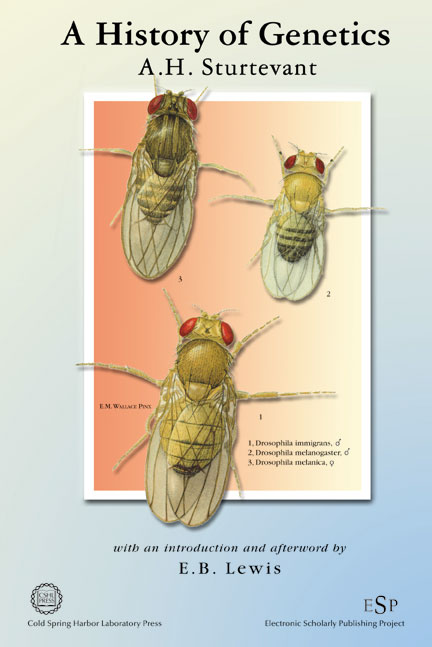
SUPPORT ESP: Order from Amazon
The ESP project will earn a commission.
In the small "Fly Room" at Columbia University, T.H. Morgan and his students, A.H. Sturtevant, C.B. Bridges, and H.J. Muller, carried out the work that laid the foundations of modern, chromosomal genetics. The excitement of those times, when the whole field of genetics was being created, is captured in this book, written in 1965 by one of those present at the beginning. R. Robbins
ESP Picks from Around the Web (updated 28 JUL 2024 )
Old Science
Weird Science
Treating Disease with Fecal Transplantation
Fossils of miniature humans (hobbits) discovered in Indonesia
Paleontology
Dinosaur tail, complete with feathers, found preserved in amber.
Astronomy

Mysterious fast radio burst (FRB) detected in the distant universe.
Big Data & Informatics

Big Data: Buzzword or Big Deal?
Hacking the genome: Identifying anonymized human subjects using publicly available data.